







Big Five Kenya Safari - Which Kenya Parks Give You the Best Chance in 2026?
For many people dreaming about African Big Five animals, seeing them in the wild is a major life goal. Kenya is one of the best, most reliable destinations to tick this off your list. Since Kenya’s got so much incredible wildlife, figuring out where to focus your trip can feel a little overwhelming sometimes.
This blog explains exactly where you’ll want to point your compass for the Best Kenya parks for Big Five safaris in 2026. We’ll use using park-specific wildlife data, habitat conditions, and accessibility facts. You’ll discover which Kenyan parks actually deliver on that Big Five safari in Kenya, which parks are best combined. We’ll also help you know how to plan a safari that maximises chances without unnecessary travel.
Key Takeaways:
- Learn which Kenya parks are true Big Five destinations
- Understand where each Big Five animal is most likely seen
- Compare parks based on wildlife density and accessibility
- Discover why multi-park safaris increase Big Five success
- Get clear guidance on when to go for the best sightings
What Makes a Park a True Big Five Safari Destination?
It’s an important to know that not every Kenya National Park has all of the Big Five. Often, the biggest thing telling us if a park is a true big five destination is whether or not they’ve managed to keep rhinos there.

Also, the kind of land and how big the park really affects how often you’ll get sightings. Moreover, how easy it is to drive around changes how much time you spend actually hunting for animals.
The Kenya Wildlife Service (KWS) gives us the basic facts on where species like to hang out. Specifically, knowing where the protected rhino areas are is key to any good Kenya national parks safari. Without these conservation zones, the rhino population wouldn’t survive the threat of poaching.
Masai Mara National Reserve – Classic Big Five Safari
The Masai Mara National Reserve is a very famous safari spot in Kenya. There, you’ll find very strong numbers of lion, elephant, buffalo, and leopard. Truthfully, seeing a rhino is rare here, though it’s sometimes spotted by luck.

This reserve flows right into Tanzania’s Serengeti ecosystem. This means the wildlife moves freely between the two countries. Research show that Great Migration hugely affects predator numbers, leading to amazing action when it’s happening. Still, even when the wildebeest aren’t there, you’ll need patience for that full Big Five tally.
Guide insight is vital for tracking elusive species like rhinos. Our expert guides suggest looking for fresh tracks near water sources between 6:30AM and 8:30AM. Rhinos are most active in the cool morning air.
Check our Shadows of Africa Masai Mara safari page for more information.
Amboseli National Park – Elephant Capital of Kenya
Amboseli is famous for one animal above all: its massive elephant families. You’ll see elephants here like nowhere else in Kenya. However, the Amboseli National Park safari sadly has no rhinos, so it’s not a full Big Five park.
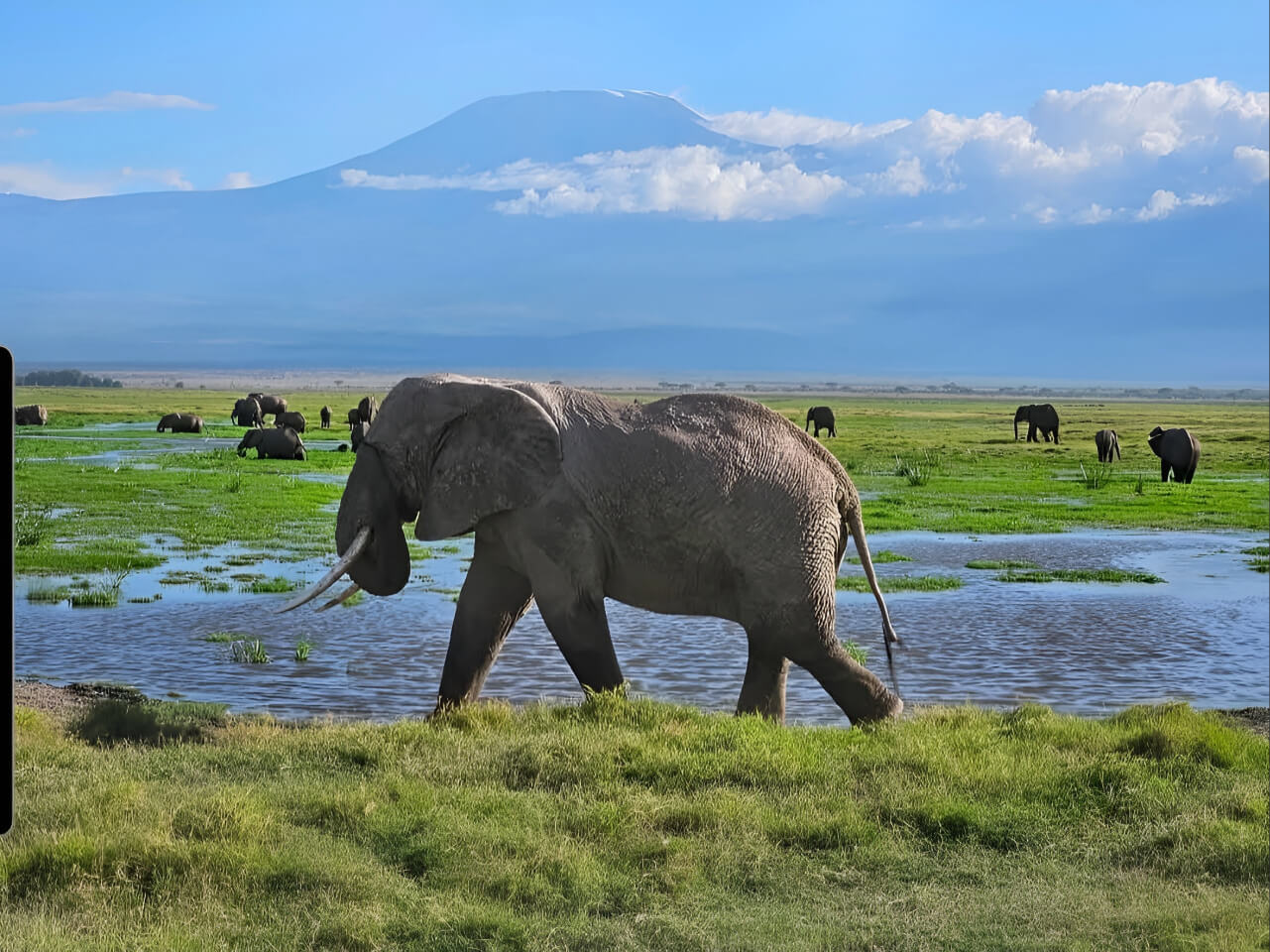
Amboseli covers 395 square kilometers. The amazing upside here is the landscape. Because the plains are so flat and open, visibility is superb, making it easier to spot lions and buffalo with Mount Kilimanjaro standing right behind them. The View of Kilimanjaro provides an unbeatable photo backdrop. You’ll see elephant population stats easily here!
Conservation is the heart of this park. The Amboseli Trust for Elephants has been studying these herds for over 50 years. They’re the most relaxed and well-documented elephants in the world. The park’s open habitat gives you great viewing, though you’ll want to pair this park with another spot for your full Big Five checklist.
Tsavo East and Tsavo West – Kenya’s Largest Wildlife Landscape
When looked at together, these two parks cover about 40% of Kenya’s total protected land. Data from the park shows the ecosystem supports over 12000 elephants alongside other60 mammal species including the Big Five. Most importantly, both black and white rhinos are present in this vast area. This makes Tsavo a must-visit for Tsavo East Big Five safari and Tsavo West Big Five safari.
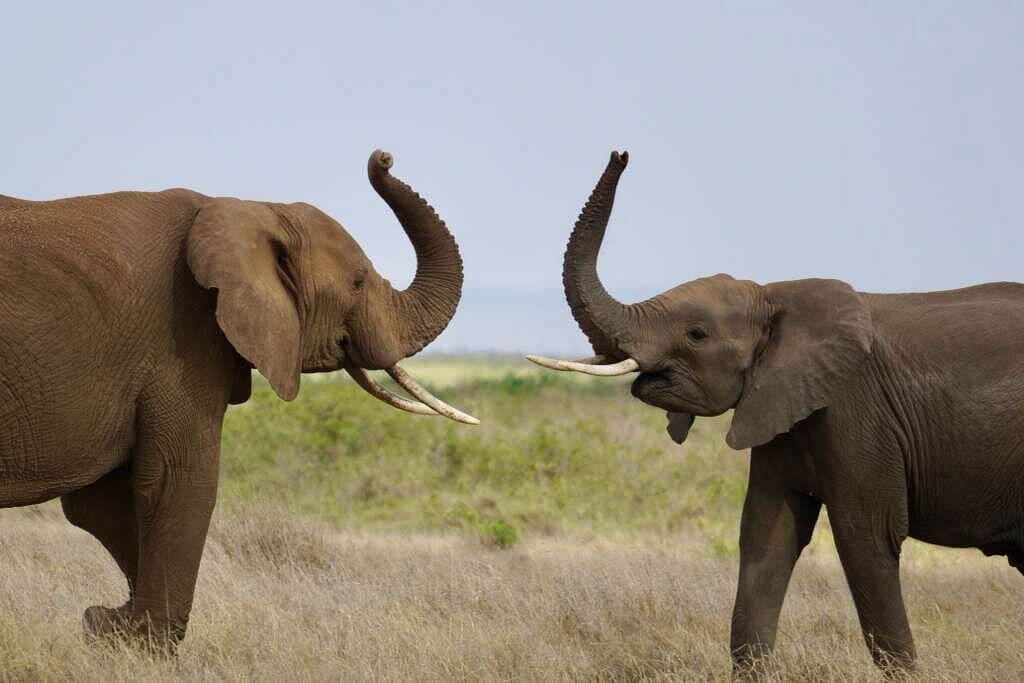
Tsavo East is famous for its huge herds of elephants covered in red dust, a sight you’ll never forget. On the other hand, Tsavo West is more mountainous and houses the Ngulia Rhino Sanctuary. This is a fenced area designed as a habitat for the black rhinos. See more about this huge area here: Shadows of Africa Blog: Tsavo Kenya’s Greatest National Park.
Spotting leopards can be tricky, even here. Therefore, using an experienced Shadows of Africa guide is extremely important. This is because they know the best secret spots to track these shy cats. As one guide put it, “leopard tracking here needs deep, local savvy!”
Northern Kenya Big Five Safaris – Laikipia Plateau
The Laikipia Plateau is made up of private conservancies. For this reason, there aren’t many tourists around, giving you a quieter, more exclusive safari feel. This region boasts strong populations of black rhino, which is a major draw for finding the Best places to see Big Five in Kenya. For instance, Ol Pejeta Conservancy is home to the last two northern white rhinos on earth.
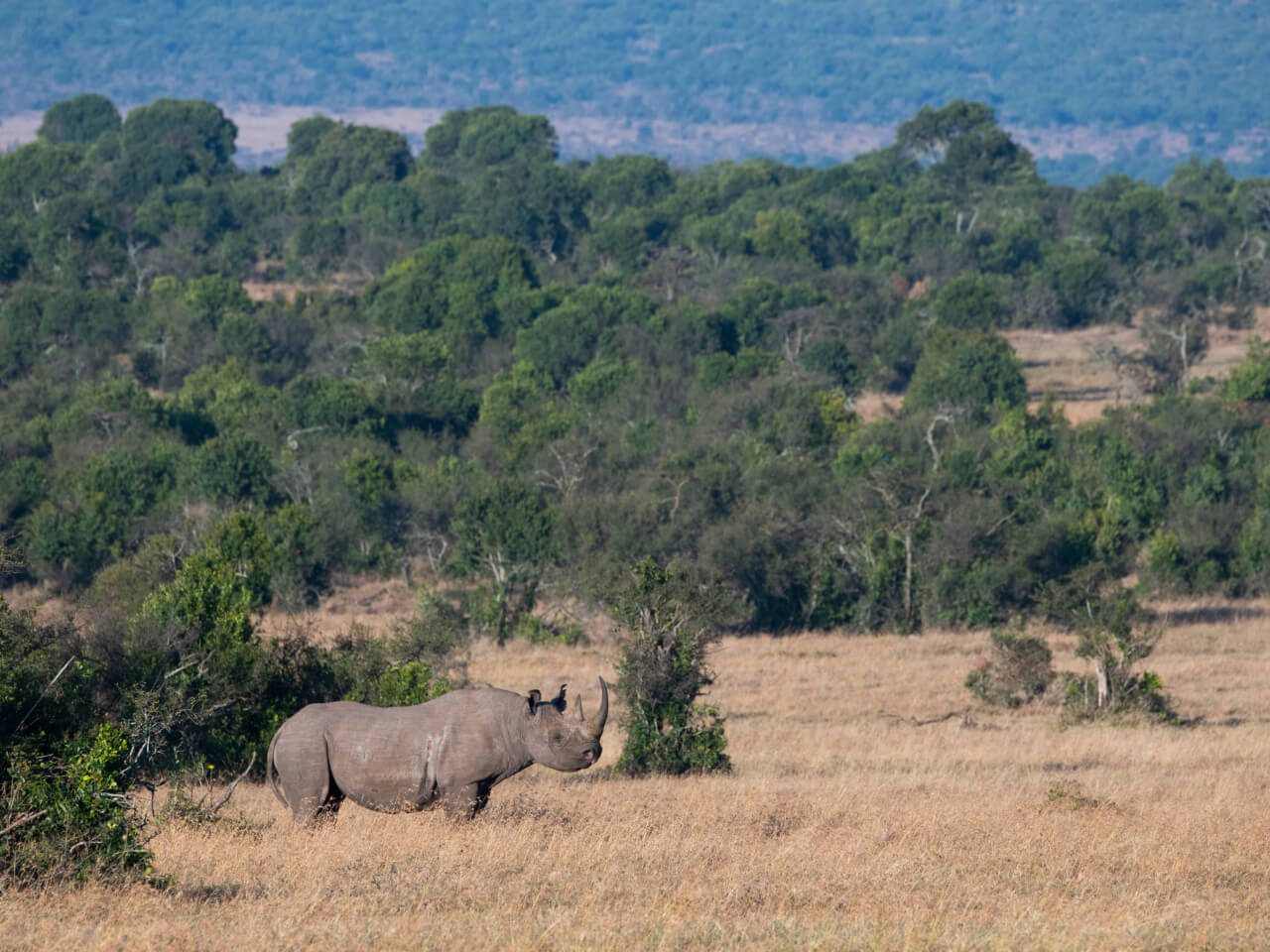
These safaris often focus on supporting conservation efforts up close. You’ll experience varied habitats and climate, unlike the huge, open parks. In addition, Laikipia is wonderful for experienced safari travelers who want in-depth, private guided safaris in Kenya.
We support responsible tourism models here. You’re often helping private reserves fund vital rhino conservation work directly, which feels great.
Samburu, Buffalo Springs & Shaba – Northern Kenya Wildlife Circuit
In the Samburu and Buffalo Springs parks, lions and leopards are seen commonly. However, rhinos aren’t usually part of the deal, so they’re not a full Big Five destination. Since these parks are smaller, game sightings can feel more concentrated and easy to spot up close.
- Leopard Hotspot: Samburu is actually known for better leopard sightings than even the Mara.
- The “Special Five”: These parks are famous for animals like the Grevy’s zebra and reticulated giraffe, Beisa Oryx,Generuk and Somali Ostrich; Kenya’s “Special Five.” According to the IUCN Red List 2026 data these are highly endan
Therefore, these parks often complement a private Laikipia trip well, offering a completely different wildlife mix to enjoy for your Kenya safari adventure.
Expert Guide Insight: “To spot Samburu’s big cats, focus on the riverine thickets along the Ewaso Ng'iro. Leopards are ambush predators here; look for the "flick of a tail" in the high branches of Acacia trees.”
Best Time to Visit Kenya for Big Five Safaris
When you should go really shifts your viewing success chances for the Kenya wildlife safaris.
- The June–October dry season is great because animals really gather near the shrinking water sources.
- January–March also sees intense predator activity.
- Still, wildlife viewing is reliable year-round across most Kenya national parks safari destinations. Our Kenya safari planning guide helps you choose the best time.
Additionally, it is important to track weather studies to determine the Best time for Kenya Big Five safari.
How to Plan the Perfect Big Five Kenya Safari
To truly maximize your chances of seeing all African Big Five animals, you’ll need a smart strategy.

- Combining Parks is Key: Never put all your eggs in one basket (e.g., Mara for lions, Tsavo for rhinos). You’ll need that mix to see the full set across Best Kenya parks for Big Five.
- Lodges vs. Camps: Camps often put you closer to the action at night, while lodges offer more solid comfort. Shadows of Africa helps you choose what fits your personal style the best.
- Guide Quality: Your guide is the difference between a quick glimpse and a magnificent, close-up sighting. Experienced guides are non-negotiable when tracking the elusive ones.
Planning Your Ultimate Kenya Adventure
Kenya’s greatest strength really is its ability to stage a spectacular Big Five Kenya Safari. Ultimately, selecting the right parks,with rhino presence in mind is the most important step you’ll take. Furthermore, having expert, local planning turns a good trip into an unforgettable, successful memory.
Plan Your Big Five Kenya Safari with a Local Expert
How to Experience Tanzania Fully in 10 Well-Paced Days?
Planning a 10-Day Trip To Tanzania brings up many questions. When’s the best time to travel? Which parks are a must-see? Should you add a Zanzibar beach holiday? How do you balance wildlife viewing with rest?
These are things good planners think about. Getting a 10-Day Tanzania Safari Plan will help answer these questions.
Whether you’re considering a safari with time to unwind by the coast or a journey focused entirely on inland exploration, this blog breaks down two expert 10-day itineraries from Shadows of Africa. We’ll look closely at both options, including one that focuses purely on adventure, wildlife, and culture.
- The Calving Season and Zanzibar Safari – A social group trip focusing on new life and white sands.
- The Ten-Day Kila Kitu Safari – An active adventure covering wildlife, culture, and hidden lakes.
You’ll learn what each plan includes, see how they differ in style, and find out the best time to travel. You’ll also see which trip suits which group of travellers, helping you plan your 10-day Tanzania safari itinerary with clarity and confidence.
Key takeaways
- Compare two very different 10-day Tanzania safari experiences.
- You’ll understand calving season travel versus year-round viewing.
- See how Zanzibar fits into a safari trip plan.
- Learn which plan suits group travelers and which suits active explorers.
- Get a clear look at the day-by-day experience for each option.
Plan Your 2026-27 Tanzania Safari Now
Why These Two Itineraries Represent Tanzania So Well
Both trips last for 9 nights and 10 days and include famous spots in the northern wildlife circuit. However, each offers a distinct travel style.
One combines wildlife with beach time; the other mixes wildlife with culture and adventure inland.

Shadows of Africa has long experience designing these multi-region safaris. This has ensured consistent access across the parks in line with the Tanzania National Parks Authority rules.
Our comparison shows the feeling you get from each trip:
Feature Calving Season & Zanzibar Kila Kitu Safari Travel Style Group (Max 12) Private / Active Primary Goal Wildlife + Relaxation Wildlife + Culture Beach Time 5 Days in Zanzibar None Adventure Game Drives Walking, Cycling, Hunting Top Highlight Migration Calves Hadzabe Tribe Itinerary One - Calving Season and Zanzibar Safari – Join the Group 2025
This option is the Serengeti calving season safari with Zanzibar. It’s built for travelers who like structure and guaranteed dates.
You’ll join a small group for this adventure. This path focuses on the migration’s most tender time, giving you two very different Tanzanian worlds: the wild plains and a spice island retreat.
Here are the key facts for this specific departure:- Duration: 10 Days / 9 Nights total.
- Group Size: A maximum of 12 guests for a personal experience.
- Departure: The dedicated group date is 25 February 2025. Other dates are available upon request.
- Guarantee: This trip’s departure is confirmed once just 2 guests book, giving you great planning confidence.
The route flows from Arusha to the coast, including Serengeti National Park and Ngorongoro Crater.

Day-by-Day Experience Highlights
Here are the day-to-day highlights for this popular Tanzania safari package 10-day option:
Day Destination Key Experience 1 Arusha Arrival and resting after your flight 2 Lake Manyara Seeing tree-climbing lions and colorful birds 3 Ndutu Exploring the vast migration plains 4 Ndutu / Serengeti Tracking predators during sunrise drives 5 Ngorongoro Crater A full day hunting for the Big Five 6 Zanzibar Stepping back in time with a Stone Town tour 7 Zanzibar Coast Learning about exotic plants on a Spice tour 8–9 Kendwa Enjoying the turquoise water and beach sun 10 Departure Saying goodbye to paradise Join a Small-Group Tanzania Safari — Check Availability
Understanding the Serengeti Calving Season
The Ndutu calving season safari is unique because about half a million wildebeest give birth in the Ndutu area each year between January and March. This massive gathering of young animals draws in many predators, creating incredible photo opportunities.

Simply put, the January-March window is truly special for seeing life begin on the plains. Conservation reports track this massive natural event carefully—it's a factual highlight, not just exciting language.
For a deeper look at this event, read our Great Migration guide
Itinerary Two - Ten-Day Kila Kitu Safari – Best of Tanzania
The second option is the Ten-Day Kila Kitu Safari. “Kila Kitu” means “Everything” in Swahili. This plan is for travelers who want serious variety and constant movement. It’s the Best of Tanzania safari itinerary for adventurers.

What makes this journey stand out compared to a Tanzania safari and beach holiday?
- There is no Zanzibar beach time.
- But, it includes trips to Lake Natron and Lake Eyasi.
- You get to meet the local Hadzabe Tribe, learning their ancient ways.
- It mixes game drives with guided walking, village cycling, and cultural deep dives.

This Tanzania Safari itinerary offers a true deep dive into Tanzania’s varied landscapes and cultures. You can see this unique plan at https://www.shadowsofafrica.com/kilakitu-safari-10-days-the-best-of-tanzania
Day-by-Day Adventure Table
Here are the day-by-day highlights for this active 10-day Tanzania safari itinerary:
Day Destination Experience 1 Arusha NP Canoeing on the lake or a guided bush walk 2 Tarangire Watching massive herds of elephants by the river 3 Lake Manyara Exploring groundwater forests and flamingos 4–5 Lake Natron Cycling through the Maasai land and seeing waterfalls 6–7 Serengeti Tracking the great migration across the plains 8 Ngorongoro Crater Descending into the world-famous volcanic caldera 9 Lake Eyasi Meeting local blacksmiths and tribal elders 10 Hadzabe Tribe A traditional hunting morning with local hunters We emphasize responsible cultural tourism here. All interactions with tribes like the Hadzabe are guided by trained locals, ensuring respect and safety for everyone.
Tanzania Safari vs. Zanzibar Beach: How the Experiences Differ
It’s important to know what you’re signing up for. The two choices offer very different feels. Here’s a simple look at how they compare:
Experience Safari (North) Zanzibar Wildlife Extremely High Very Low (mostly birds/monkeys) Culture Tribal/Traditional Arabic/Swahili/Coastal Relaxation Low (early starts) Very High Adventure Very High Moderate (water sports) Which 10-Day Itinerary Should You Choose?
Helping you decide is simple when you know what you value most.
Choose the Calving Season + Zanzibar Safari if:
- You really want to see the Serengeti calving season safari spectacle.
- You want an included Zanzibar holiday component for beach time.
- You prefer traveling in a reliable Group safari in Tanzania.
Choose the Kila Kitu Safari if:
- You value deep cultural interaction, like the experience of meeting the Hadzabe tribe.
- You want more physical adventure, including walking and cycling around Lake Natron safari.
- You prefer exploring diverse inland areas without heading to the coast.
Practical Travel Planning Tips
Proper planning helps everything run smoothly. Remember these points as you finalize your Tanzania Safari Planning Guide.
- Best Months: For the Zanzibar trip, aim for Dec–Mar to see calving. For Kila Kitu, the dry months (Jun–Oct) are often best for walking.
- Fitness Expectations: The Zanzibar trip requires less intense fitness. The Kila Kitu plan asks for better fitness due to the extra walking and cycling.
- Packing Considerations: Review your Tanzania Safari Checklist based on your itinerary. A beach trip needs swimwear; the Kila Kitu needs walking shoes.
Two Ways to Experience Tanzania, One Thoughtful Journey
Tanzania is a land of endless variety. Whether you choose to follow the newborn herds or walk with ancient tribes, you’ll leave with a full heart. Both of these 10-day journeys offer a deep look into the wild soul of East Africa Destinations.
One gives you the comfort of a group and the peace of the beach. The other gives you the thrill of adventure and the richness of culture. No matter which one you pick, you’re in for the trip of a lifetime.
We’ve spent years making sure these plans are perfect so that you can just enjoy the ride. Your adventure is waiting for you under the vast African sky.
Tanzania Safari Planner 2026-27 – Costs, Best Times & Essential Tips
Every great safari starts long before you see a lion. It begins with thoughtful planning. A good Tanzania Safari Planner will help to make Tanzania not “just a trip” but a life-changing adventure. You must choose the right time of year, budget wisely and pack like a pro..
This guide is built by our Shadows of Africa experts to help you step into Africa’s wild heart feeling totally ready. It has collected everything for a smooth 2026–27 safari and is going to cover costs, seasonal tips, packing lists, and expert advice.
We’ve planned safaris for over 15 years. We reference official data from TANAPA and CDC rules for accuracy. We also include real traveler reviews to show our experience.
Plan Your 2026-27 Tanzania Safari Now
Understanding Tanzania Safari Costs – A Complete Breakdown
When you start looking at a Tanzania Safari Planning Guide, the price is often the first question. We believe in transparency about where your money goes and in understanding Tanzania Safari Costs, which keeps your budget manageable.
Here’s what affects your Tanzania Safari Cost Per Day:
- Accommodation
Will you choose simple lodges, comfy tented camps, or luxury bush camps? These choices change the price significantly.
- Park Fees
These are fixed daily fees set by the government and charged per person. For a detailed breakdown, you can refer to TANAPA’s official park fee structure. Safari vehicles are also subject to separate charges, and certain areas may include an additional conservation fee.
- Transport
Will you drive everywhere in a 4x4? Alternatively, you can use domestic flights for long distances quickly. Flying costs more, naturally.
- Food & Drinks
Are all your meals included in the price? Sometimes you only have half-board lodging. Always check the details on your tour plan.
- Guides & Staff:
You hire professional driver-guides for your drives. Remember to save money for tipping them and the support team, too.
- Extras
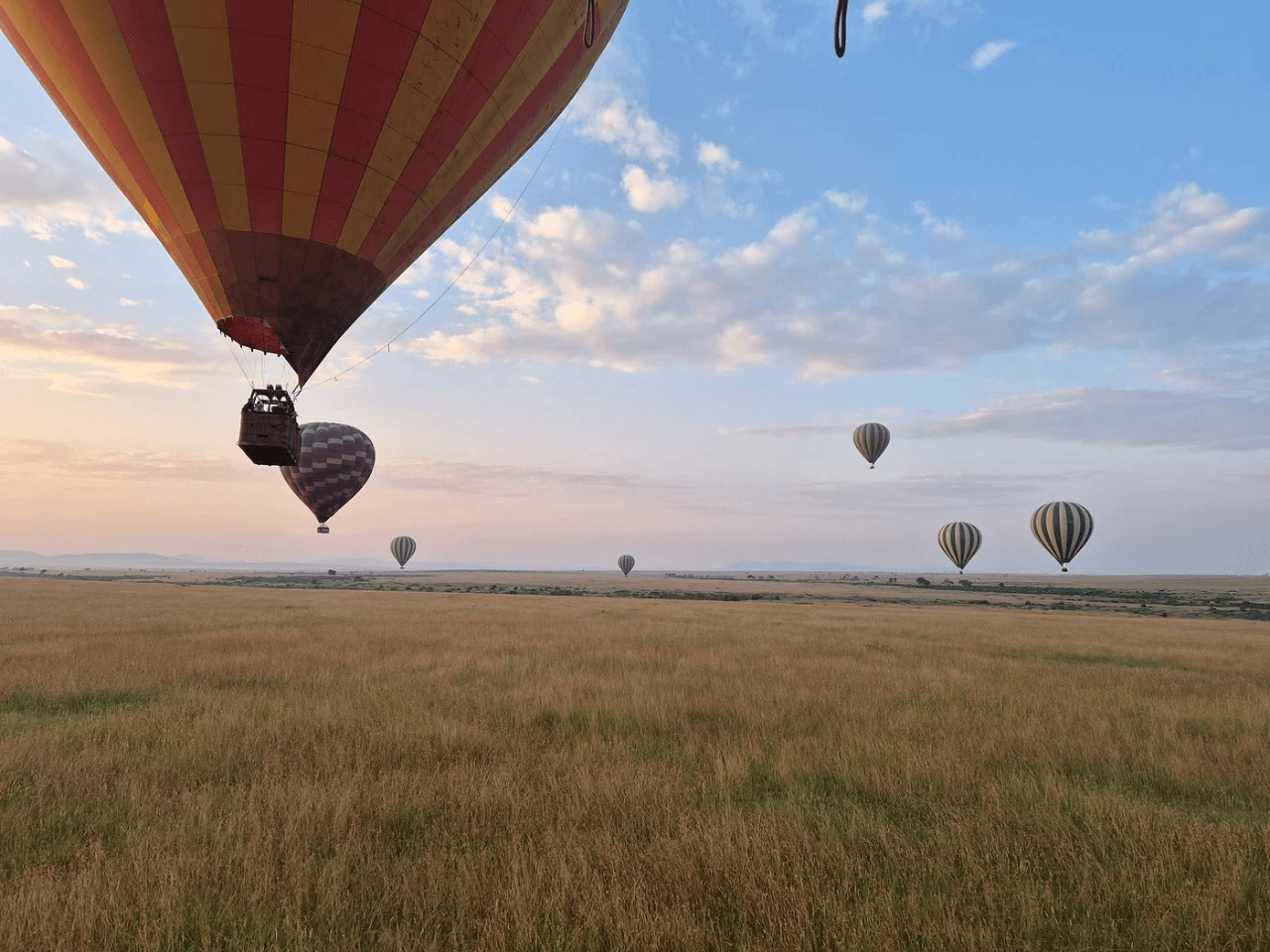
Extra fun activities cost more. Think about adding a balloon safari. Perhaps you want night drives or local cultural tours included.
One safari expert shared this insight about price differences:
“Prices shift because every traveler wants a different style. A family needs different things than a solo traveler. We tailor everything to fit the budget.”
For many trip ideas, check our main guide: Tanzania Safari Tours 2026-27 – Epic Adventures From Serengeti to Zanzibar.
Best Time to Visit Tanzania – Month-by-Month Guide
Tanzania’s weather strongly influences the timing of your Tanzania Safari. Wildlife behavior changes with the seasons, too. Knowing this timing is key to your successful planning. The right month means you see the best action.

Here’s a short look at what you’ll find:
- December to March:
This holds the famous calving season in Ndutu. Birdwatching peaks during these months, as many species are present.
- April to May:
We call this the “green season.” Expect some dramatic, refreshing rain showers. The crowds thin out a lot. Landscapes look very lush and beautiful.
- June to October:
This is the popular dry season. Viewing the game gets easier. Animals gather near water sources. This time can include Great Migration river crossings.
- November:
This is a season of brief rains. It’s a great time for photographers to capture dynamic skies.
A guide offered this thought on timing:
“The dry season lets you spot animals easily. Yet, the green season gives you peace in the parks. Both times offer their own magic.”
If you’re dreaming of the massive herds moving across the plains, read our Serengeti Safari 2026-27 – Your Complete Guide to the Great Migration. If you prefer seeing the "Big Five" in a unique setting, you can't miss Ngorongoro Crater Safaris – The Ultimate Big Five Experience in Tanzania
Sample Tanzania Safari Itinerary for 2026–27
We offer many trip styles because travelers dream differently. We plan trips for families, honeymooners, and photographers.
Here are a few practical plans we often create:
- The 7-Day Classic Safari follows a well-balanced route through Tarangire, Ngorongoro Crater, and the Serengeti plains, making it a reliable choice for strong wildlife viewing.
- The 10-Day Migration Safari is built around the main spectacle, moving from Central Serengeti to Northern Serengeti, and many travelers choose to end this journey with relaxing days in Zanzibar.
- The 12-Day Bush & Beach experience combines Tanzania’s key safari parks—Tarangire, Ngorongoro, and Serengeti—before a flight to Zanzibar for beach time. You can explore this pairing further in our Bush & Beach Bliss – How to Combine Your Safari with a Zanzibar Holiday
One client shared this review on our TripAdvisor page:
“We went on a six-day safari in Tarangire, Manyara, Ngorongoro, and Serengeti. The organisation by shadows was perfect, and we had really good time with our guide Emanuel (highly recommended!).”
Essential Travel Tips – Visas, Health & Tanzania Safari Tips
Smart planning also covers entry rules and staying healthy while you’re there. Having a good Tanzania Safari Travel Guide keeps your journey on the ground safe.

Here are the key things you must get sorted before you travel:
- Visa Requirements
Many countries require a visa right when they arrive at the airport. Yet, we strongly suggest you finish the required e-visa online before you leave home. This saves you time waiting in lines later.
- Health & Vaccinations
See your doctor months before you depart. You might need shots for diseases like yellow fever or hepatitis. It’s also wise to check the latest CDC guidelines
- Safety Tips
Always follow your guide’s rules inside the parks. Never try to feed any animals you see. Remain inside your vehicle unless your guide says it’s completely safe to exit.
- Travel Insurance
Look for coverage that pays for medical costs and emergency evacuation from distant areas.
Our guides share this safety point often: “Trust your guide’s instincts about animal behavior always. They know the bush best.”
When these details are sorted before you arrive, you’re free to relax into the journey, knowing your Tanzania safari is not just exciting, but responsibly planned and genuinely safe.
Tanzania Safari Checklist – Gear, Clothing & Photography Essentials
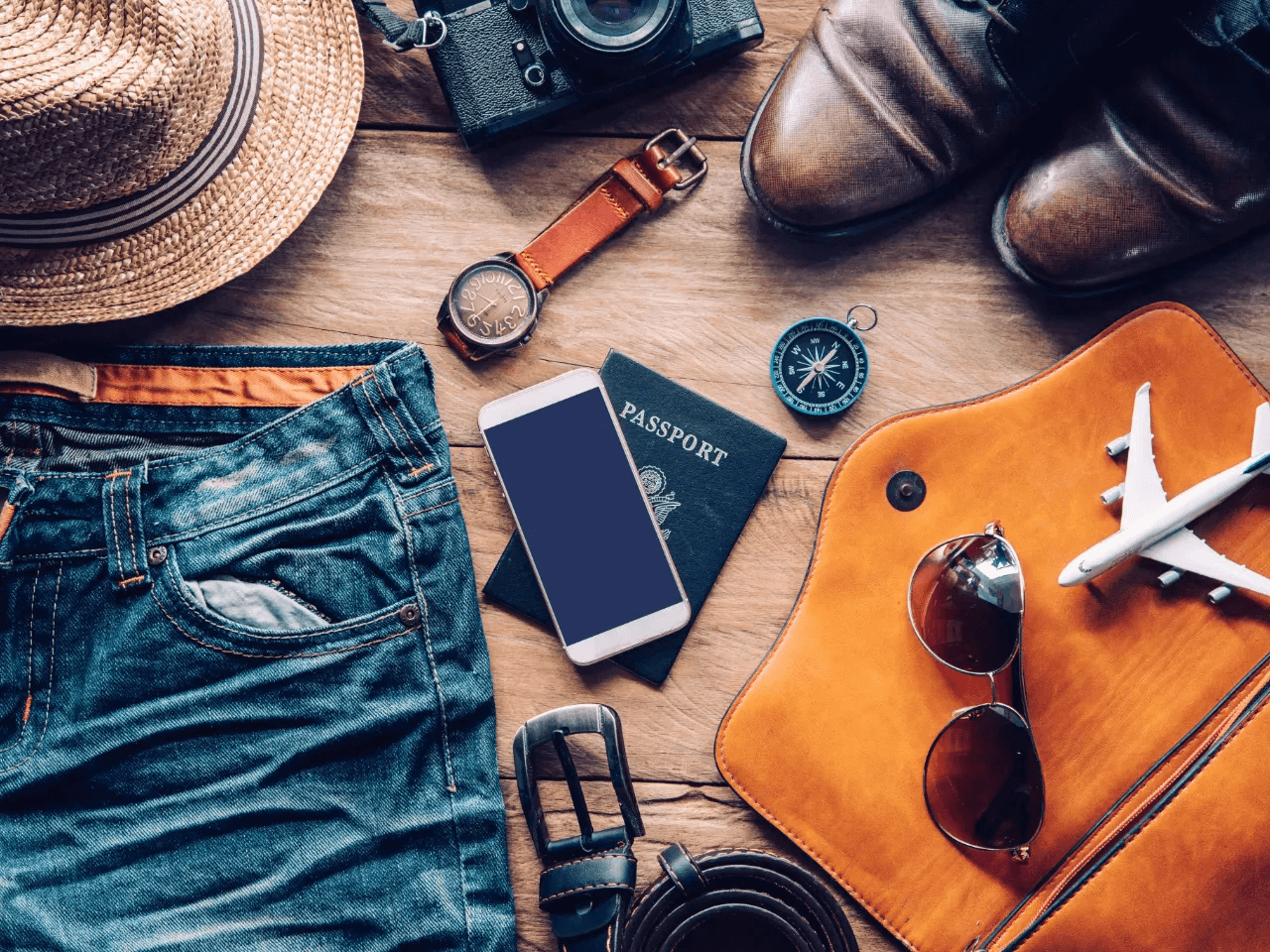
Packing for a Tanzania safari in 2026–27 isn’t about ticking boxes. It’s about knowing how the days actually unravel. Early mornings that feel almost cold. Midday heat that settles into your shoulders. Long hours in a vehicle where comfort matters more than style. Your Tanzania Safari Packing List should change with the season, yes—but it should also change with how you like to travel.
We’ve pulled this together from people who live this routine. Guides who are out there every week. Wildlife photographers who’ve learned the hard way what gets used and what stays untouched in the bag. The common thread is simple: pack for reality, not for the photos.
Clothing
Clothing needs to feel easy. Light layers you can peel off as the sun climbs, then pull back on when the air cools again.
Neutral colours work best—khaki, olive, dusty green—not because it’s a rule, but because they just make sense out there.
A proper sun that helps more than people expect. And if you’re travelling during the shoulder months, a light rain layer is worth the small space it takes.

Gear
Gear doesn’t need to be fancy, just reliable. A good pair of binoculars quickly becomes one of those things you wonder how you ever travelled without. Spotting movement far off in the grass, catching details you’d otherwise miss—it changes the experience.
Photography
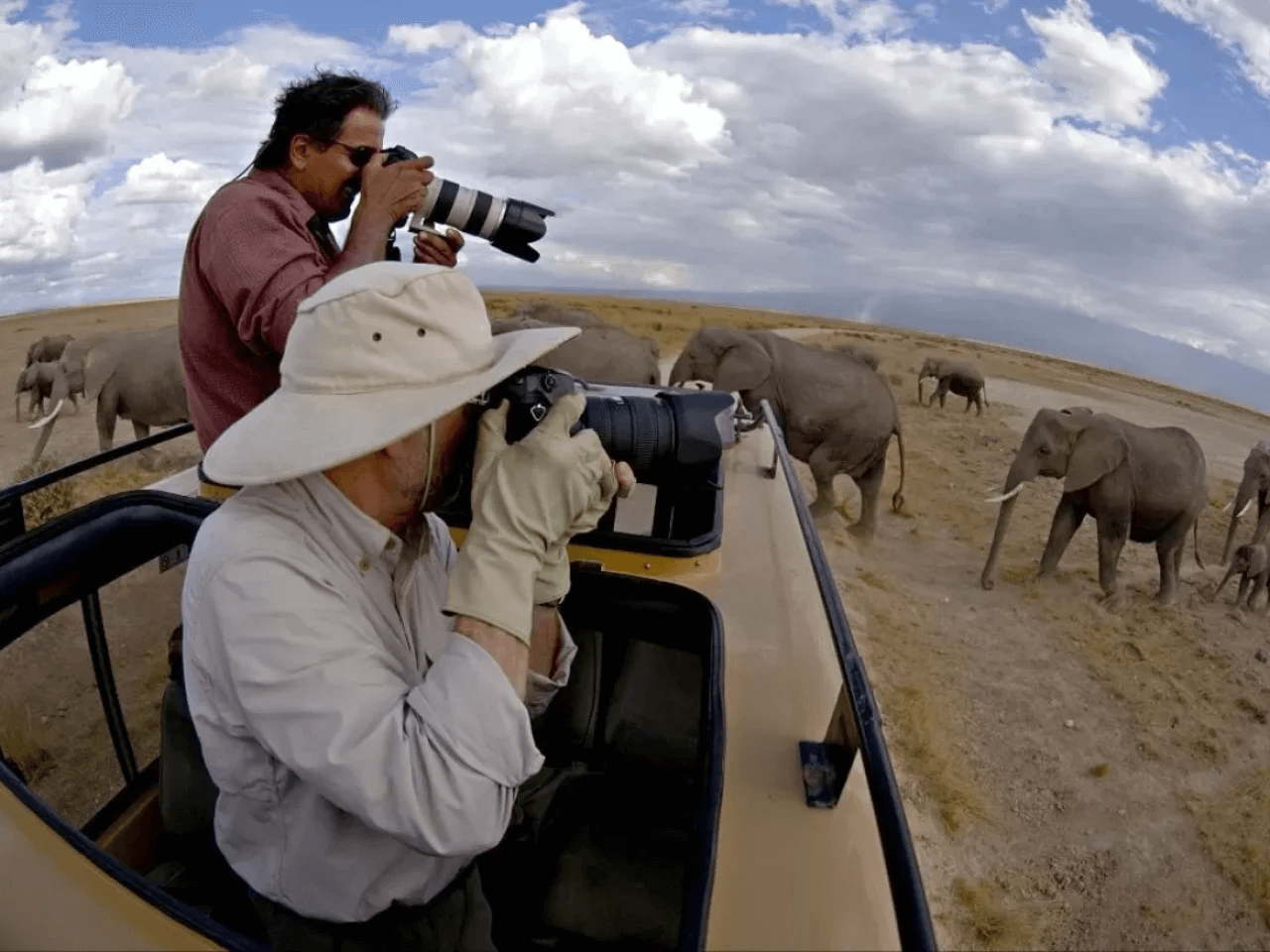
Photography is personal. Bring the camera you already know, not the one you’re still figuring out. A long telephoto lens makes a real difference, especially when animals keep their distance. Extra memory cards disappear faster than you think. And battery packs? You’ll be glad you packed them when the days stretch longer than planned.
Tech Items
Then there’s the practical stuff. Power banks quietly keep everything running in the background. Plug adapters matter more than you expect. And having both digital and printed copies of important documents—insurance, IDs—just gives peace of mind. You don’t want to be scrambling for that information when you’d rather be watching elephants cross the road.
If you want to go deeper, we’ve put together a broader guide to What to Pack for an African Safari that expands on these essentials and helps you fine-tune your list.

At the end of it all, a good Tanzania Safari Packing List doesn’t try to prepare you for everything. It simply makes sure nothing gets in the way of being present—watching, listening, and letting the place do what it does best.
Insider Tips for a Seamless Safari
The best trips often come from knowing small secrets. These tips make your whole safari experience better.
Here are a few insights from our planning team:
- Book Early: If you want to travel during the busy peak season, you need to book your tour 8 to 12 months before you go.
- Group Size: Traveling in a very small group or booking a private tour gives you much better chances for great wildlife viewing.
- Support Local: Try to use operators who hire local guides. Back community projects when you have free time.
- Travel Mindfully: Look into certified operators who actively offset their carbon footprint from travel.
Additionally, our guides often give this advice: Give a small tip envelope to your main guide near the end.
To see diverse parks beyond the main ones, check out our post on Offbeat Tanzania – Explore Tarangire, Arusha & Hidden National Parks, Tanzania.
Your Perfect Tanzania Safari Starts Here
Planning your trip is more than just booking the dates. It’s about creating a journey that fits your travel style, your budget, and your biggest dreams.
With the right timing, good homework, and expert help, your 2026–27 safari can become one of your life’s best adventures. You will see amazing animals.
If you haven’t picked your route yet, please look at our main resource: Tanzania Safari Tours 2026-27 – Epic Adventures From Serengeti to Zanzibar.
Get Your Personalized Safari Plan
Bush & Beach Bliss – How to Combine Your Safari with a Zanzibar Holiday
There’s a reason so many people come home from Tanzania saying, “I wish I’d added a few more days on the coast.”
These Tanzania Bush and Beach Safaris aren’t just a pretty phrase. It’s an efficient way to travel.On one side, you have the wild energy of a Tanzania Safari, early starts, dusty tracks, lions in the distance, and the Great Migration rolling across the plains. On the other hand, you have Zanzibar Attractions, late breakfasts, warm water, slow walks in Stone Town, and evenings when the loudest sound is the ocean.
This blog is here to show you how to put those two worlds together without overcomplicating things.
Written with insights from safari specialists and Zanzibar travel planners with over 15 years of experience designing tailor-made bush-and-beach itineraries, this guide leans on real itineraries, real routes, and honest guest feedback. It also aligns with information from the Zanzibar Tourism Board and TANAPA, so that what you read here matches what you’ll actually encounter on the ground.
Why do people love the bush + beach combo?
The shortest answer is because it feels complete. You don’t just tick off “wildlife” and fly home tired. You end your trip rested, sun-warmed, and a little salty from the Indian Ocean. That shift matters.

Why Combine Safari and Zanzibar? – The Best of Both Worlds
If you strip away the marketing language, combining a Tanzania safari and beach holiday solves three very human needs: variety, recovery, and ease.
Adventure + Recovery in one ticket
A few days in Serengeti National Park or the Ngorongoro Crater are unforgettable… and full on. You’re up before sunrise, scanning horizons, bouncing along tracks, soaking in every sight. It’s exciting, but there’s a lot of sensory input.

Zanzibar is the antidote. Late wake-ups. A swim instead of a game drive. A cocktail instead of a checklist. The safari stirs you up; the coast settles you back down. That’s why Bush and Beach Honeymoon trips work so well, you get shared adventure and proper downtime in the same itinerary.
Key benefits of a Tanzania safari + Zanzibar combo:
- Diverse experiences in one trip: wildlife, Maasai culture, Swahili coast, spice farms, and reef life
- Stress-free logistics: short bush flights from safari hubs to Zanzibar
- Ideal post-safari reset: soft landing after dusty, thrilling days in the bush
- Fits many guests: honeymooners, families, first-timers, and “once in a lifetime” travelers
Travel platforms like SafariBookings and TripAdvisor show steady growth in searches for Tanzania Safari and Beach Holiday, and Tanzania Safaris from Zanzibar. The trend isn’t random. It reflects exactly what guests tell us after their trips: “Next time, we want both.”
“If you’re already flying all the way to East Africa, why not let your trip breathe a little — roar in the bush, exhale by the sea?”
[Design Your Bush & Beach Escape]
Where to Safari Before the Beach – Best Wildlife Destinations
Not every park feels the same, and not every traveler wants the same kind of safari. The good news is that Tanzania offers choices, and many of them connect smoothly to Zanzibar.
Serengeti National Park – Classic drama and the Migration
The Serengeti-National-Park is the big one: endless plains, big cats, and the Great Migration. For many guests, this is non-negotiable.
From a bush-and-beach perspective, the Serengeti works beautifully because you can finish in the central or southern plains and fly directly to Zanzibar. No long backtracking drives.

Local guides often say the same thing:
“Serengeti first, Zanzibar later. Let the wild part go all-in, then slow down.”
If you’re interested in a deep dive into this part of the trip, you can pair this blog with:
→ Serengeti Safari 2026–27 – Your Complete Guide to the Great MigrationNgorongoro Crater – Big Five in a volcanic bowl
The Ngorongoro Crater is a natural wildlife bowl, and it fits easily into most northern circuit routes. You can game drive in the crater, return to Arusha, and then connect to Zanzibar the next day.

For guests who want a strong chance of seeing the Big Five without a long safari, this is the logical anchor. To connect the dots, you can read:
→ Ngorongoro Crater Safaris – The Ultimate Big Five Experience in TanzaniaTarangire National Park – Elephants, baobabs, and a quieter feel
If you like a slightly slower pace, Tarangire National Park is a good match. It’s elephant country, dotted with baobabs, and often less crowded than the Serengeti.

Tarangire works well in itineraries that don’t push too far west into the plains but still deliver varied landscapes. It’s a key player in more offbeat combos, which you can explore further in:
→ Offbeat Tanzania – Explore Tarangire, Arusha & Hidden National ParksNyerere (Selous) & Ruaha – Remote and wild
For travelers who don’t want anything “standard,” the southern parks like Nyerere (Selous) and Ruaha feel rawer, with walking safaris, boating, fewer vehicles, and more silence. These parks usually connect to Zanzibar via Dar es Salaam.

Guides often describe these as “parks for people who already know they love safaris.”
Zanzibar Island – Beyond the Beach Paradise
When people hear “Zanzibar,” they picture a white beach and a palm tree. Fair enough. But the island is more layered than that, and that’s what turns a simple beach stay into a meaningful ending.
Stone Town – History, markets, and slow corners
Stone Town is a UNESCO World Heritage Site, and it feels like a world away from the open savannah: narrow lanes, carved doors, old trading houses, rooftop cafés, and spice markets. Spending at least one night here makes the whole trip feel richer; you see how the coast, history, and culture fit together.

Snorkeling & Diving – Life under the surface
For many guests, the first day after the safari is about water. Snorkeling at Mnemba Atoll, reef dives, or a simple boat trip with masks and fins. After staring at horizons and plains, looking down into clear water feels like switching channels in your brain.
Spice farms, cooking classes, and village visits
Zanzibar isn’t just about what you see; it’s also about smell and taste. Zanzibar Spice Tour, local cooking classes, or village walks in places like Jambiani offer guests a slower cultural experience. They’re easy half-day add-ons that don’t require too much energy after a complete safari.
Day trips: Prison Island, Chumbe, and more
You can keep days light with simple trips:
- Zanzibar-Prison-Island-Tour to meet the giant tortoises
- Jozani Forest to spot red colobus monkeys
- Chumbe Island for marine conservation and snorkeling
- Sundowners at The-Rock-Restaurant, because yes, the location really does feel surreal

All of this is why Zanzibar Safari Extensions work so well. You’re not just signing up for “a beach break.” You’re ending your safari with a different kind of story.
Perfect Bush & Beach Itineraries – From Savannah to Sea
Instead of dumping a day-by-day breakdown, let’s talk about how these itineraries actually feel and where they fit. The important part for you: the package names appear clearly so you can hyperlink them on your website.
Wildebeest Migration, Calving Season, and Zanzibar
The Wildebeest Migration, Calving Season, and Zanzibar itinerary is built around one thing: Ndutu in the calving period. Guests usually move through areas such as Lake Manyara, the Ndutu Region, and the Ngorongoro Conservation Area before flying to the coast. This trip is ideal between December and March, when the plains are full of newborn wildebeest and dramatic predator action.
Calving Season and Zanzibar Safari – Join the Group 2025
The Calving Season and Zanzibar Safari – Join the Group 2025 itinerary is designed for travelers who are happy joining a carefully curated group instead of going fully private. It usually weaves through Arusha, Lake Manyara, the Ndutu Region, Central Serengeti, the Ngorongoro Crater, and then continues on to Stone Town and the Zanzibar coast (often heading to Kendwa or the northern beaches).
This kind of trip works well for:
- Solo travelers who don’t want to travel alone
- Couples or friends happy to share a vehicle
- Guests who want fixed dates and a fixed price but still want quality lodges
The group nature of the safari keeps the energy high in the bush, then the beach days feel like a shared exhale.
JOIN THE GROUP – Safari from Zanzibar – Saadani National Park – Day Trip
For travelers already on the island who don’t want a complete land-based safari, the Join The Group – Safari from Zanzibar – Saadani National Park – Day Trip option is a good compromise. It gives a bite-sized bush experience (with real wildlife and real game drives) without requiring a long mainland itinerary. This is especially useful for guests who book Zanzibar Beach Packages first and then realize they still want a taste of safari.
Travel Logistics – Flights, Transfers & Practical Tips
The bush-to-beach idea sounds romantic, but it stands or falls on logistics. Guests don’t remember which airline they flew; they remember if it felt smooth or stressful.
Flights from Safari to Zanzibar
Most Tanzania Safaris from Zanzibar or to Zanzibar use bush flights operated by companies like Coastal Aviation or Precision Air. Typical routes include:
- Serengeti → Zanzibar (often via Arusha or direct, depending on season and schedule)
- Arusha → Zanzibar
- Ruaha / Nyerere → Zanzibar via Dar es Salaam
Flights are usually 1–2 hours, which is much kinder than a long day on the road.

Best time for a combined safari and beach holiday
For the Best Time for a Zanzibar Safari Holiday, most travelers look at:
- June to October: dry season on the mainland, comfortable on the coast, great for wildlife
- January to March: warm, good visibility for marine activities, and calving season in Ndutu
April and May are wetter in Zanzibar, but some guests like the quieter atmosphere and lower rates.
Visas, vaccinations, and insurance
Visas
Most people who want to visit Tanzania get their visa online before they go. A regular tourist visa that only lets you in once is normally good for up to 90 days.
Your passport should be good for at least six months after your trip and have some blank pages. It's always a good idea to verify with the Tanzanian embassy or consulate in your country to make sure you have the most up-to-date information, since restrictions sometimes change.
For more details on how to get a visa on arrival in Tanzania’s JRO airport, please go through our blog:
Vaccines for yellow fever and other diseases
The guidelines for yellow fever rely on where you've been, not where you live. If you're coming from or passing through a country where yellow fever is a concern (and you have to stay there for a particular number of hours), you may be requested to provide proof of a yellow fever vaccination when you arrive.
It's crucial to talk to your doctor or a travel clinic about getting other vaccines, such as hepatitis, typhoid, and tetanus boosters, as well as how to avoid malaria. Before giving you any advice, they will look at your route, how long you want to stay, and your health history.

Following the guidance of the CDC, WHO, and local authorities
Your own country's health authorities, as well as worldwide organizations like the CDC and WHO, give you health advice. Use them as a guide, but always check with a doctor before making any decisions.Please read our blog for more information: https://www.shadowsofafrica.com/blog/what-vaccinations-do-i-need-for-africa/
Insurance
For Zanzibar, mandatory travel insurance is now required for entry, effective October 1, 2024, covering medical emergencies and unexpected situations.
Learn about the mandatory Zanzibar travel insurance here:https://www.shadowsofafrica.com/blog/zanzibar-travel-insurance-what-you-need-to-know/
Packing for both bush and beach
A simple rule: think in two small capsules.
- Safari capsule: neutral clothes, layers, closed shoes, hat, sunglasses, light jacket, headlamp
- Beach capsule: light clothes, sandals, swimwear, a smarter outfit or two for dinners
Having a small “Zanzibar section” in your bag makes the transition easier. You don’t want to dig through dusty fleece layers when all you need is a swimsuit.
What Real Guests Say About Their Bush & Beach Journeys
Cindy H – “Amazing Tanzania Safari!”
“We just returned from our amazing safari in Tanzania and time in Zanzibar and had to provide a shout out to Shadows of Africa for their part in ensuring it was the trip of a lifetime. When we initially researched safari companies, we were immediately struck by the responsiveness we received from Karen Maki at Shadows. This along with the strong reviews convinced us that this was the right company for us. Throughout the planning process, Karen was engaged, responsive and intent on ensuring that the itinerary met our needs, including safari days, lodging and extras.”
Abigail H –
Unforgettable first safari experience with Shadows of Africa - could not rate more highly!!
“Shadows of Africa made our honeymoon so special and unforgettable and made sure everything ran smoothly from start to finish! The whole team were so helpful and were there if we had any questions or issues, I would highly recommend booking your safari with Shadows! Thank you so much to all the Shadows of Africa team, but especially Hayley and Edwin!”
Mikayla C –
Kenya, Tanzania & Zanzibar Honeymoon!
Our experience with Shadows of Africa was exceptional! From start to finish everything was planned exactly as we imagined for a once in a lifetime Honeymoon through Kenya, Tanzania & Zanzibar!
These are the kinds of trips Tanzania Bush and Beach Safaris can become when they’re designed well and appropriately supported on the ground.
Tying It All Together – The Perfect End to an African Safari
A Tanzania safari on its own is powerful. It stays in your mind for years: the first lion, the first elephant herd, the first time you hear hyenas at night.
But when you add Zanzibar, the trip lands differently. You don’t go straight from adrenaline to an airport gate. You give yourself time to rest, to process, to enjoy the coast, to wander through Stone Town, to float in warm, shallow water and think, “Yes, that really happened.”
If you want to go deeper into the safari side while you plan your bush-and-beach combo, these connected guides will help:
- From the Beach to the Bush: How to Plan a Zanzibar Safari Experience
- Go on a short safari from Zanzibar
Offbeat Tanzania – Explore Tarangire, Arusha & Hidden National Parks Tanzania
When people plan their first Tanzania Safaris, they always mention the Serengeti and the Ngorongoro Crater. And sure, they are amazing. But talk to guides, locals, or visitors who’ve been around a bit longer, and you’ll hear something different: “The real magic starts when you go off the main road.”
There is a calmer, wilder part of the land beyond those famed plains. Places where you may sit alone by a river and hear nothing except elephants splashing in the shallows. Colobus monkeys jump above your head in these forests. Empty savannahs where lions snooze quietly under ancient baobab trees.
This is the part of Tanzania that most people don't see. This is your guide for travellers planning Tanzania Safari Tours 2026-27 to lesser-known parks that don't get much press but leave a lasting impression.
Why Go Offbeat

The solution is simple: space.
Crowds don’t follow you here. You don't share your morning with safari jeeps; you share it with giraffes. Your guide doesn't hurry you; they park the car and let you peacefully observe nature happen.That’s what happens when you choose oddball national parks. You give up loudness for connection. And a lot of the time, you see more.
TANAPA says that parks like Tarangire, Arusha, Ruaha, and Selous attract much fewer tourists than the Serengeti. Sometimes they get 10 times fewer. That means longer sightings, more peace, and real wilderness moments that feel untouched.
For years, we've helped travelers find their way around these quieter parts of Africa at Shadows of Africa. And to be honest, they are often the best part of the vacation for many.
Tarangire National Park - Big skies, bigger Elephants
Tarangire is where the wild spirit still hums gently in the background, while Serengeti is Tanzania's primary stage.
You’ll know you’ve arrived when the first baobab appears – vast, old, and silent. Then you’ll see elephants, hundreds of them, marching single file to the river that gives this park its name.

This is one of the best places in Africa to see elephants. The Tarangire River is their only source of water during the dry season, which lasts from June to October. Lions are stalking the herds, leopards are sleeping in trees, and the sunsets turn everything golden.
The rhythm is what makes it remarkable. You don't hurry through Tarangire; you let it happen. The park's slower pace makes every trip feel like a narrative from long ago, still important.
Arusha National Park – Green, Peaceful, and Unexpected
Arusha National Park is just outside the city and seems like a calm breeze before the great activities start. It may be little, but it has a lot of surprises, including misty woods, glittering lakes, and volcanic slopes that catch the dawn sun.
This park isn't for pursuing lions or cheetahs. It's about paying attention to what you see and hear when you walk. On a guided Arusha Walking Safari, you may get out of the car and follow wildlife footprints with a ranger. You could see colobus monkeys hanging in fig trees or giraffes in the distance.

Another peaceful joy is canoeing on Momella Lakes. You float across the river with flamingos on one side and Mount Meru towering in front of you.
Start here if you want to ease into your Tanzania Safari. It's peaceful, lovely, and full of life.
Hidden Parks That Deserve a Spot on Your Map
Tanzania has many lesser-known parks that are unique for different reasons. Each one has its own tale, emotion, and rhythm.
Lake Manyara National Park
A little park with a huge personality. There are tree-climbing lions, flocks of flamingos, and thick woodlands that unexpectedly open out to expansive vistas of the lake at Lake Manyara. It's a simple stop between Tarangire and Ngorongoro, and it's a great place to spend half a day.

Ruaha National Park
Ruaha is the center of southern Tanzania. It's big, wild, and beautiful. The park is like Africa before tourism: there are huge lion prides, hundreds of elephants, and boundless red-earth plains.
It affects how you view the wild. It's wild in every way, but it's also relatively peaceful.Selous, which is in Nyerere National Park
This location used to be called Selous Game Reserve. It is now called Nyerere National Park. It is a living waterworld. The Rufiji River winds its way through palm groves and lakes where hippos, crocodiles, and elephants live. The lights, sounds, and reflections on the boat safaris here are remarkable.
Saadani National Park
Saadani is Tanzania's only coastal park, and it's where the jungle meets the shore. You could witness giraffes wandering by the seashore or elephants playing in the waves. It's simple, crazy, and one of a kind—just what you need after a long safari.
Mahale Mountains National Park
The Mahale Mountains are the place to go if you want to view chimpanzees in the wild. You get there by boat, then you stroll through green forests till you hear the echoes, a symphony of cries deep in the treetops. It's far away, rough, and very moving.
Mkomazi National Park
Mkomazi is like a secret rediscovered, hidden between the Pare and Usambara mountains. You travel through vast savannahs full of giraffes and oryx before reaching the fenced rhino sanctuary, a narrative of hope and safety. Black rhinos do well here because rangers keep an eye on them. Elephants, on the other hand, may roam freely against the backdrop of Kilimanjaro. It's a park where conservation comes to life. It's secluded, wild, and quietly lovely.
When to Go
Each park has its own wonderful time. We tell our guests this:
- From June to October, elephants and predators are along the river at Tarangire.
- You can visit Arusha all year round, although December to March is best for seeing Mount Meru clearly.
- Dry, warm, and full of animals from June to October in Ruaha and Selous.
- The optimum time to go chimp trekking in the Mahale Mountains is from July to October.
- The best time for visiting the Saadani beach is from December to March.
The key is to schedule your trip around each park's rhythm. Our staff at Shadows of Africa accomplishes this every day for those arranging Tanzania Safari Tours 2026–27.
Stories from Real Travelers
1- Incredible honeymoon safari
We went with Shadows of Africa for our honeymoon safari in Tanzania and it was an amazing experience! We were well taken care of with food, accommodation and all other needs from beginning to end. Our guides Loma and Frank were so informative and had such an experienced eye to spot the animals. They worked with us to make an itinerary that suited our needs and we ended making memories for a lifetime! Thank you to Shadows of Africa office and particularly Karen for organizing the trip for us. Highly recommend this travel company! - Sravani M
We booked the second time a trip with Jessica Gartner from Shadows. Four years ago we went to the classics in the north and then to Zanzibar. This time it was to go to the southern regions to Mikumi and Nyerere NP (the largest national park in Africa with a size like Austria).
After falling in love with our guide and driver Lucas 4 years ago, we asked to be allowed to ride with him again. That arranged Jessica and Shadows, so Lucas drove all the way from Arusha up north to pick us up in Dar. A huge thank you for that!
The organization worked great as always. The hotels or lodges (especially the lodge in Nyerere Park and the overhang at the end south of Dar right on the waterfront were super nice. The other accommodations we had of course also agreed with Jessica and fit wonderfully. Lucas was again a courteous and fun guide who you can only recommend. We're already planning a reunion.
We can only thank Jessica, Shadows and Lucas again for this wonderful. holiday. Anytime we would book again with Shadows.
Thank you so much! - dieter wFind out about Tanzania's wild side
It's nice to be somewhere where you can still feel the world breathing. The quirky parks in Tanzania offer calm mornings, raw scenery, and experiences that don't need a filter.
The nature here doesn't yell; it whispers. You may see elephants among baobab trees in Tarangire, walk next to flamingos in Arusha, and float by hippos on the Rufiji River in Selous.
If you're going on a safari in 2026 or 2027, don't take the usual path. Go to places where the roads aren't paved yet. Take a different route with Shadows of Africa and let Tanzania discover you.
Ngorongoro Crater Safaris – The Ultimate Big Five Experience in Tanzania
Formed by an ancient volcano more than two million years ago, Ngorongoro Crater is one of Tanzania’s most remarkable landscapes. A collapsed caldera that measures about 19 kilometres across and 600 meters deep, it shelters one of the densest concentrations of wildlife anywhere in Africa. Within its circular walls live thousands of animals, lions, elephants, buffalo, rhinos, and leopards, alongside flamingos, zebras, and wildebeest moving in quiet patterns below the mist.
This guide from Shadows of Africa, written with insights from professional guides who have led expeditions here for more than a decade, explores what makes Ngorongoro not just a safari stop but a living ecosystem. It explains the crater’s origins, its wildlife, its Maasai communities, and how to plan your Ngorongoro Crater Safari 2026-27 effectively.
Understanding Ngorongoro – Africa’s Lost World

Seen from the rim, Ngorongoro looks like another planet: a perfect bowl of grassland, forest, and lake sealed by steep volcanic walls.
According to UNESCO World Heritage data, the crater was formed when a massive volcano collapsed in on itself, leaving behind a self-contained ecosystem that now hosts more than 25,000 animals.
The Tanzania National Parks Authority (TANAPA) calls it “the world’s largest intact volcanic caldera still supporting life.” Its fertile volcanic soil supports thick grasslands, which in turn host herbivores that attract predators. The result is a micro-world where ecology and evolution still interact openly.
A prominent and recognized naturalist named Professor Bernhard Grzimek said, “It is impossible to give a fair description of the size and beauty of the Crater, for there is nothing with which one can compare it. It is one of the Wonders of the World.”
Discover How Tanzania’s Great Parks Connect, read our blog - Serengeti Safari 2026–27 – Your Complete Guide to the Great Migration.
The Big Five and Beyond – Wildlife Highlights
A Ngorongoro Crater Safari offers what travellers often call “Africa in one view.” Within a few hours, you might spot all five of the Big Five in Tanzania: lions resting in the sun, elephants crossing the swamps, buffalo moving in herds, leopards skulking near the forest, and a black rhino feeding on open grass.

The crater’s floor is home to an estimated 70 lions, hundreds of buffalo, and a closely monitored population of rhinos protected around the clock. WWF and IUCN figures show that Ngorongoro remains one of the few places in East Africa where rhinos can still be seen in the wild.
Flamingos cluster at Lake Magadi, hippos wallow in the marshes, and cheetahs patrol the open plains. For photographers, the light inside the crater is remarkably soft, especially in the early hours when mist rises off the rim.
From June to October (dry season), animals gather around the remaining waterholes. From November to May, the land greens and birdlife increase dramatically. Every season has its pattern; every drive feels different.
Join a Guided Big Five Safari → Speak to an Expert Now
Cultural Encounters – Meet the Maasai
The Maasai people who live around the Ngorongoro Conservation Area add a deep cultural dimension to the landscape. Their presence here connects the human and natural worlds in a way that has existed for centuries.

While many tours include an optional visit to a Maasai boma, it’s worth noting that these experiences can sometimes feel curated for tourism rather than genuine daily life. Shadows of Africa encourages travelers to make informed choices about cultural visits that truly support local communities and preserve authenticity.
For a thoughtful perspective on this topic, read our blog: Why You Should Reconsider Visiting a Maasai Boma.
Tourism continues to play a vital role in supporting Maasai schools and healthcare programs through sustainable partnerships. Still, the most meaningful encounters often come through respectful dialogue and responsible travel practices guided by your Shadows of Africa expert.
Best Times to Visit Ngorongoro Crater
Ngorongoro is a year-round destination, but its moods shift with the seasons.

June – October (Dry Season)
Clear mornings, cool days, and excellent visibility make this the Best Time To Visit Ngorongoro Crater for game viewing. Animals concentrate around the swamps and lakes, and roads remain firm for easy driving.
November – May (Green Season)
Rain returns, turning the plains emerald. There are fewer vehicles and brighter skies – ideal for Ngorongoro safari photography. Birdlife peaks, and young animals fill the fields.
December – February (Calving Months)
The southern Serengeti and Ngorongoro share a calving period when thousands of wildebeest give birth. Predators are active, and the drama is intense but still manageable for visitors seeking smaller crowds.
Ask Our Experts When to Travel
Read our blog on how to plan your safari for the upcoming year ahead: Tanzania Safari Planner 2026–27 – Costs, Best Times & Essential TipsSafari Planning – Permits, Access & Where to Stay
A well-planned Ngorongoro Crater Safari in Tanzania relies on accurate information and local guidance. Here’s what you should know for 2026-27:
Entry Rules and Fees
Managed by the Ngorongoro Conservation Area Authority (NCAA), the crater charges a daily park fee (about USD 70 per adult) plus a vehicle descent permit. Only one descent is allowed per day to limit traffic on the fragile floor.
Access Routes
Most travellers depart from Arusha – roughly a three-and-a-half-hour drive through scenic highlands – or combine it after the Serengeti. The crater rim sits at 2,300 meters and can be cool at night, so pack warm layers.
Accommodation
Shadows of Africa partners with lodges and camps across all ranges: budget, mid-range, and luxury. Each offers different views – from rim-top sunrises to floor-edge access. Guests often describe the experience as “waking up inside a postcard” while staying in these accommodations.
Get our Tanzania Accommodation List by visiting the link here.
Combine Ngorongoro with Other Destinations
Most itineraries fit Ngorongoro into the Northern Tanzania Circuit, which links Tarangire, Lake Manyara, Ngorongoro, and the Serengeti before ending in Zanzibar. It’s a logical flow from woodland to crater to open plain – each day adding scale to the story of Tanzania.
Sample Routes with Shadows of Africa:
- Ngorongoro One-Day Safari: An efficient full-day tour from Arusha for travellers on tight schedules.
- Nine-Day Tanzania Adventure Safari: A comprehensive journey covering Tarangire, Lake Manyara, Arusha, and the classic Serengeti and Ngorongoro safari.
- The Six-Day Big Five Safari takes you to Tanzania's most important parks: Arusha, Lake Manyara, Serengeti, Ngorongoro, and Tarangire. This is a great way to view the Big Five.
- Six-Day Tanzania Culture and Wildlife Safari combines cultural events with game drives in Tarangire and Ngorongoro. You will see both people and animals.
Visit the “Natural Amphitheatre” of Africa
The Ngorongoro Crater remains one of the few places where you can see Africa’s Big Five in a single day against a backdrop that has barely changed since prehistoric times. Its value is not just in numbers or size but in the sense of continuity it offers – between land, wildlife, and people.
For travelers planning a Tanzania journey in 2026-27, Ngorongoro is a central highlight of any Northern Circuit itinerary. With Shadows of Africa, you gain more than a trip – you gain context, expert guidance, and the comfort of traveling with a team that calls this place home.
Plan Your Ngorongoro Crater Safari Today → Chat with Our Team →
Quick Facts About Ngorongoro
- Location: Northern Tanzania, 180 km from Arusha
- Best Visit Months: June–October (Dry) | November–May (Green)
- Wildlife: Big Five + 25 000 animals year-round
- Culture: Maasai villages along the crater rim
- Ideal Duration: 2–3 days minimum
Closing Note
Ngorongoro is a place that reminds you why safaris exist, mainly to witness life as it has always been. It doesn't matter if you’re a first-time visitor or a returning traveller; standing on the rim and looking down into that ancient world feels like looking through time itself.
Shadows of Africa invites you to see it with clarity, respect, and expert guidance. Because great safaris aren’t just seen – they’re understood.
Serengeti Safari 2026-27 – Your Complete Guide to the Great Migration
On a Tanzania safari, you'll never forget the Serengeti's quiet before the drama. A hopeful, humming quiet. The air smells like rain and wild grass. Like gold and rust, the horizon is endless. Then the earth shakes suddenly. A distant sound becomes a throbbing heartbeat. Thousands of hooves rock the earth. Dust rises. Life goes on.
This is the Great Migration of Wildebeest. Before you go on a Serengeti Safari 2026–2027, there is one thing you should know: no amount of writing, movie, or picture can prepare you for what you will see. It's not just a show; it's Africa's real, beating heart.
This is the main reason why lots of people go to Tanzania. It's not just a matter of seeing wildlife; it's also a matter of seeing one of the last great natural processes in motion. This handbook will get you into the front row for another fantastic Serengeti Migration Safari in 2026 and 2027.The Serengeti- The Place Where the Wild Still Moves

Serengeti is a vast, old ecosystem that has been moving to the same beat for thousands of years.
Over 1.5 million wildebeests, along with zebras and gazelles, start a 3,000-kilometer circle through Tanzania and Kenya. They are pursuing the rains and life itself. By the way, they are not alone on this journey.
Lions stalk the herds across the grass. Cheetahs run over the plains in a whirl of muscle and instinct. Hyenas and jackals are hiding in the dark. And under the rivers, crocodiles wait, always and forever. It's a drama without a screenplay, and that's what makes it so exciting.
The Serengeti National Park is remarkable for more than just its animals. It’s actually the unpredictability of the place that has caught the attention of travel-seekers for years. The migration doesn't happen on a set schedule. That implies that no two safaris are ever the same, not even two days. People enjoy this location because of its unpredictable nature and wildness.Serengeti is a vast, old ecosystem that has been moving to the same beat for thousands of years.
Over 1.5 million wildebeests, along with zebras and gazelles, start a 3,000-kilometer circle through Tanzania and Kenya. They are pursuing the rains and life itself. By the way, they are not alone on this journey.
Lions stalk the herds across the grass. Cheetahs run over the plains in a whirl of muscle and instinct. Hyenas and jackals are hiding in the dark. And under the rivers, crocodiles wait, always and forever. It's a drama without a screenplay, and that's what makes it so exciting.
The Serengeti National Park is remarkable for more than just its animals. It’s actually the unpredictability of the place that has caught the attention of travel-seekers for years. The migration doesn't happen on a set schedule. That implies that no two safaris are ever the same, not even two days. People enjoy this location because of its unpredictable nature and wildness.The Migration Calendar: Month by Month, Nature's Biggest Journey
People often think the Great Migration is just a single event that happens in July or August. In reality, it's a circle that never ends, and each portion of it tells a different tale.

December to March: Ndutu's Season of New Beginnings
The trip begins in the south, in the Ndutu plains, which are the fertile plains. The herds come together by December, a time of new life. The savannah is like a nursery in February, with more than 8,000 wildebeest calves being born every day. It's a moment of vulnerability, beauty, and violence.
Predators are aware of this as well. There are lions and hyenas on the plains. Cheetahs run after newborn calves. You can see the circle of life, which is the oldest tale in nature.
This season is great if you want to feel the weight of the migration on your heart. The scenery is beautiful and lush, the predator action is intense, and a lot of drama is building in the air.
Book our Wildebeest Migration Safari- Calving Season Package to get the best possible experience of the Serengeti.
The Long March North from April to June
The rains come to the Serengeti in April, and the herds start their long trip north. The speed picks up. During the rutting season, the males struggle for partners, and dust flies up from their fights. A dynamic, living river of life stretches out into the distance with columns of wildebeest.
People don't typically talk about this time, but it's one of the best-kept secrets of the Great Migration Safari. The parks are less crowded, the plains are verdant, and the animal watching is fantastic.
The crossings of the Grumeti River in May and June give you a taste of the drama to come: crocodiles hiding below and wildebeests jumping above.
The Mara River Drama runs from July until October.
This is the time of year that most travellers dream about: the famous Mara River crossings. The animals had made it to the northern Serengeti by July, and you can feel the strain. They wait on the banks of the river. For days at a time. Then, all of a sudden, they rush ahead without thinking.
The river is full of action. Wildebeests jump into the water, crocodiles attack, and predators wait on the other side. You can feel the chaos and survival happening in real time in your chest.
Plan early if you want to see the Serengeti Safari in 2026 -2027. Camps near the Mara River tend to fill up 8 to 12 months in advance.
November: The Return to the South
The herds begin their return trip to Ndutu when the brief rains return. The speed slows down. The chaos goes away. And the Serengeti breathes forth. This is a calmer, more reflective time of year, which is excellent for photographers and those who prefer to be alone and peaceful on their safari.
Wildlife Encounters That You'll Never Forget
The migration is the main headline, but there are many stories in the Serengeti, waiting to be heard and shared. Each day is different, with some moments that take your breath away and others that tear your heart. A few stories as narrated by our guests:
Stories from the wild
1- Shadows of Africa planned an awesome safari for us in Tanzania for the Great Migration. Within six days, we experienced Tarangire National Park, Ngorongoro Crater and Serengeti National Park. Our guide and driver Lucas was extremely knowledgeable about the animals, parks and history. He was also a great driver, navigating the roads and knowing where the animals were most likely to be. And he was very friendly, responsive and accommodating to our interests and needs. In fact, he secured a prime location for us near the Mara River to watch a crossing of the migrating wildebeests — definitely a highlight of the trip. - Ronald J
2- Norbert has been wonderful! We were able to see part of the great migration across the Mara River. He put us in a great position to watch everything. It was AMAZING!!!!! He has been so informative, patient,and we’ve enjoyed his company immensely! Great guide!!- Cheryl C
Where to Stay: Timing Is Everything
One of the biggest mistakes people make when arranging a Serengeti Migration safari is not realizing how important location is. You don't want to be far away when the action happens; you want it to happen right outside your tent.
This is a rough Serengeti Migration Guide:
We assist travellers in choosing the right lodges and camps at Shadows of Africa. These might be anything from a luxury tented camp with a view of the river to a mobile camp that moves with the herds.
We have a detailed guide on where to stay during a Serengeti Safari. It includes a list of all the lodges and camps available with us
 Serengeti Safari Accommodations
Insider Tips for Planning Your Migration Safari in 2026–27
You can't just wing a vacation to the Serengeti. You need to prepare properly because a bit of planning goes a long way in the wild.
- Book ahead of time, especially during the river-crossing season. Almost a year in advance, the greatest camps fill up.
- Don't rush it; take your time. Nature doesn't follow a schedule. Set aside at least five or six days for the park.
- Pack for everything. It might be cold in the mornings and nights. You need layers, a hat, binoculars, and a good zoom lens. Please take a look at our What to Pack for an African Safari Guide for all the information.
- Health comes first. Find out what vaccinations you need and chat to your doctor about how to avoid malaria.
- Easy to get to. Most people fly into Kilimanjaro International Airport and then take a small plane to Seronera, Ndutu, or Kogatende.
Why Shadows of Africa Changes Everything
It's the people that make a safari come alive, not just the cars and resorts. That's what makes Shadows of Africa different.
We are not a large, impersonal travel business. We are a group of travellers, wildlife enthusiasts, and natives who have made it our mission to show visitors the Africa we love. Since 2010, we've crafted hundreds of custom safaris, each one uniquely tailored. This is what makes traveling with us so special:- You may go on as many game drives as you like. You choose how long you stay in the field.
- Our guides are like family to the Serengeti.
- Our Tanzania Safari Itineraries are custom-made just for you, based on your interests and speed.
- Top-of-the-line cars include pop-up roofs, charging stations, fridges, and even Wi-Fi.
- We take care of the little things, like getting you new lunchboxes and guides that speak more than one language, so you don't have to.
- Over and over, our guests tell us that the individuals who showed them the animals were what made their vacation so memorable. They were friendly, patient, and passionate.
 Why Shadows of Africa Changes Everything
The Journey Goes on After the Serengeti
The migration may be the best part, but Tanzania's enchantment doesn't end at the Serengeti's boundary.
The Big Five live in a natural amphitheater at the Ngorongoro Crater, which is a great place to explore after your safari.
In Tarangire National Park, you may walk among old baobabs and herds of elephants.
On Zanzibar's white-sand beaches, you may exchange savannah dust for ocean breeze.
You gain a richer, more profound sense of Africa when you blend the wild with the calm, much like dust with water. The Journey Goes on After the Serengeti
Final Thoughts: The wild will change you.
The fact is that a Serengeti Safari in 2026–27 is not just any excursion. It's a reminder that the planet is still wild and that some rhythms haven't ceased beating, no matter how much noise we've made around them.
The sound of hooves is like thunder in the distance. The time before a lion jumps. The calm times when you know the scenery has gotten into your soul.
You won't merely take pictures with you when you depart. You will have tales with you. The type of story you repeat over and over again, as when you stood on the Serengeti and felt the world breathe.
So, if the Great Migration is calling, go. Shadows of Africa can plan a trip for you that is more than simply a safari; it will be a narrative you tell for the rest of your life.
Upcoming Next:
Stay tuned for our next blog, which takes you on a breathtaking tour of the Ngorongoro Crater.Tanzania Safari Tours 2026–27 – Epic Adventures from Serengeti to Zanzibar
There’s a moment, just before sunrise, when Tanzania feels like a secret the world hasn’t fully discovered yet.
The air is cool, soft with the scent of acacia, and the plains of the Serengeti begin to glow under the first blush of light. Somewhere out there, a lion calls — not for you, but you feel it anyway. That’s how Tanzania Safaris begin here — quietly, powerfully, without any need for grand announcement.
Every safari tells a story. Some are written in dust trails behind a Land Cruiser. Others unfold in whispers beside a campfire or through a guide’s patient smile when spotting a leopard in the shade.
In this guide, we’ll walk you through Tanzania safari tours 2026-2027 not as a checklist of parks, but as a journey seen through the eyes of real guides, travellers, and dreamers who’ve watched Africa change them in the best possible way.
Compiled by safari specialists with over 15 years of guiding travellers across Tanzania, this is a story of what it truly means to travel from the wild plains of the Serengeti to the turquoise calm of Zanzibar.
Start Your Tanzania Safari Adventure Today
What’s Included in Tanzania Safari Tours
Behind every safari that goes perfectly — every seamless transfer, every warm towel after a dusty drive — there’s careful planning involved.
Most Tanzania safari tours in 2026-2027 include accommodation, park entry fees, all meals, a private 4x4 vehicle, and the company of an expert guide. But what really changes your experience is how you choose to travel.

Budget, Mid-range or Luxury — Three Different Kinds of Magic
There are three different ways to choose from when traveling on a Safari in Tanzania.
A Budget safari is all about the experience: sleeping in a tent, hearing hyenas roar at night, and waking up to coffee made over a campfire. It's real and close to nature, which is excellent for people who value experiences over comforts. You still get the same animals, sunsets, and skilled guides, but the layout is more straightforward, with shared amenities or tiny, snug camps.
A mid-range safari is about finding a balance between authenticity and comfort. You’ll stay in tented lodges where zebras graze nearby, dine under lantern light, and still have every comfort you need.
A luxury safari, on the other hand, leans into indulgence — fly-in lodges, bush dinners with linen napkins, and guides who seem to have an instinct for where the lions will be before you even ask.
“We went with Shadows of Africa for our honeymoon safari in Tanzania, and it was an amazing experience! We were well taken care of with food, accommodation, and all other needs from beginning to end. Our guides, Loma and Frank, were extremely informative and had an experienced eye for spotting the animals. They worked with us to make an itinerary that suited our needs, and we ended up making memories for a lifetime! Thank you to the Shadows of Africa office, and particularly to Karen, for organizing our trip. Highly recommend this travel company!- Sravani M”
Both ways, you’re never rushed. Shadows of Africa builds safaris around your rhythm — unlimited game drives between sunrise and sunset, and the freedom to pause anywhere, anytime.

Key Safari Routes Across Tanzania
Tanzania is not just one destination — it’s a collection of worlds stitched together by endless horizons. Each region feels like a different chapter in the same wild book.
The Northern Circuit- Tanzania’s Timeless Wilderness
If it’s your first time, this is where the pulse of safari beats loudest — Serengeti, Ngorongoro Crater, Tarangire, and Lake Manyara.
- Tarangire feels ancient — elephants weaving through baobabs that have stood for centuries.
- Lake Manyara is gentler, full of birds and fig forests where baboons chatter like old friends.
- Ngorongoro Crater feels surreal — an entire ecosystem living inside a giant volcanic bowl.
- And then there’s the Serengeti, where the earth itself seems to move with wildebeests and zebras crossing in waves.
A Nine Days Complete Tanzania Safari across these parks gives a perfect rhythm — long game drives balanced with quiet evenings, a sense that you’re not just passing through nature but becoming part of it.

The Southern Circuit: Where Silence Has Its Own Sound
Now, the Southern Circuit — Ruaha and Nyerere (Selous) — is for travellers who crave space and solitude. Here, the lodges are few, the animals are plenty, and the silence hums with life.
Boat safaris drift along the Rufiji River, hippos snorting beside the reeds. In Ruaha, elephants roam through golden grass while lions laze in dry riverbeds.
It’s quieter, wilder, and profoundly moving — the kind of experience that feels more like discovery than tourism.
→ Explore Our 7 Day Southern Tanzania Safari
Wildlife & Seasonal Highlights in Tanzania Safari
If Tanzania were a symphony, its wildlife would be the music — and each park, a different instrument. The country’s beauty lies not just in the animals you see, but in when and how you see them.
The Great Migration — The Earth in Motion
More than 1.5 million wildebeests and zebras move across the Serengeti each year, following ancient instincts and the scent of rain.
In January and February, they gather in the Ndutu plains for calving season — the air filled with the calls of newborns and the watchful gaze of predators.
By June, the herds push north, reaching the Grumeti River, where crocodiles wait. By August, they thunder toward the Mara River in a scene so intense it feels prehistoric.
This isn’t something you watch. You feel it — the vibration in your chest, the dust on your skin, the silence that follows after they’ve crossed.
The Big Five and Beyond
From the silent stare of a leopard to the massive calm of an elephant herd, Tanzania’s wildlife has a way of slowing time.
Most travellers hope to see the Big Five, but many leave remembering the smaller moments:
- A lilac-breasted roller flashing colour against a blue sky.
- A giraffe lowering its head to drink in perfect balance.
- A lioness yawning at sunset, cubs tumbling beside her.
According to National Geographic, Tanzania’s protected parks cover almost 40% of the country — one of the largest conservation areas in the world.
“Our safari with Shadows of Africa was an incredible experience. KC (Chislon Kafunzile) made the planning simple and tailored the itinerary perfectly. Our guide was knowledgeable and made sure we saw the Big Five and much more. The lodges were comfortable, and the whole trip was seamless and well-organized. I highly recommend Shadows of Africa for anyone planning a safari.- Ibrahim A”

Planning & Travel Essentials for Tanzania Safari Tours
A safari isn’t just a trip. It’s a logistical dance — gear, health prep, timing, and a little bit of intuition. But once you’ve got the basics, Tanzania takes care of the rest.
What to Pack — The Smart Traveler’s Checklist
The key is balance: pack light, stay comfortable, and blend in with nature’s palette.
Here’s what seasoned travelers and Shadows of Africa guides recommend:- Neutral-colored clothing (beige, brown, olive — not white or black)
- Light jacket for early mornings
- Hat, sunscreen, insect repellent
- Good binoculars and a camera with extra batteries
- Reusable water bottle
- Soft-sided duffel bag for easy transfers
“Pack less, feel more,” says Natasa Fras, founder of Shadows of Africa. “The less you carry, the more you’ll notice — the colours, the air, the sounds.”
Health, Safety, and Travel Tips
- Consult the CDC or WHO for the latest vaccination and malaria prevention advice. Read: https://www.shadowsofafrica.com/blog/what-vaccinations-do-i-need-for-africa/
- Carry comprehensive travel insurance covering evacuation and cancellations.
- Drink bottled or filtered water; every Shadows of Africa vehicle carries a fridge and purified supply.
- Bring any prescription medicines in original packaging.
Most safaris start in Arusha, Tanzania’s safari capital. From here, you can travel by 4x4 to northern parks or take a small plane to Zanzibar, Ruaha, or Nyerere.
Having a trusted team matters — and that’s what sets Shadows of Africa apart. Their guides are more than drivers; they’re storytellers, translators, and safety nets — fluent in wildlife, people, and places.
→ Plan Your Safari with Local Experts
Zanzibar Adventures Beyond the Beach
After the roar of the savannah, the sound of the ocean feels almost unreal.
Zanzibar is where most safaris end — and where another kind of adventure begins.Stone Town — A Story Carved in Coral and Spice
Walking through Stone Town is like slipping into another century.
Doors carved from teak and brass open to hidden courtyards. The smell of cloves hangs in the air. Children race through narrow lanes where the call to prayer echoes above the hum of the market.It’s a blend of Swahili, Arab, and Indian influences — a living museum of cultures that once converged through trade and time.
The Ocean — Tanzania’s Other Wilderness
Out on the water, the world changes again. Snorkel among coral reefs at Mnemba Atoll, sail on a wooden dhow as the sun sinks into the sea, or walk barefoot along Nungwi Beach while fishermen pull in the day’s catch.
Zanzibar’s beauty isn’t just in what you see — it’s in the way it slows you down.
“Fantastic travel company. Organised an amazing two weeks for us to go on safari, experience Tanzania, and relax in Zanzibar. They planned everything for us, a family of four, and then delivered it with excellence. We had the best guide for the safari; extremely knowledgeable, planned each day to give us an amazing experience, and respected the animals and landscape we were in. We saw and experienced everything! All the accommodations were amazing, including lodges, tented camps, and more. Each night is a new and amazing experience. Spent time meeting with local people, learning the culture, etc., eye-opening, and then relaxed in Zanzibar, at an amazing hotel with the best beach. Everyone at Shadows of Africa went the extra mile to make everything perfect for us. If you want the best, you have to choose Shadows of Africa. Get Karen to plan everything for you. And get Eugene to be your guide. Thank you!- benwilson888 ”

Your Ultimate Tanzania Safari Adventure Awaits
There’s a reason travellers return to Tanzania. It’s not just the wildlife — it’s the way this country makes you feel. Every horizon promises something new, yet somehow, it all feels like home.
From the thunder of the Great Migration to the serene glow of a Zanzibar sunset, Tanzania invites you to be both a witness and a participant in one of the world’s most incredible journeys.
For over 15 years, Shadows of Africa has turned these moments into memories — crafting safaris that aren’t just seen but felt. With their experienced guides, local insight, and a genuine love for this land, every journey becomes personal.
Because in the end, a safari isn’t about ticking animals off a list — it’s about connection. To the land. people. To yourself.
A Cultural Adventure in Uganda- Claudia & Ralf’s Journey Beyond the Gorillas
When it comes to safaris, we at Shadows of Africa believe that it is not just about the animals; rather, it is about the people, the places, and the significant experiences that unfold along the way.
So, when Claudia and Ralf Bonmann, a lively German couple, asked for an active experience to complement their gorilla trekking in Bwindi Impenetrable National Park, we designed a tailor-made adventure to make it truly special
Their journey would leave tour vans behind in favor of canoe rides, forest trails, and authentic community encounters — the kind of experiences that bring southwest Uganda alive.
From the hilltop, the expanse revealed almost all the Bunyonyi islands. They paddled on to Habukomi Island, where Tom’s Homestay lies, but after a local dinner, our travellers returned to the comfort of BirdNest Resort.

Their energy was needed for the next day’s leg through the mystical Echuya Forest. This highland jungle, stretching into Rwanda, is home to the Batwa people. Led by a “Pygmy” leader and his son, the Bonmanns ventured into the grand swamp at its heart. A picnic surrounded by greenery was a perfect pause before heading to Lake Chahafi Resort, skipping our usual camping stop at Lake Kayumbu. The welcome there was unmatched: hot meals, warm beds, and a crackling fire restored their spirits.

Day three took them to Kisoro town for a tasty lunch, followed by a visit to a nearby family farm for a comprehensive bean-to-brew coffee experience. As the sun set, Claudia and Ralf retreated to the serene Mutanda Lake Resort, ready for the final day. The route to Bwindi’s Rushaga sector ended with a glimpse of the primates ahead. Exhausted but elated, they were prepared for the real deal the next day!
… We promise to give Bwindi more love from now on. Our “Virungas” territory has been renamed “Gorilla National Parks” and will embrace it fully.
The purpose of this trip was not to fulfill a list of requirements; instead, it was to integrate aspects of culture, environment, and community into a seamless vacation experience. By working with Shadows of Africa,tourists like Claudia and Ralf can acquire more than just a safari experience; they can gain tales, friendships, and experiences that last long after the trips are over.
Planning to track gorillas in Uganda? Let us craft an itinerary that adds depth, culture, and comfort to your once-in-a-lifetime experience.
How it works
- 1 Describe your dream trip
- 2 A travel consultant will help curate your experience
- 3 Confirm & start packing

Let us plan your dream
African trip!Enquire now and a Shadows of Africa Safari Expert will be in touch within 24 hours!
Let's start planningAbout us
We are Shadows of Africa, an international team dedicated to sharing the beauty and wonder of Africa with the world.


 https://fonts.googleapis.com/css2?family=Oswald
Quick contact

- Destinations
- Attractions

Wildebeest Migration
From the Ndutu region of the Ngorongoro Crater in Tanzania to the Maasai Mara in southern Kenya... read more
Tanzania Attractions
March 23, 2026
Top 5 Unforgettable Wildlife Encounters in Tanzania's National Parks
November 25, 2025
Bush & Beach Bliss – How to Combine Your Safari with a Zanzibar Holiday
December 12, 2024
Trade Snow for Sun: A Christmas Serengeti Safari
October 17, 2024
Flying Safari: Bush Planes in Tanzania and What to Expect
- Tours
- Accommodation
We want the best for our clients!
We seek accommodation with friendly owners, helpful staff, great food, amazing pastime options, spectacular views, pleasant atmosphere and clean facilities.
We guarantee good value for money, whatever your choice of accommodation is.
-
ABOUT US


Actual brochures
Explore, experience, and enjoy Africa with us!
Why us?- Safari tour specialists
- Years of experience
- Private vehicles
- Safe traveling
- Financial insurance
- blog Safari Diary

