







Tanzania
Mandatory Travel Insurance in Kenya, Tanzania & Zanzibar
IIf you're planning a safari in East Africa for 2027, there's a new item on your checklist. Kenya, mainland Tanzania and Zanzibar now each require foreign visitors to buy a Government Travel Insurance Policy as a condition of entry. Kenya and mainland Tanzania started their schemes in early October 2026. Zanzibar has had its own since October 2024.
The new rules raise plenty of questions. Who needs to buy? How much does it cost? Does one policy cover a combined Kenya and Tanzania safari? And does it replace your own travel insurance? (Short answer to that last one: no.)
We've gone through the official notices, FAQs and policy wordings so you don't have to. This guide explains what each mandatory travel insurance policy covers, where it falls short, and what we recommend before you travel.
Key Takeaways
- Kenya needs its own insurance policy. It costs about USD 52 per person.
- Tanzania and Zanzibar need one policy between them. It costs USD 44 per adult.
- So, a Kenya + Tanzania safari means two policies, about USD 96 per person.
- These policies are compulsory. You can't skip them, even if you already have insurance.
- They don't replace your own travel insurance. They don't cover cancellations, delays or lost bags in Kenya, and their medical limits are low.
- They pay bills after an emergency. They don't send a doctor or a plane to you.
A Few Words You'll See in This Guide
Word What it means eTA Kenya's online entry permit (Electronic Travel Authorisation). Most visitors apply for it before they fly. eCitizen Kenya's official government website, where you can buy the Kenyan policy. EAC / SADC Two groups of African countries (the East African Community and the Southern African Development Community). Some of their citizens don't have to buy. NIC / ZIC The government insurers that sell the mainland Tanzania policy (NIC) and the Zanzibar policy (ZIC). Evacuation Moving a sick or injured person to a hospital, by road or by air. Repatriation Flying a patient, or a person who has died, back to their home country. In-patient A patient who is admitted and stays in hospital, not just seen and sent home. Pre-approval The insurer must say "yes" before something happens, or it may not pay. The Three Schemes at a Glance
Kenya Mainland Tanzania Zanzibar Started Early October 2026 Early October 2026 October 2024 Adult cost USD 44 (about USD 52 with portal fees) USD 44 USD 44 Children Own policy from age 3; no child rate published No child rate published USD 22 (ages 3–17); free under 3 Valid for Up to 3 months Up to 92 days Up to 92 days Medical limit USD 20,000 Not published USD 50,000 Evacuation USD 25,000 Not published Actual cost EAC and SADC travellers EAC citizens exempt EAC and SADC residents exempt Not exempt; pay USD 22 Two things to remember:
- Each policy only works inside its own territory. The Kenyan policy doesn't cover you in Tanzania, and the reverse is also true.
- All three policies pay costs after the event. None of them sends an ambulance or aircraft to you. More on why that matters below.
Kenya: The New Inbound Travel Health Insurance
The rule, and how it links to your eTA
Kenya's scheme is based on Section 26(6) of the Social Health Insurance Act, 2023, and Gazette Notice No. 11492. On 7 October 2026, the High Court in Marsabit dismissed a petition challenging it, so the rule is firmly in place.
The policy is tied to Kenya's Electronic Travel Authorisation (eTA). The eTA portal won't accept your application without a valid Kenyan policy. You can also buy the policy before travel on the eCitizen insurance portal. If you already have an older eTA, or don't need one, buy it at insurance.ecitizen.go.ke/dashboard.
Who doesn't need to buy it
- Kenyan citizens and residents
- Citizens of East African Community (EAC) Partner States. The portal lists seven: Burundi, DRC, Kenya, Rwanda, South Sudan, Tanzania and Uganda. Somalia is also an EAC member but isn't shown, so the rule for Somali passports is unclear.
- Holders of diplomatic, official and service passports
- People seeking asylum. Refugee or stateless status on its own does not exempt you.
- Crew with employer health cover, or crew who stay in the port of entry
- Transit passengers who don't enter Kenya
Children: the portal doesn't list under-threes as exempt, but it says every child over age three needs their own policy.
Watch out: An eTA exemption is not an insurance exemption. Travellers from South Africa, Zambia, Zimbabwe, Botswana and many other African countries don't need an eTA, but they must still buy the policy on the eCitizen insurance portal.
What it costs and how it works
- Price: up to USD 44 per person. eCitizen adds an access fee and a payment fee, so test purchases in October cost about USD 52. Budget USD 52 per person.
- Kenya + Tanzania safari: budget about USD 96 per person for the two mandatory policies.
- One policy per person. There are no family or group policies, and no child rate has been published.
- Valid for up to three months, with multiple entries. Some advisories say twelve months. That's not right: twelve months is the test for who must buy, not how long the cover lasts. Always go by the portal and your certificate.
- Limits aren't pro-rated. A four-night stay and a three-month stay get the same limits.
- No opt-out. You can't upload your own policy to get an exemption. The Kenya Tourism Federation confirmed this on 8 October.
Seven insurers sell the policy: AAR, Britam, CIC, First Assurance, Pioneer, Fidelity and Star Discover General. Benefits, limits and price are identical across all seven, and Minet Kenya handles claims for all of them.
What the Kenyan policy covers
The total limit is USD 50,000 per person.
Benefit Limit (USD) Medical expenses 20,000 Emergency medical transport and evacuation 25,000 Repatriation of mortal remains 5,000 Mental illness (part of medical expenses) 1,000 Prescribed medicines (part of medical expenses) 300 Treatment is cashless at accredited providers in all 47 counties, with no excess and no co-payment. Each traveller has their own limits; families and groups don't share them.
Where the Kenyan policy falls short
The policy is a useful safety net, but it has real gaps that safari travellers should understand.
- It pays for an evacuation, but it doesn't send one.
Under the policy wording (General Conditions 8 and 9), evacuation is only covered if all three of these apply:
- The condition is life-threatening.
- The insurer approves the evacuation before it starts.
- The patient is admitted to hospital as an in-patient.
Here's how that can play out on safari:
- A fall from a horse. A guest breaks an arm or shoulder and needs an X-ray, maybe surgery. It's serious and painful but not life-threatening, so condition 1 isn't met. The insurer can refuse to pay for the evacuation, even if the guest is admitted.
- A suspected head injury. A guest falls from a vehicle or a height and needs a CT scan. The scan is clear and they return to camp after an out-patient visit. They were never admitted, so condition 3 isn't met. Again, the insurer can refuse.
In both cases, evacuating was the right medical call. But the policy only pays if the outcome turns out to be serious, and nobody knows that when the call is made. The treatment may be covered while the evacuation bill stays with the guest.
Indemnity vs response. An indemnity is insurance that pays a bill or refunds you after the event. A response service sends a medical crew while the emergency is still happening. The Kenyan policy is an indemnity only. It does not send a crew.
- The FAQ and the policy wording don't agree. The FAQ says treatment starts immediately, but the wording requires approval before any evacuation. The FAQ itself says the wording takes priority, so plan around the wording.
- The nearest facility is often not the right one. The policy moves patients to the nearest hospital, or one the insurer approves. Facilities near remote safari areas often lack X-ray, CT scanners or specialists. That can mean a second transfer. A clinician, not a policy rule, should decide where a patient goes.
- It only works in Kenya. It doesn't cover Tanzania, Uganda, Rwanda or transit. It does cover medically necessary repatriation to your home country, within the evacuation limit.
- The exclusions are unclear. The FAQ lists about 20 exclusions, including pre-existing conditions and high-risk sports. The policy wording lists only eight, and those two aren't among them. The wording also says pre-existing conditions get emergency cover, while some certificates say they don't. You may only find out when you claim.
- It doesn't cover cancellation, delays, baggage or trip interruption.
Two practical risks:
- Hospitals outside the panel. If you're treated at a non-accredited hospital, the claims administrator must be told within 24 hours, or the costs won't be reimbursed.
- Several policies at once. A guest may hold three or four policies, each with its own notification rule. Missing one can cost you a claim.
Mainland Tanzania: Inbound Travel Insurance
If your safari includes the Serengeti, Ngorongoro or Tarangire, this is the policy you'll need. Combining Kenya and Tanzania? Then you'll need two mandatory policies, one for each country.
- Legal basis: the Insurance (Inbound Travel Insurance) Regulations, 2026 (Government Notice No. 256). The scheme started in early October 2026.
- Where it's checked: at airports, land borders and seaports. Officials can refuse entry to visitors without cover.
- Cost: USD 44 per visitor, valid for up to 92 days with multiple entries. No child rate has been published.
- Where to buy: online at inbound.nicinsurance.co.tz, or on arrival.
- What it covers: emergency treatment, evacuation, repatriation and loss of baggage. The National Insurance Corporation (NIC) has not yet published the benefit limits.
- Who's exempt: EAC and SADC residents, Tanzanian residents and diaspora, work or residence permit holders, diplomats and transit passengers.
Zanzibar: The Island's Own Policy
Heading to the beach after your safari? Zanzibar runs its own scheme, separate from the mainland.
- Who sells it: only the Zanzibar Insurance Corporation (ZIC), at inbound.visitzanzibar.go.tz.
- Where it applies: Unguja, Pemba and the nearby islands. It doesn't apply to Mafia Island.
- Cost: USD 44 per adult, USD 22 for ages 3–17, and free for under-threes.
- Valid for: up to 92 days. It can't be renewed; after 92 days you buy a new policy.
- Regional travellers: EAC and SADC travellers are not exempt. They pay USD 22.
What the Zanzibar policy covers:
Feature Calving Season & Zanzibar Kila Kitu Safari Travel Style Group (Max 12) Private / Active Primary Goal Wildlife + Relaxation Wildlife + Culture Beach Time 5 Days in Zanzibar None Adventure Game Drives Walking, Cycling, Hunting Top Highlight Migration Calves Hadzabe Tribe Safari and Beach: The First-Port-of-Entry Rule
This is the part that confuses most travellers, so here it is:
- Mainland Tanzania and Zanzibar: you buy one policy. Where you enter first decides which one. Land in Kilimanjaro or Dar es Salaam first and you buy the mainland NIC policy. Fly straight into Zanzibar and you buy the ZIC policy.
- Kenya: always needs its own separate policy, whatever else you hold.
Quick examples:
Your trip Mandatory policies needed Serengeti safari, then Zanzibar beach 1 (mainland Tanzania, bought on entry) Zanzibar first, then a safari from Zanzibar 1 (Zanzibar) Masai Mara, then Serengeti 2 (Kenya + mainland Tanzania) Masai Mara, Serengeti, then Zanzibar 2 (Kenya + mainland Tanzania) All three schemes pay costs, and each applies only in its own territory. Mainland Tanzania and Zanzibar haven't yet published how they arrange an evacuation in practice.
What's Still Unclear
These schemes are new, and a few details haven't been settled yet. We'll update this guide as answers come in.
- Long stays. Kenya and Zanzibar say to buy a new policy when the old one expires, but not how to do this while you're already in the country.
- Pre-existing conditions. In Kenya, the FAQ, the policy wording and the certificates say different things.
- High-risk sports. Kenya's FAQ excludes them but doesn't define them. Ballooning, horse riding, diving, climbing and white-water rafting may be excluded.
- Choosing an insurer. Kenya's FAQ says you choose one of the seven insurers; operators report that the portal assigns one. Either way, the cover is the same.
- Mainland Tanzania limits. NIC hasn't published them yet.
- Several policies, one claim. No administrator has explained how insurers share a single loss.
Three Layers of Protection: Why You're Not Paying Twice
Many travellers ask whether they're now paying for the same cover three or four times. They're not. Each layer does a different job.
Layer What it does Mandatory government policies A condition of entry; you can't change or refuse them. They pay for treatment in their own country only, after pre-authorisation. Your own travel insurance Pays the bigger bills and covers what the government policies don't: other countries, cancellation, baggage, delays and higher medical limits. A serious admission at a Nairobi private hospital can cost more than USD 20,000. An emergency response service Gets help to you during your trip: medical advice by phone or video, a doctor sent to camp, and a ground or air crew dispatched without waiting for insurer approval. Its clinicians choose the right hospital. One thing is easy to forget. No insurance policy has its own ambulances, aircraft or crews. Insurance pays the bill afterwards; a response service is what actually reaches the patient. On a remote safari, both matter.
Emergency Help on Safari
If something goes wrong in the bush, the first priority is getting care, not working out which policy applies. That's where a dedicated medical evacuation and response service comes in. Services such as rescue.co assess the situation, send a crew and move the patient, and they notify your insurers while the response is under way.
A response service helps with notifications, but it doesn't pay hospital bills and isn't part of your insurance contract. That's why your own travel insurance still matters.
Your Pre-Travel Checklist
Tick these off before you fly:
- Buy only through official channels. For Kenya, that's the eTA process or the eCitizen insurance portal; for Tanzania, NIC; for Zanzibar, ZIC. Hospitals can't verify confirmations from anywhere else.
- Buy before you travel. Cover starts on arrival.
- Download your certificates and keep offline copies on your phone.
- Send us a copy of each certificate along with your passport copy, so we have it on file.
- Keep your own travel insurance. The government policies don't replace it.
- Declare pre-existing conditions. They may not be covered.
- Buy a policy for every traveller, including children from age three.
- Tell us about planned activities such as ballooning or horse riding, so we can flag possible exclusions.
Frequently Asked Questions
Is travel insurance mandatory for Kenya and Tanzania?
Yes. Since early October 2026, most foreign visitors must buy a government policy to enter Kenya, and another to enter mainland Tanzania. Zanzibar has required its own policy since October 2024.
How much does it cost?
Kenya costs up to USD 44, or about USD 52 once portal fees are added. Mainland Tanzania is USD 44. Zanzibar is USD 44 per adult and USD 22 for children aged 3–17. For a Kenya and Tanzania safari, budget about USD 96 per person.
Does my own travel insurance count?
No. You can't use your own policy to opt out of any of the three schemes. But you should still keep it, because it covers cancellation, delays, baggage, other countries and much higher medical bills.
Do I need separate policies for the Serengeti and Zanzibar?
No. One policy covers mainland Tanzania and Zanzibar; where you enter first decides which one you buy. Kenya always needs its own policy.
Do children need a policy?
In Kenya, every child over three needs their own policy, though no child rate has been published. Zanzibar charges USD 22 for ages 3–17 and nothing for under-threes. Mainland Tanzania hasn't published a child rate.
Will the policy pay for a helicopter evacuation from camp?
Only in limited cases. In Kenya, evacuation is covered only if the condition is life-threatening, the insurer approves it first, and you're admitted as an in-patient. Even then, the policy pays afterwards; it doesn't send the aircraft. That's why we recommend a separate emergency response service.
Are ballooning and horse riding covered?
Possibly not. Kenya's FAQ excludes high-risk sports without defining them. Check with your own insurer before booking adventure activities.
Travel Prepared with Shadows of Africa
The new rules add a small step to your planning, but they shouldn't change your safari plans. Buy your mandatory policies through the official portals, keep your own travel insurance, and make sure someone can reach you quickly if you need help in the bush.
Our team checks the latest entry requirements for every itinerary we plan, so you'll know exactly what you need for your route.
→ PLAN YOUR 2027 SAFARI WITH CONFIDENCE
Prefer to chat? Message us on WhatsApp and a safari expert will answer your questions within 24 hours.
Women of the Maasai - Roles, Jewellery & Traditions
Women of the Maasai are globally known for their beaded jewellery and vibrant red shukas. This craft of beadmaking acts as a visual language passed from mother to daughter. Specific patterns, shapes, and layers reveal a person’s marital status, age group, and social rank.
Besides beadmaking, Maasai women are responsible for managing homesteads, raising children, building and repairing traditional homes, and doing domestic chores. At Shadows of Africa, we design authentic Maasai cultural visits throughout East Africa, allowing travelers to interact with the community.
This article dives into Maasai women's roles and traditions, and how these traditions are evolving in the modern world.
Who Are the Maasai?
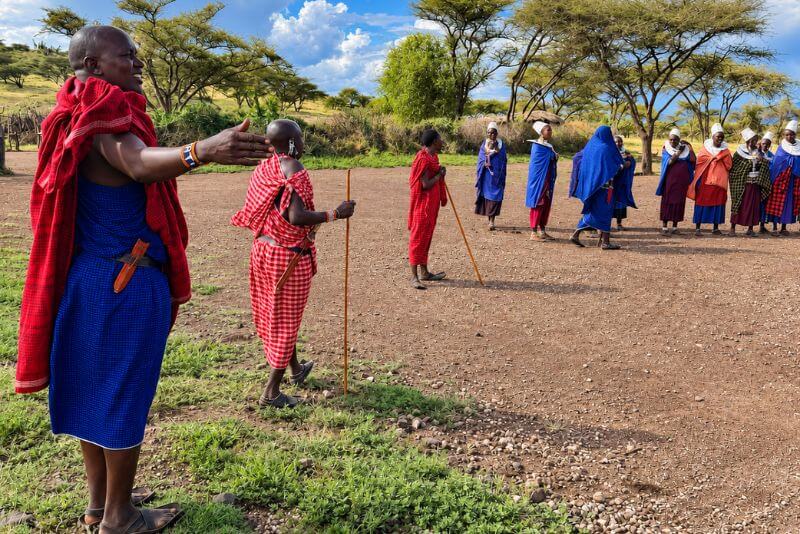
The Maasai are a Nilotic ethnic group found in the savannahs of Southern Kenya and Northern Tanzania. They are popular for keeping cattle, crafting beaded jewellery, wrapping red shukas around their bodies, and having an organised social structure.
The Maasai society is divided into two major clans, the Oodo Mongi (Red Cow) and Orok Kiteng (Black Cow). These groups determine marriage rules and trace descent through the male line. In age-sets, young boys herd the family’s cattle, adolescents become warriors (Moran), and later graduate into elders. Elder men rule the community, making decisions on political and social matters.
Key takeaways:
- Indigenous people of Kenya and Tanzania.
- Traditionally, pastoralists and cattle herders.
- Speak the Maa language.
- Live near famous wildlife reserves such as the Maasai Mara National Reserve.
- Strong connection to land and livestock.
- Important partners in conservation and tourism.
This section draws on anthropological research, cultural studies, and insights shared by Maasai communities across Kenya and Tanzania. It is important to represent Maasai voices authentically to undo stereotypes, preserve local knowledge, and secure human and land rights.
The Role of Women in Maasai Society
In Maasai Tribe culture, women are the pillars of family and community life. Their main responsibilities lie in building family homes, child-rearing, and domestic chores. In the modern world, their roles are evolving towards education, business, and community leadership.
“Tradition survives because someone chooses, every day, to protect its meaning. In Maasai society, women have long been among its most steadfast guardians.”
Traditional roles and responsibilities include:
- Building and maintaining the family home (inkajijik).
- Roles in child-rearing, food preparation, and community care.
- Economic contributions through craft-making and market trading.
- Cultural custodians: passing traditions to the next generation.
Cultural research on Maasai Culture shows that women remain central to the strength, resilience, and traditions of Maasai communities. Even though men have more property and leadership rights, Maasai women take part in economic activities like beadmaking and farming. This not only supports their daily family needs but also ensures their daughters go to school.
Role Description Homebuilder Women construct and maintain the family’s mud and dung home Caregiver Primary carer of children and the elderly within the homestead Craft Maker Create beaded jewellery and traditional crafts for trade and ceremony Food Provider Responsible for cooking, milking cattle, and fetching water Cultural Keeper Teach songs, stories, and traditions to younger generations Maasai Jewellery: More Than Just Decoration
Jewellery in Maasai culture is more than just decoration. It is a visual language that is symbolic as women handmake the community’s identity, blessings, and cultural values into every piece.
Women have been crafting beaded jewellery long before European or Asian traders. They would make them from things like carved wood, shells, horn, and clay, unlike now, where they use glass beads. These glasses were brought by traders into East Africa and had more durability and striking colours.
Maasai jewellery meaning and colours:
Colour Symbolic Meaning Red Bravery, strength, unity White Purity, health, peace Blue Sky, energy, water Green Land, nourishment, health Orange Warmth, generosity, hospitality Black The people, harmony, solidarity Experts in African cultural heritage note that Maasai jewellery reflects generations of artistic craftsmanship. It is passed down from mother to daughter, where they are taught different threading and weaving methods. Through this process, cultural identity, artistic skills, and community breakthroughs are preserved.
Types of Maasai Jewellery and What They Signify
Maasai beadwork traditions in Kenya and Tanzania signify their deep connection to the pastoralist lifestyle, community, and land. From collar necklaces to beaded earrings, each piece has a meaning.
Key jewellery types and their significance:
- Enkarewa (neck coils) — worn by married women as a symbol of status.
- Esururu (large flat beaded collar) — worn during ceremonies and celebrations.
- Ear ornaments — stretched earlobes adorned with beads or metal hoops.
- Bracelets and anklets — indicate age, marital status, and tribe affiliation.
- Headbands and hair pieces — ceremonial significance and beauty.
Established research on Maasai craftsmanship shows that jewellery designs are a form of cultural expression. For instance, Morans wear headbands and arm cuffs to demonstrate their bravery and strength as guardians of the community. Older women wear large, long brass and copper ear loops, distinguishing them from women who wear beaded loops instead.
Rites of Passage and Traditions
Just like men, Maasai women undergo rites of passage that mark transitioning from one stage to another. The two main rites of passage are when a girl joins womanhood, which later on leads to marriage.
Phases Maasai women go through:
- Birth ceremonies — beadwork gifted to newborns by the mother.
- Initiation (Emuratta)—disc-shaped necklaces (Esárudía) and forehead jewellery (Esiteti).
- Marriage (Enkiama) — bride price (lobola), shaved head. wedding adornments, and expectations.
- Mourning customs — jewellery removal, shaved head, dark shukas.
Research on Maasai traditions demonstrates that rites of passage are important in passing down local knowledge and community responsibilities. For women, they guarantee society's continuation since their roles lie in preserving the culture, domestic labour, and cultural skills.
Maasai Women Today: Tradition Meets Modernity
In the modern world, Maasai women are evolving with current times while still preserving their traditions. They are businesswomen, earning from their beadmaking while pursuing formal education. Traditionally, women had no voice, but today, they are actively fighting against Female Genital Mutilation (FGM) and early marriages.
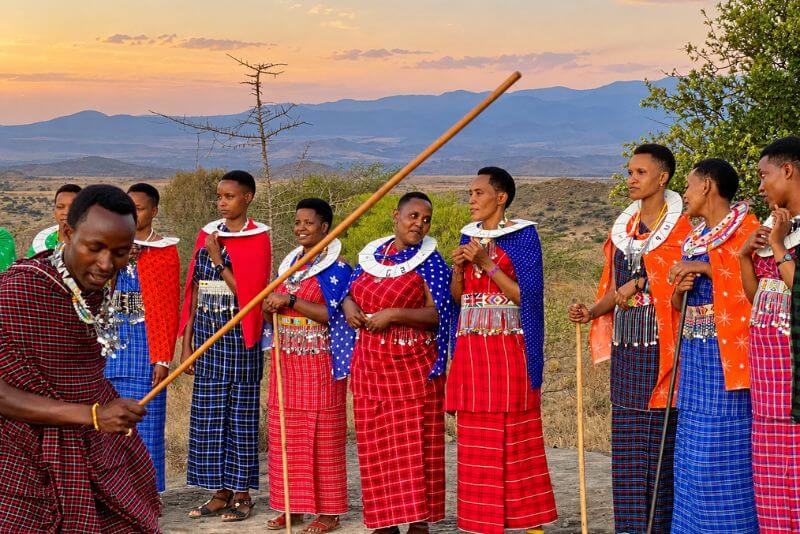
Maasai women today:
- Access to education and changing opportunities for young Maasai women.
- Women-led cooperatives selling beadwork to global markets.
- Advocacy against harmful practices and campaigns for gender equality.
- Changing family dynamics.
Studies of modern Maasai society emphasize that women play a great role in shaping the future of their community. They still participate in their traditional roles while consulting on financial and family matters with men. This paves the way for a fair future, where both parties can make decisions.
Experiencing Maasai Culture on Safari
For the best experience on a Maasai culture East Africa safari, visit a traditional village (enkang) or take part in bush walks with Maasai guides. In turn, you have an immersive and authentic interaction, getting first-hand views of the community’s way of life.
Must-Do cultural activities:
- Visiting authentic Maasai villages on a cultural safari.
- Purchasing handmade jewellery directly from Maasai women artisans.
- Participating in cultural workshops — beading, singing, and dancing.
- Engaging in responsible cultural tourism - learning proper greetings beforehand.
Safari experts recommend the Maasai Mara (Kenya), Ngorongoro (Tanzania), and Amboseli (Kenya) for the best Maasai cultural interactions. Travelers should engage in responsible tourism and listen to guides to avoid unintentional misunderstandings. Ethical tourism involves asking before taking photos, paying village fees, using community-based operators, and buying crafts directly from the women.
Meet the Women Who Carry the Heart of Maasai Culture
Maasai women play a great role in preserving Maasai cultural traditions and identity. Even with modern evolution, they balance heritage with change. This ensures customs are still passed down while helping the community adapt to the modern world.
At Shadows of Africa, our safari experts and experienced guides create meaningful cultural encounters that connect travelers with Maasai women, their traditions, and the stories that continue to shape East Africa today.
→ DISCOVER MAASAI CULTURE ON A SAFARI WITH SHADOWS OF AFRICA
How to Survive the Rainy Season in Tanzania
Rainy Season in Tanzania doesn't always mean cancelled plans and flooded roads; some showers blow through in minutes. However, some can mess with your driving or getting to a remote camp. The difference comes down to the month, the region, and how ready you've made yourself.
Think of this as the version a local would give you about Tanzania Rainy season. We're getting into when the rain falls, what it does to a safari day, what's worth packing, a few health basics, and how to keep your plans flexible.
Bring waterproof layers, quick-drying clothes, insect repellent, sturdy shoes, and something to keep your electronics dry. Beyond that, go with a driver who knows the roads, leave room in your route for changes, watch the forecast, and stick to a few basic habits around mosquitoes, food, and water.
→ PLAN YOUR RAINY SEASON SAFARI
When Is the Rainy Season in Tanzania?
Tanzania actually has two rainy stretches, not one long wet season. Here’s a seasonal breakdown.
Period Months What to Expect Long rains March to May Heavier, steadier rainfall Dry interval June to October Generally drier, occasional showers Short rains Late October to December Lighter, less predictable rainfall Dry interval January to February Generally drier, occasional showers Weather depends on where you are too. The north, south, west, coast, and highlands don't all get rain at once, so treat these months as a rough guide, not a fixed rule. An evening shower doesn't necessarily wreck the whole day.
One local guide put it this way:
Rain in the Serengeti can look nothing like what's happening near Kilimanjaro the same week. Tanzania's weather is regional, so what you've read about one park doesn't always hold up in the next.
It’s important to check the Tanzania Meteorological Authority information for more assurance.
How Rain Can Affect Your Tanzania Trip
Rain shapes your trip in a few practical ways. It can influence road travel, safaris accommodation, photography and outdoor activities. For instance:
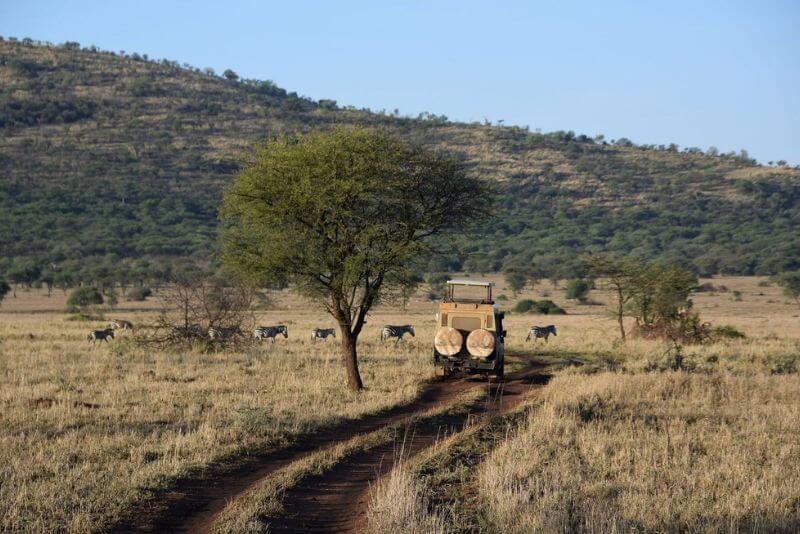
- Dirt roads can turn muddy or hard to cross.
- Driving times may stretch longer than planned.
- Some remote camps close for part of the season.
- Outdoor plans may shift or get delayed.
- Heavy clouds can cut visibility.
- Trekking paths can turn slippery.
- Domestic flights may face weather delays.
A driver-guide puts it well:
After a heavy storm, the morning drive might start later or take a firmer road instead. The plan bends. It doesn't break.
Tanzania Safaris in Rainy Season brings real upsides too. Landscapes turn a rich green, parks see fewer vehicles, and photographers get striking cloud-lit skies. Birdlife picks up, some areas see newborn animals, and some lodges drop their rates.
How much rain affects you depends on its strength, roads conditions, the park you're in, and your own itinerary.
What to Pack for the Rainy Season
Here’s Tanzania Rainy Season Packing List:
Clothing
- A lightweight waterproof jacket
- Quick-drying shirts and trousers
- One warm layer for cool evenings
- Waterproof or water-resistant shoes
- Extra socks
- A hat with a brim
Skip heavy cotton. It soaks up water and takes forever to dry.
Safari and Travel Gear
- A small umbrella
- A waterproof backpack cover
- Dry bags or resealable bags
- Binoculars
- A reusable water bottle
- A compact towel
- A torch or headlamp
Health and Personal Items
- Insect repellent
- Sunscreen
- Any personal medication
- Hand sanitiser
- Basic first-aid supplies
Photography Gear
- A waterproof camera cover
- Lens cloths
- Spare memory cards
- Extra batteries
- Protective bags for your electronics
Just keep in mind domestic flights often have tight luggage limits, so pick rain gear that's light but still does the job.
Rainy Season Health and Safety
Mosquito Protection
Mosquitoes tend to come out more in warm, humid weather. A few things help:
- Go with a strong insect repellent.
- Cover up with long sleeves and trousers once evening comes.
- Sleep under a mosquito net where one's provided.
It's worth chatting with a doctor about malaria prevention before you head out.
Food and Water Safety
- Stick to water that's treated, filtered, or sealed in a bottle.
- If you're not sure where the ice came from, skip it.
- Choose freshly cooked meals.
- Wash or sanitise your hands before eating.
- Steer clear of raw food where hygiene standards feel unclear.
Road and Outdoor Safety
- Ride with an experienced driver who knows wet roads.
- Never walk through floodwater.
- Follow your guide's lead near rivers and wildlife.
- Wear proper shoes on slick paths.
- Build extra time into your transfers.
Speak with your own doctor for personal medical advice before you fly out. Always check official health authorities for current guidance before travel.
How to Plan a Rain-Friendly Safari
A smart itinerary absorbs the rain instead of fighting it.
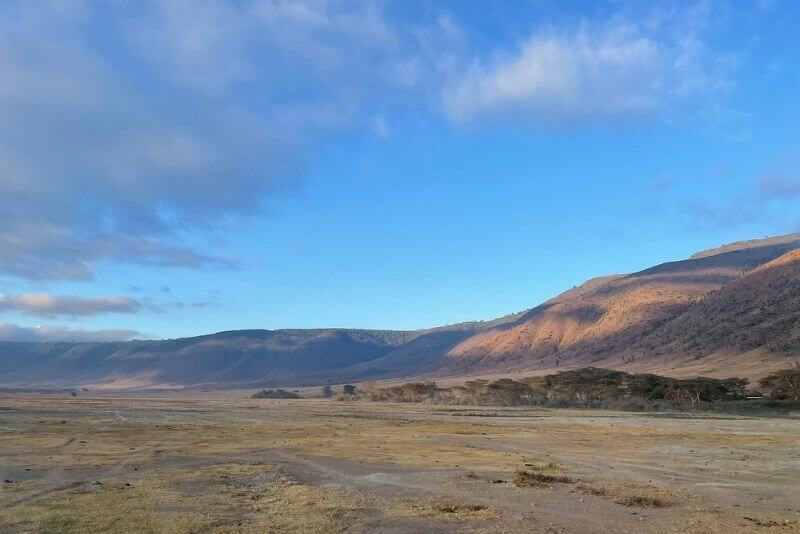
- Stay longer in fewer places.
- Avoid packing your route with long road transfers.
- Pick lodges with solid road access, and confirm they stay open through the wet months.
- Book a proper four-wheel-drive safari vehicle.
- Build in buffer time before your international flight.
- Keep optional activities loose, not locked in.
- Talk through backup plans with your safari operator.
- Read the cancellation and rescheduling terms before you commit.
- Get travel insurance that covers delays and medical emergencies.
Going private helps here; you can work out start times, routes, and last-minute changes directly with your guide. That said, your guide still follows park rules and won't drive roads that are unsafe or officially shut.
→ PLAN A FLEXIBLE TANZANIA SAFARI
Practical Tips During the Trip
- Check the forecast each morning.
- Keep waterproof clothing inside the vehicle, not packed away.
- Keep your passport, phone, and camera sealed away from moisture.
- Top up your batteries whenever power's nearby.
- Wear layers, since temperatures shift fast after rain.
- Follow your guide's read on road conditions.
- Keep footwear dry overnight where you can.
- Don't rest luggage right on a tent floor.
- Expect game-drive timings to shift now and then.
Weather apps help, but your guide's local knowledge often beats any app for reading the road and the park right now.
Is the Rainy Season Worth It?
It may suit you if you:
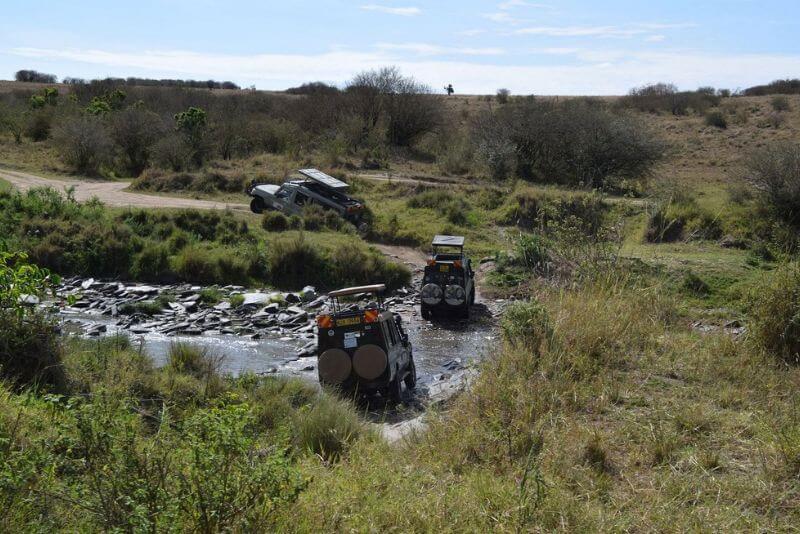
- Prefer quieter parks
- Enjoy green, lush scenery
- Love birdwatching
- Can roll with a changing schedule
- Like the idea of lower seasonal rates
- Don't mind the odd rain shower
It may suit you less if you:
- Need a fixed schedule
- Want to reach hard-to-access camps
- Dislike muddy conditions
- Have little room for delays
- Plan tough mountain treks during the heaviest rain
The short rains are generally easier to plan around than the peak of the long rains, though Tanzania's weather never comes with guarantees.
Travel Through the Rains Prepared
Yes, Tanzania Rainy Season can mess with your roads, shuffle your plans, and add time to your travel days. But it won't wreck your safari. Pack the right clothing, stay on top of mosquito protection, pick lodges carefully, and leave room to adjust and you'll still get great wildlife, lush green views, and quieter parks. Plan around the destination and month, instead of treating the whole rainy season the same.
Visiting the Hadzabe: How to Tell an Ethical Cultural Visit From a Staged One
A Hadzabe Tribe Visit Tanzania gets sold on almost every Lake Eyasi itinerary, a dawn hunt, the click sounds of the language, arrows and honey. What most travellers never learn is how much of what they saw was arranged in advance for them to see. This blog explains who the Hadzabe are, what a visit usually involves, which practices raise real concerns, and the questions that separate a respectful visit from a performance. It won't tell you to skip the visit. It'll help you choose one properly.
Who the Hadzabe Are
Around 1,300 to 1,500 people live near Lake Eyasi in northern Tanzania, based on figures from Minority Rights Group. Many still get much of their food from hunting and gathering, a way of life tied to this land for thousands of years. Not every Hadzabe family lives this way today, though. Some have moved into farming, paid work, or settled villages, and daily life varies a lot from one family to the next.

Their language, Hadzane, uses click sounds and was once grouped with the Khoisan languages. Linguists now treat it as an isolate, meaning it isn't proven to be related to any other known language on record.
Land pressure is real and ongoing. Grazing expansion, farming, and blocked access to old foraging grounds have all shrunk the areas Hadzabe families can use freely. In 2011, Hadzabe communities won Tanzania's first Certificate of Customary Right of Occupancy for a hunter-gatherer group, formal legal recognition covering tens of thousands of acres in the Yaeda Valley, with support from the Ujamaa Community Resource Team. Tourism sits inside this wider picture, not apart from it.
What a Typical Visit Involves
Most visits start early, from Karatu or a camp near Lake Eyasi. A small group of men leads visitors on a walk, often showing bow-making and fire-starting along the way. Some visits include foraging for tubers or wild honey, weather and season depending. Many operators pair the morning with a follow-on stop at Datoga blacksmiths, who forge the arrowheads Hadzabe hunters actually use, rather than props made just for tourists. Most visits run two to three hours in total, though timing varies by operator and by how far the walk goes.
What Makes a Visit Feel Staged
A few warning signs tend to repeat, regardless of which operator is involved.

- The "hunt" starts the moment the vehicle arrives, and ends the moment visitors leave.
- Animals are killed mainly to give tourists something to photograph.
- Large groups arrive at once, or several vehicles show up at the same camp together.
- Costumes or ornaments appear only when visitors are present.
- Alcohol, cash, or cannabis gets offered by guides or tourists.
- No interpreter is present, so no real conversation is possible.
- A middleman handles payment entirely, with no stated share reaching the community.
None of this means a demonstration arranged for visitors is dishonest by default. Some communities choose to offer these visits on purpose, as a source of income on their own terms. The real problem is hiding what's staged, pushing people to perform, and money that never actually reaches where it's meant to go.
Questions to Ask Before You Book
- How much of the fee reaches the community, and who decides how it's used?
- How many visitors go per group, and how many groups visit per day?
- Is a Hadzane-speaking interpreter present throughout?
- Is hunting part of the visit, and was it happening anyway, visitors or not?
- What are the rules around photography and consent?
- Does the operator return to the same families repeatedly, or rotate between different ones?
How to Behave on the Visit
- Ask before photographing anyone, every single time, and accept a no without pushing.
- Don't hand out sweets, cash, alcohol, or clothing directly.
- Don't ask anyone to repeat clicks or pose for video.
- Keep the group small, and let the interpreter lead the exchange.
- Buy crafts directly if they're offered, at the asking price.
If You'd Rather Not Go
Choosing not to visit is a fair decision, not a failure of curiosity. Lake Eyasi's landscape and birdlife stand on their own, and plenty of travellers find the drive and the setting worth it without adding a cultural stop at all. A Datoga blacksmith visit works well on its own, separate from any Hadzabe encounter. Community-run conservation projects in the area also welcome visitors and support, often without the same concerns around staging or consent that follow some cultural tours. There's no single right way to see this region, and skipping a visit doesn't mean skipping the trip.

As one Shadows of Africa planner put it, “some requests get declined outright, large groups, no interpreter, or a fixed script the family has no say in.”
What gets arranged instead is smaller, slower, and built around an actual conversation rather than a performance timed to a vehicle's arrival.
Cultural anthropologist Anniina Sandberg notes that truly informed consent requires transparency, fair compensation and ensuring that indigenous people have both the knowledge and agency to make decisions about how they’re represented.
Planning a Cultural Visit with Shadows of Africa
A Lake Eyasi visit works best alongside honest expectations, not a wildlife-documentary version of events. If a Maasai boma is also on your itinerary, our piece on reconsidering that visit covers similar ground. For travellers looking to build a route around fewer staged stops generally, our Offbeat Tanzania guide and Tanzania Safari Planner 2026-27 both help shape an itinerary around this.
Ask Better Questions, Not Fewer
A Hadzabe visit can be worth it when it's small, agreed to freely, paid fairly, and described honestly. It can feel wrong when it's staged for a camera instead. The difference usually comes down to the operator, not the community, so judge it that way. Ask the questions above before you book, and expect straight answers.
The Case for the Slow Tanzania Safari: Why Four Nights in One Camp Beats Six Parks in Six Days
Most first safaris get built around a fear of missing out, six parks, six days, a new lodge every night. What you get is a holiday spent mostly in transit, watching Tanzania slide past through a window. A Slow Safari Tanzania flips that. Fewer parks, more nights, deeper time with the wildlife. This piece covers what you gain, what you give up, and who should still book the fast route.
A Shadows of Africa planner put it plainly: “guests often ask for more parks than they actually need, usually because nobody told them fewer stops could mean better sightings.”
One of our driver-guides agrees, he's watched sightings improve the longer a vehicle stays in one area, simply because the crew starts to know where the animals are that week.
The Hidden Cost of a Packed Itinerary
A six-parks-in-six-days trip means packing every morning, queueing at park gates, arriving late afternoon, and leaving again right after breakfast. Real driving times make the cost obvious. Arusha to central Serengeti runs about six hours, much of it on rough, sandy roads through the Ngorongoro Conservation Area. Central Serengeti to Ngorongoro takes roughly three hours. Tarangire to Lake Manyara is shorter, around an hour to ninety minutes, but it still eats into a game-drive morning.
Add it up and a big chunk of the week disappears into transfers. Bags go in, bags come out, again and again. Golden hour, the best light for both wildlife and photos, gets lost to driving instead. Children and older travellers usually feel this hardest, since long, bumpy transfer days wear people out fast.
There's a knock-on cost too. A tired group tends to rush the next game drive just to get to camp before dark, which means less patience for a slow-moving sighting. The itinerary itself starts working against the thing you actually came for.
What Four Nights in One Place Actually Gives You
Staying longer in one place changes the texture of a safari in ways that are hard to appreciate until you’ve experienced both styles.
Guides learn where specific animals are moving that week. By day two or three in the same camp, your guide knows which pride is denning nearby, where a leopard has been dragging kills into a specific tree line, and which waterhole is drawing the most activity that week: intelligence that only accumulates with time in one area.
You can return to a sighting or wait for it to develop. If a leopard hunt looks imminent, there’s no need to cut it short for a scheduled departure; the vehicle can simply wait, because there’s another full day in the same park tomorrow. That flexibility alone accounts for a large share of the difference in sighting quality between rushed and hurried trips.
Full-day drives with picnic lunches replace rushed half days. Instead of a few hours in the park before a transfer, you can pack a lunch and spend the entire day exploring.
Access to activities lodges only to guests staying longer. Night drives, walking safaris and cultural visits often require a minimum stay of three nights.
You unpack once, and actually rest between drives. A slower pace means afternoons are yours: a siesta on a shaded deck, a sundowner on the kopje, time to simply absorb the sounds of the bush.
Comparison: Slow vs Fast
Safari Experience Slow Safari (2 parks, 6 nights) Fast Safari (5-6 parks, 6 nights) Time transferring Low High Lodge changes 1 4-5 Repeat sightings possible Yes Rarely Variety of landscapes Less More Park fees Fewer entries Higher total Best for Photographers, families, repeat visitors First-timers wanting breadth Where Slow Works Best
Serengeti
Tanzania's largest park rewards multi-night stays best. Staying put lets your guide position you around the migration rather than chasing it for one rushed morning. The park is simply too big to understand from a single overnight stop.
Ruaha or Nyerere
Both sit remote enough that flying in for one night barely makes sense. The flight alone eats a big share of a short stay, and these southern parks reward the extra days with far fewer other vehicles around.
Tarangire
Often treated as a half-day stop between other parks, but it rewards a two-night minimum, especially for elephant herds along the river during the dry months.
Ngorongoro Crater is the exception. One full day on the crater floor is usually enough to see most of what it offers, and rooms on the rim run expensive for longer stays.
When the Fast Itinerary Is the Right Call
A packed route genuinely suits some travellers. If this is a single lifetime trip with limited days, breadth might matter more than depth. Travellers chasing landscape variety, or working through a Big Five checklist, often prefer covering more ground. Some people also just enjoy the movement itself, a new view every night, a different park to learn each day.
A rushed safari is still a good safari. This isn't an argument against the fast route, just a case for a better default when time and budget allow it.

How to Restructure Your Trip
- Cut one park, add two nights somewhere else instead.
- Choose parks that connect without backtracking.
- Ask how many hours of driving each transfer day actually involves.
- Weigh the money saved on park entries against the cost of extra nights.
- Consider a mobile camp that moves with the migration, instead of moving yourself.
Our Tanzania Safari Planner 2026-27 walks through current TANAPA park fees and seasonal pricing in more detail, reviewed January 2026, and worth checking again closer to your travel dates since rates shift. For the full route options, our Tanzania Safari Tours 2026-27 guide and Serengeti Safari 2026-27 guide both cover slower pacing options in more depth. If you'd rather explore on foot for part of the trip, our Walking Safaris in Tanzania and Kenya guide covers where that's actually possible.
Fewer Parks, More Safari
Slow travel buys better sightings, less fatigue, and a guide who genuinely knows the ground you're covering. It suits photographers, families, older travellers, and repeat visitors especially well. No sighting is ever guaranteed, slow trip or fast one, but the right itinerary comes down to your trip length and priorities, not how many parks fit on the map.
Why a Private Safari Is the Best Way to Explore Tanzania?
A Tanzania trip feels easier when you're not stuck to the pace of strangers. On a Private Tanzania Safari trip, the vehicle, guide, and daily plan are built around you and whoever's travelling with you.
A Private Safari Tanzania gives you your own vehicle, your own guide, and a plan built around what you want to see. You can stay longer at a good sighting. You can pick your own breaks. This means you can skip the fixed schedule that comes with a big group tour.
This guide will cover: what a private safari includes, how it stacks up against a group safari, who it suits best, and whether the higher price is worth it.
→ PLAN YOUR PRIVATE TANZANIA SAFARI
What Is a Private Tanzania Safari?
A private safari means the vehicle and guide work for your group only. Nobody else climbs in.

This setup works for many kinds of travellers, such as:
- Solo guests
- Couples
- Families
- Small groups of friends
- Photography groups
- Honeymooners
One thing worth clearing up: a private safari isn't the same as a luxury safari. You can pick mid-range lodges or simple tented camps and still get your own vehicle.
Here’s what a good Custom Tanzania Safari usually includes:
- Private use of the vehicle
- A dedicated guide
- Lodging that fits your budget
- A route built around your interests
- Flexible daily plans. Still, park rules and lodge check-in times can limit last-minute changes.
Expert Insight: “a private route starts with listening to what you want.”
Private Safari vs Group Safari
Let’s compare both fairly. Group safaris follow a fixed route and a shared clock. You often bend your stops, meal breaks, and drive times around the rest of the group. A private trip skips that trade-off. You could spend hours watching a leopard without anyone pressuring you.
Here’s a simple comparison.
Feature Private Safari Group Safari Vehicle Reserved for your party Shared with other guests Itinerary Based on your interests Usually fixed Daily timings More flexible Set for the group Wildlife stops Guided by your preferences Based on shared decisions Guide attention Dedicated to your party Shared among guests Vehicle space More room for people and gear Depends on group size Privacy Greater privacy Shared experience Cost Usually higher Usually lower Best for Families, couples, photographers Social or budget-focused travellers A guide who's worked both setups says a bigger group often means more seat-shuffling and less room for cameras or curious kids to lean out for a look.
→ REQUEST A PRIVATE SAFARI PLAN
More Freedom During Game Drives
Private Game Drives Tanzania trips let you talk straight to your guide about how each day should go.

With this setup, you can:
- Leave early while animals are still active
- Stay longer at a lion pride or an elephant herd
- Stop for birds, plants, or smaller creatures on the way
- Wait a bit for better light before you shoot a photo
- Pick a full-day drive or shorter morning and afternoon runs
- Head back early when kids or older guests need rest
- Time your meal and toilet breaks around your own comfort
For example, a photographer might sit at one sighting until the light turns golden. A family with tired kids might cut the drive short instead. Either way, guides still stick to park roads and safe viewing distances.
A Safari Based on Your Interests
Your route can bend around your main wildlife interests and comfort needs instead of following a generic template. Here are some examples:

- Big wildlife: Serengeti, Ngorongoro Crater, and Tarangire offer varied sightings.
- Great Migration: Your route can shift toward the Serengeti zones in season.
- Photography: Extra gear space and longer stops make a real difference.
- Birdwatching: More time near forests and wetlands means more species.
- Family travel: Drive times and lodge picks can bend around kids.
- Honeymoons: Couples often want quieter camps and private meals.
- Safari and beach: A Tanzania safari pairs well with a few days in Zanzibar.
It’s important to remember that wildlife moves on its own schedule, so no guide can promise a specific sighting.
Who Benefits Most From a Private Safari?
A private safari Tanzania suits different types of travellers. Here’s how it helps:

For Families
Shorter drives, extra breaks, and kid-friendly lodges make the trip smoother.
For Couples and Honeymooners
More privacy during transfers and drives, plus quieter stays.
For Wildlife Photographers
Extra room for gear, and a chance to talk light and angles with your guide.
For Older Travellers
Daily plans can bend around comfort and energy levels.
For Friends and Small Groups
Vehicle cost can be split while staying inside your own circle.
Remember to share any health or mobility needs before you book, so your planner can plan around them.
Is a Private Safari Worth the Cost?
Private Tanzania Safari Cost usually runs higher, since the vehicle, guide, and fuel go to one party alone. Still, the per-person price drops once friends or family split that vehicle.

What moves the price:
- Number of travellers
- Length of the safari
- Travel season
- Parks on the route
- Driving distances
- Level of accommodation
- Domestic flights
- Optional extras
In return, you get your own vehicle, more say in the daily plan, and a route shaped around your interests. Park fees and lodge rates shift over time. Check current pricing with your operator before you book.
What to Confirm Before Booking
Before you pay a deposit, ask your operator:
- Is the vehicle reserved only for our group?
- How many passengers can it hold?
- Will the same guide stay with us the whole trip?
- Can daily timings change if needed?
- Which park fees and transfers are included?
- Which meals and drinks are covered?
- Are tips and extra add-ons left out?
- What happens if bad weather changes the plan?
- What are the deposit and refund terms?
- Is emergency support available on the trip?
Always check accommodation names, driving times, room arrangements, inclusions, exclusions and additional charges before you pay.
Downloadable checklist: Private Safari Booking Questions
Responsible and Realistic Safari Planning
A private trip should still follow sound wildlife practices.

- Follow your guide's safety calls.
- Keep a safe distance from wild animals.
- Don't push your guide into illegal off-road driving.
- Skip routes packed with long driving days.
- Carry a reusable water bottle.
- Pick cultural visits that treat communities fairly.
Going private doesn't make a trip responsible on its own. That comes down to the operator's planning and how wildlife encounters get handled on the ground.
Explore Tanzania With More Control
The Benefits of a Private Safari come down to this: your own vehicle, a guide who's there for you, and daily plans shaped around your needs. It works well for families, couples, photographers, honeymooners, and small groups. Still, the right trip depends on your dates, your budget, and what you want to see.
Family-Friendly Safari Tours in Tanzania With Kids (Complete Guide)
A Family Safari In Tanzania is more than a vacation. It is a front-row seat to nature’s wildlife, scenes, and culture. With the right planning, families achieve a safe and engaging safari experience. Tanzania safari tours also offer educational experiences suitable for kids.
According to Shadows of Africa, Tanzania is perfect for families with kids. It includes wildlife and ecosystem viewing with a touch of cultural immersion. Its safe environment allows kids to witness the beautiful wonders of nature. With top-tier family accommodations in lodges or camps.
This guide shows how Tanzania is perfect for a family safari by looking at;
- The best family safari parks in Tanzania.
- Safety tips for traveling with kids.
- Ideal safari durations for families.
- Kids' safari lodges and activities.
Let us now help you book your next unforgettable Tanzania safari with kids!
Why Tanzania Is the Perfect Destination for a Family Safari
Before delving into the key details, it is important to first consider why Tanzania stands out as an ideal destination for a family safari.

A family safari in Tanzania guarantees adventure, safety, and enriching cultural experiences. Throughout the year, animals are present in parks like Serengeti National Park. Whereas Zanzibar provides relaxation on its white sand beaches, all creating unforgettable memories. With family-friendly lodges and engaging cultural experiences, Tanzania is ideal for all ages.
Here is why you should book that Tanzania safari with kids:
- Diverse wildlife, including the Big Five and countless other species.
- Stunning landscapes featuring endless savannah plains and lush tropical rainforests.
- Easily accessible national parks and wildlife reserves.
- A safe, family-friendly tourism infrastructure designed for travelers with children.
- Private, hand-picked game drives and comfortable transportation vehicles.
- Personalized educational itineraries that make learning about wildlife and nature fun for kids.
- Professional guides are assigned to you throughout the trip.
- All accommodations have tight security.
Recent travel insights show tailored itineraries are perfect for families. Parents should consider cultural engagement with the Maasai to educate kids. They should also book lodges with pools, family suites, and kids’ clubs to keep them active. All these ensure an immersive and well-rounded experience.
Best Tanzania National Parks for Kids and Families
A Tanzania safari with kids includes visiting famous parks. Parks like Serengeti National Park offer dense wildlife populations that keep children engaged. Parents also need to consider accommodations that are accessible and have the necessary amenities.

Here is what each park offers your family;
Serengeti
Kids yearn for exciting adventures they will share stories about. Serengeti National Park is an exciting destination that offers up-close wildlife viewing. It is well guided, so parents have no safety issues to worry about. It also provides shorter game drives, enhancing engagement and comfort.
Below is a list of what to expect in Serengeti:
- It is home to the iconic Great Wildebeest Migration and the Big Five.
- Has unending savannah plains that act as home to other animal species.
- Features predators in their true wild, natural form.
- Animals are ever-present, guaranteeing a fun and active game drive throughout.
- Offers both budget-friendly and luxurious accommodation options.
- Long but manageable driving distance.
Recent travel insights show the Serengeti offers lifetime memories. Experts recommend it for children aged between 6 and 8 years because of the high presence of big cats. Parents should consider lodges with children's programs to keep them active throughout.
Ngorongoro
Ngorongoro Crater offers unique experiences due to its enclosed location. It allows families a chance to witness a dense view of wildlife in one area. Family-friendly lodges make game drives manageable for young travelers.
Ngorongoro offers:
- High wildlife population that keeps kids engaged.
- It is home to the Big Five.
- Short driving distances that make it less tiring for kids.
- It can be visited all year round.
- Cultural experiences with the Maasai who live in the Crater.
- Variety of activities like birdwatching and guided nature walks.
- Close-up wildlife viewing.
- Family-friendly infrastructure and amenities.
Safari experts recommend Ngorongoro for families because it offers an “easier” escapade. Families can see the Big Five in a short time, reducing child fatigue.
Tarangire
Tarangire National Park provides a more relaxed and enjoyable family safari in Africa. Its beautiful baobab trees offer a relaxing atmosphere. Whereas its large elephant herds provide enjoyable game drives.
Here is what to expect:
- Offers an incredible game driving experience all year round.
- Known as the elephant paradise, it is easy for kids to spot elephants interacting.
- Accessible wildlife during the dry season near the Tarangire River.
- Mass population of baobab trees and giant red termites.
- Less crowded, offering a more intimate experience.
- It is easily accessible.
- Offers engaging activities like birdwatching and walking safaris.
Travel experts recommend Tarangire when visiting Tanzania with kids. It provides safe, educational, and accessible safari experiences. Even better, it offers lodges with swimming pools and family-friendly tents.
Lake Manyara
Lake Manyara National Park offers different safari experiences from the ordinary. It is well known for its colorful birdlife and tree-climbing lions. Families enjoy scenic views during their short game drives, providing an enjoyable time.
Lake Manyara is:
- Easily accessible and has short game drives.
- Home to abundant flamingoes turning the lake beautifully pink.
- Great for canoeing in the wet season and traditional game drives year-round.
- Offers beautiful sightings of tree-climbing lions.
- Perfectly safe for families with kids to take guided nature walks.
- Has diverse habitats and scenery.
- High animal population. They include giraffes, zebras, elephants, flamingoes, wildebeest, klipspringer, and cape buffalo.
Based on real travel experiences in Tanzania, families should visit parks. They provide fun, cultural, and educational experiences.
Family-Friendly Safari Activities
Tanzania family safari tours need engaging and educational activities. This keeps children calm and entertained- giving parents an easy time on vacation.

The top kid-friendly safari activities include;
- Short game drives that spot ‘big’ animals fast. It keeps children active and less exhausted.
- Visiting Maasai villages. Allows families to experience their culture through dancing, jumping, storytelling, and traditional craft-making.
- Walking safaris and nature walks. Kids above 10 years can take part in this with the supervision of professional guides.
Experienced travel experts suggest using tour operators that have family-specialized guides. Their itineraries give room for flexibility and ease of mind whenever the kids are not with you.
Best Accommodation for Families
The best accommodations for families include;
- Family safari lodges. They provide safe amenities like private safari vehicles and guided nature walks. Swimming pools are also present.
- Tented camps. They are spacious, private, safe, and convenient. Family-friendly amenities like pools are also available.
- Private safari villas. They have no age restrictions and include personal guides, chefs, and house managers. Private swimming pools and lounges for relaxation are available.
Safari experts recommend these accommodations for a rewarding safari with the children. They create some ‘time-alone’ for parents and still ensure kids are safe. Facilities provide professional guides or babysitters, improving convenience.
Safety Tips for Traveling with Kids
Traveling for a Tanzania safari with kids mandates careful preparation. As much as you are on vacation, safety and kids' engagement are top priorities.
Some of the safety tips parents need to practice include;
Health Precautions
- Carry antimalarial tablets.
- Up-to-date vaccinations like Hepatitis A, Hepatitis B, Typhoid, and Tetanus should be conducted.
- Use of DEET mosquito repellent (20-30%).
- Sleep under mosquito nets.
- Dress kids in long-sleeved clothes.
- Use SPF 50+ sunscreen, carry sunglasses, and wide hats to avoid the scorching sun.
- Regular drinking of bottled or filtered water.
- Have a medical kit with you at all times in case of an emergency.
Wildlife Safety Rules
- The guide's instructions on the wildlife must be strictly obeyed. That is, staying silent and seated when close to the animals and not touching them.
- All windows should remain closed.
- Kids should have their shoes on at all times.
- Drink water regularly and provide snacks during game drives.
- Kids should be dressed in long-sleeved clothing to avoid tsetse fly bites.
Travel Insurance
- An insurance coverage offering $1 million dollars covers medical and evacuation emergencies.
- Activity coverage should include game drives, walking, and trip cancellations.
- Kids should be under a comprehensive plan or individual coverage if needed.
According to family safari planners, families need to observe safety standards. Health risks (malaria) and heat risks (dehydration) are probable. Proper planning with your tour operator is essential to keep safe at all times.
Best Time to Plan a Tanzania Family Safari
Tanzania family safari tours are best explored when the kids have closed school. This correlates with the dry season, late June to October, which is considered the best time for a safari.

Dry season advantages include;
- Easy spotting of animals due to thinner grass and reduced vegetation.
- Concentrated wildlife viewing near permanent water sources like the Tarangire River.
- Witnessing the Great Migration river crossing in the Northern Serengeti.
- Improved road conditions and easy accessibility to remote areas.
- Conducive weather for kids.
- Less mosquito presence reduces the risk of getting malaria.
- Clear skies that offer easy visibility, providing excellent photography opportunities.
Family planners recommend planning your family safari during the dry season. Apart from the advantages listed above, your kids won’t have to miss school. Despite the warm conditions, parents are still advised to observe malaria precautions.
Create Unforgettable Family Memories on a Tanzania Safari
With this guide, it is now easy to embark on a family safari in Africa. Good preparation guarantees a family safari portrait hanging on your living room walls.
Kids deserve fun too. They will grow up to tell tales of the incredible safari experiences they had with their parents. At Shadows of Africa, our experts tailor itineraries that are safe and engaging for kids' pace. Our guides offer premium services and supervision, promoting convenience. We take you to the most iconic parks with massive wildlife populations and unique scenery. Our aim is to offer unforgettable and immersive cultural experiences for your family.
Explore our Tanzania family safari packages now to give your children an experience they will remember for life.
Serengeti vs Amboseli: Which Safari Destination Is Better in 2026?
Serengeti vs Amboseli? Choosing between the two destinations depends on your travel goals. Imagine watching thousands of wildebeest cross a crocodile-filled river in the Serengeti. Or, capturing a herd of elephants walking beneath snow-capped Kilimanjaro in Amboseli. Each destination has something for everyone, creating meaningful experiences.
Shadows of Africa highlights that travelers should choose based on their safari expectations. That is, what type of animals you want to see, the time available, prices, and your safari preference. This ensures meeting your safari expectations and getting value for your money.
This guide digs deeper into the Amboseli vs Serengeti safari. Based on factors like wildlife, landscapes, accessibility, and travel trends.
Overview of Serengeti National Park
The Serengeti National Park was founded in 1951 in Tanzania. It is 15,000 km² with vast savannah plains that host the Great Wildebeest Migration.
The migration involves 1.5 million+ wildebeests and thousands of other animal species. Guests can expect to see zebras, gazelles, and antelopes. More fascinating, tourists can also spot the Big Five in the park. This in turn creates a true wilderness feel for all visitors.
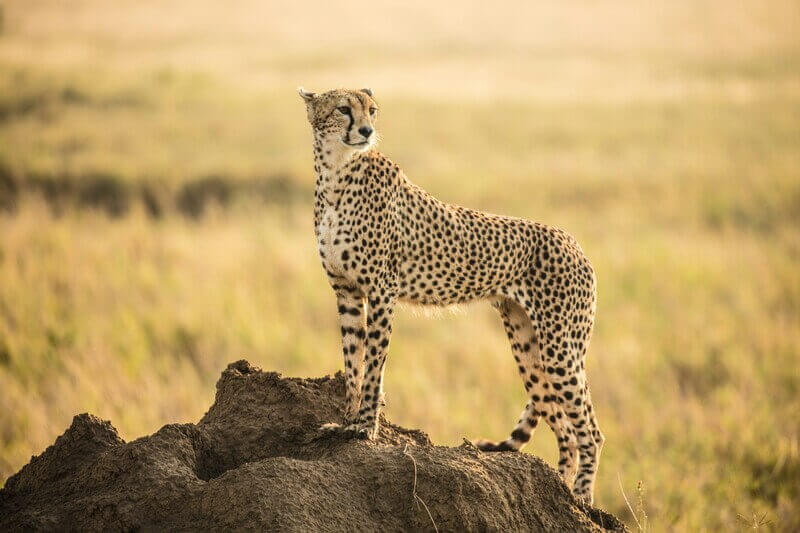
A Serengeti wildlife safari is ideal because game drives are active. They involve abundant wildlife sightings and a lot of regions to explore. It is known for frequent predator action keeping travelers engaged throughout. Exploring its large ecosystem takes a day or many days.
Overview of Amboseli National Park
Amboseli National Park was established in Kenya in 1974. It is located at the foot of Mount Kilimanjaro hence the name “Royal Court of Kilimanjaro”.
Amboseli is home to large populations of elephants. They live in its dotted green swamps and dry plains. During the Amboseli Elephant Safari, visitors have the scenic backdrop view of Mt. Kilimanjaro. The park is small (392 km²) contributing to a short and more relaxed safari. Besides elephants, visitors can also spot lions, leopards and giraffes. The park is also home to 47 raptors of 350 bird species, welcoming all birdwatchers.
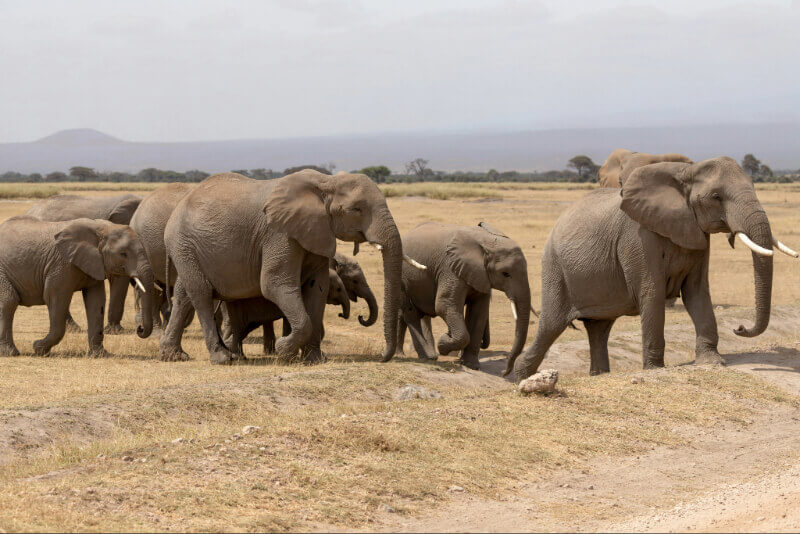
Prime water sources in Amboseli are large papyrus swamps originating from Mount Kilimanjaro. The park also has a temporary lake, Lake Amboseli, that comes from underground streams from Mt. Kilimanjaro.
The Maasai community stays in Amboseli offering a timeless African experience for tourists. Guests can visit their local villages under supervision for a full immersive safari.
Wildlife Comparison: Serengeti vs Amboseli
Below is a table comparing Serengeti and Amboseli for easier decision-making.
Feature Serengeti Amboseli Size Large Small Wildlife Variety Extremely high Low Elephants High Very high Landscape and Scenery Differences Explained
Serengeti is larger in size than Amboseli. Due to this, it offers more extensive game drives compared to the enclosed park. Below is a detailed landscape comparison table of each park;
Feature Serengeti National Park Amboseli National Park Size 15,000 km² of large plains. Enclosed in 392 km². Landscape Endless savannah plains, open woodlands, and acacia forests. Dry, flat savannah plains with green wetlands. Vegetation Rocky Kopjes and riverine forests. Sparse acacia trees and yellow “fever” tree forests. Water Sources Permanent rivers like the Mara and Seronera and seasonal rivers like the Mbalageti river. Permanent swamps like Enkong Narok and other seasonal wetlands. Scenic Views Massive wildebeest migration,crocodile-filled Grumeti and Mara rivers and Seronera valley. Stunning views of Mt. Kilimanjaro, panoramic views from Observation Hill, and flamingo-filled alkaline lake beds. Safari experts recommend Amboseli for private, relaxed, and short experiences. Whereas, Serengeti is best for long, remote, and vast experiences.
Comparing Safari Experiences in Tanzania and Kenya
Serengeti and Amboseli provide unique experiences based on your safari preference.
Below is a comparison table of a Tanzania vs Kenya safari focusing on major aspects;
Feature Tanzania (Serengeti) Kenya (Amboseli) Game Drives Style Long and immersive. Full-day drives covering large distances. Short and more relaxed drives due to smaller size. Game Drive Experience Dynamic and active. Includes predator hunts, large herds, constant movement. Slow-paced and scenic. Focuses on elephants and consistent wildlife near swamps. Wildlife Encounters During Drives High variety and unpredictable. Focus on big cats and large scale movement. Reliable, especially for elephants. Fewer dramatic predator interactions. Photography Opportunities Migration, predators, dramatic wildlife behaviour) and wide-angle landscapes. Elephants with Mount Kilimanjaro backdrop, close-up wildlife shots. Crowd Levels Can be crowded in migration zones but spread out due to size. Lower crowd density offering quiet and relaxed sightings. Vehicle Congestion High at events like river crossings and predator sightings. Low to moderate. Few vehicles at sightings. Travel experts recommend Amboseli for travelers with tight schedules seeking valuable safaris. Serengeti includes long itineraries with expansive landscapes.
Cost and Accessibility Comparison for Travelers
Tanzania vs Kenya safari costs and accessibility differ. Serengeti is more expensive and has more complex travel logistics due to its remoteness. Whereas, Amboseli is affordable with easy access from the capital city, Nairobi.
The tables below contain detailed cost and accessibility comparisons of each park.
Cost Comparison
Aspect Serengeti (Tanzania) Amboseli (Kenya) Average Cost (per day) $350 - $700 per person. $200 - $700 per person. Budget Safari (7 days) $2195 - $2289 per person. $1200 - $1600 per person. Luxury Safari $3242 - $3623 per person. $700 - $1400 per person. Park Fees $70 - $100 per day. Slightly lower or similar ($70 - $80) per day. Transport Costs Higher - involves internal flights. Lower - easy road access from Nairobi. Value More expensive, more remote experience. More affordable, better value for shorter trips. Accessibility Comparison
Category Serengeti Amboseli Main Access Hub Arusha Nairobi Travel Time Long (6-8hr drive). Shorter travel time (4-5hr drive). Transport Options Bush flights or long drives. Easy road trips or affordable flights. Flexibility Best for long itineraries (5-10+ days). Best for time-limited safaris (2-4 days). Infrastructure More remote, fewer roads, more rugged. Well-developed and better connectivity. First-Time Travelers More complex. Easy and straightforward. Experts suggest that Amboseli is a cost-effective option with straight-forward accessibility. Due to this, it is recommended for first-time goers. Serengeti is more expensive because of flying in and longer game-drives. Its large remote location makes it difficult to access.
Which Destination Is Better for First-Time Safari Travelers?
Tanzania vs Kenya safari, which one should you opt for? Below is a detailed decision-focused table comparing what each location offers.
Factor Choose Serengeti Choose Amboseli First Safari Good but involves complex logistics. Best choice - easy logistics and quick access from Nairobi. Extensive Safari Experience Best location - vast landscapes, iconic wildlife, and Great Migration. More limited in scale and variety. Limited Time Not ideal because it needs multi-day exploration. Best option for quick rewarding sightings. Tight Budget More expensive. Budget-friendly. Dramatic Wildlife Action Best for predator action and migration events. Less action, more relaxed sightings. Easy Wildlife Viewing Not suitable because it requires tracking across large areas. Easier - animals concentrated in smaller spaces. Elephant sightings Present but not the main highlight. Best location for large elephant herds. Travel experts recommend the Serengeti for the true wilderness feel. While Amboseli is best for picture-perfect moments paired with cultural integration.
Serengeti or Amboseli - Best Choice for Your Travel Style
Serengeti vs Amboseli comparison guides help travelers choose the right destination. They are both iconic safari destinations with long-lasting memories but offer different experiences.
At Shadows of Africa, our safari experts tailor itineraries for each destination. We ensure all our visitors experience the true African nature with utmost comfort. From tracking river crossings in the beautiful skies of the Serengeti. To special connections with the Maasai in Amboseli and magnificent views from Observation Hill. All creating a once-in-a-lifetime African experience.
Ready to plan your 2026 African safari? Speak to a safari expert now for a memorable and engaging time in Africa!
Tanzania Safari Costs Explained – Budget, Mid-Range and Luxury Safaris
One of the first questions travelers ask when planning an African safari is, What is the Tanzania Safari Cost? The truth is, there is no single answer. Your final price depends on where you stay, when you travel, which parks you visit, and the kind of experience you want
Here is the thing about safari prices. They vary more than most people realize. You might spend $200 per day, or you might spend $2,000 per day. What surprises many travelers is this: both of you could visit the same parks and see the same lions, elephants, and zebras. The difference comes down to how you choose to travel.
This Tanzania Safari Cost guide will walk you through the real numbers. We will look at budget, midrange, and luxury safaris side by side. You will understand what drives prices up and how to plan a trip that fits your budget without missing out on the experience.
Key Takeaways
- Understand average Tanzania safari costs per day
- Learn the difference between budget, mid-range, and luxury safaris
- Discover hidden costs travelers often overlook
- Get tips to manage safari expenses wisely
Average Cost of a Tanzania Safari.
Let us look at the numbers. Tanzania safari cost per day generally fall into three clear categories. These prices are influenced by TANAPA fees. They’ll show what you will pay per person, for each day of your trip.
Safari Type Average Cost Per Day Typical Experience Budget Safari $200–$350 Basic lodges, group tours, camping Mid-Range Safari $350–$700 Comfortable lodges, private guides Luxury Safari $700–$2,000+ High-end camps, fly-in options So, what do these prices actually include? Most Tanzania Safari Packages Cost cover your accommodation, three meals each day, park entrance fees, game drives in a proper 4×4 vehicle, and a professional guide who knows the land. Some operators also throw in drinking water and airport transfers.
But you should always read the fine print. Some Tanzania Safari deals leave out certain meals or park fees. Mid-range and luxury options usually include these automatically .
Budget Safaris in Tanzania.
Budget safaris offer the most affordable way to see Tanzania's wildlife. You will typically join a group tour with six or seven other travelers. Your accommodation will be either public campsites or very simple lodges .

What you can expect:
- Shared safari vehicles with guaranteed window seats
- Simple meals served at camp or the lodge
- Fixed itineraries that do not change
- Basic tents or rooms with shared bathrooms
Best parks for budget safaris:
- Tarangire National Park gives you excellent elephant viewing with lower entry fees than Serengeti
- Lake Manyara National Park packs diverse wildlife into a small area
- Some budget operators also cover Serengeti and Ngorongoro, though you will have shorter stays there
The good parts: You save serious money. Group travel also means sharing the adventure with other people who love wildlife.
The trade-offs: You have less control over your daily schedule. Vehicles can feel crowded. Comfort stays basic, and campsites often mean shared bathroom facilities.
A typical 7-day budget safari runs around $1,800 to $2,500 per person. This covers park fees, accommodation, meals, and transport .
Mid-Range Safari Experiences.
Mid-range safaris hit the sweet spot for most travelers. You get real comfort without the luxury price tag. This category works great for couples, families, and anyone wanting a reliable experience.

What you can expect:
- Private or small-group safari vehicles
- Comfortable tented camps or permanent lodges
- Private bathrooms with hot showers
- Good food and solid service
- More flexible daily plans
Popular places to visit:
- Serengeti National Park for the classic safari feel
- Ngorongoro Crater for almost guaranteed wildlife sightings
- Tarangire for huge elephant herds and ancient baobab trees
Mid-range properties give you proper comfort at fair rates. You sleep well, eat satisfying meals, and save hundreds compared to luxury options. A 7-day mid-range safari typically costs $2,800 to $4,500 per person.
Luxury Tanzania Safari Experiences.
Luxury safaris take things to another level. You are not just seeing wildlife. You are experiencing Africa in serious comfort and style.

What you can expect:
- Fly-in safaris that cut travel time dramatically
- High-end lodges and private camps in prime wildlife areas
- Personal safari guides and private vehicles just for you
- Gourmet meals with fine wine selections
- Spacious rooms with views across the plains
- Spa treatments and bush dinners under the stars
Luxury camps in Serengeti:
Places like Singita Sabora or &Beyond Crater Lodge sit in exclusive wildlife areas. You wake up to savannah views from your bed. You return from game drives to cold towels and welcome drinks. Dinner means multiple courses served in the bush.
Exclusive wildlife viewing:
Luxury camps often sit on private land with fewer vehicles around. You might watch a lion hunt with only your guide nearby. That kind of intimate experience is hard to find in public areas .
A 7-day luxury safari ranges from $6,000 to $12,000 or more per person. Ultra-luxury properties can run over $1,500 per night .
Park Fees and Government Charges.
Park fees make up a big chunk of your Tanzania Safari Cost. These charges are set by the government. They apply to everyone the same way.

Current daily park fees (approximate):
- Serengeti National Park: $70–$83 per adult
- Ngorongoro Conservation Area: $60–$71 per adult
- Ngorongoro Crater vehicle fee: $295 per vehicle
- Tarangire National Park: $50–$59 per adult
- Lake Manyara National Park: $50–$53 per adult
The Tanzania National Parks Authority (TANAPA) says park fees will stay the same for at least 12 more months. Any future increases will come with a full year of advance notice .
A typical 7-day safari visiting Serengeti, Ngorongoro, and Tarangire adds about $500–$700 in park fees per person. This money goes toward conservation work, anti-poaching efforts, and park upkeep .
Hidden Safari Costs Travelers Should Know.
Smart travelers plan their Tanzania safari budget beyond the package price. These hidden costs can pile up fast if you forget about them.

Tips for guides and staff:
Tipping is part of safari culture. Plan to tip your guide $20–$30 per person each day. Lodge staff usually get another $10–$15 per person per day. For a week-long safari, set aside $200–$300 for tips.
Travel insurance:
Good travel insurance runs $50–$150 for a week. It covers medical issues, trip cancellations, and lost luggage. Do not skip this.
Hot air balloon safaris:
A balloon ride over the Serengeti costs $550–$650 per person. It is optional but unforgettable.
Domestic flights:
If you choose a fly-in safari, internal flights add $200–$500 per person. You save driving time but pay more.
Other possible extras:
- Visa fees: $50–$100 depending on your passport
- Alcoholic drinks at lodges
- Laundry services
- Maasai village visits: $20–$50 per person
Tips to Save Money on a Tanzania Safari.
You can cut costs without cutting experiences. These tips help you stretch your safari budget .

Travel during green season:
March through May and November offer lower rates. You will save 30–50% on lodging. The landscapes turn lush and green. Wildlife viewing stays strong, though you might get afternoon showers .
Choose longer safaris:
A 7-day safari actually costs less per day than a 4-day trip. Fixed costs like vehicle rental and guide fees spread across more days .
Join small group tours:
Group safaris cut per-person costs by 30–50% compared to private trips. You share vehicle and guide expenses with others. This works well for solo travelers and couples .
Book with local operators:
Local Tanzanian companies often give better value than international agencies. You skip the middleman markups. Just check for Tanzania Tourist Board licensing first .
Mix accommodation types:
Try camping or budget lodges for part of your trip. Splurge on a luxury lodge for a night or two. This balances cost with comfort .
Skip unnecessary flights:
Driving between parks costs less than flying. The roads are fine, and you see more countryside along the way .
Share costs with friends:
Travel with family or friends and split vehicle costs. A private safari for four often costs less per person than a group tour.
Planning the Right Safari for Your Budget.
Tanzania safaris cover a huge price range. You can spend $200 per day camping under canvas. You can spend $2,000 per day at an exclusive lodge. Both deliver wildlife moments you will carry forever.
The trick is matching your travel style to your budget. If you want comfort and privacy, mid-range or luxury works best. If you want maximum wildlife for minimum cost, budget safaris deliver exactly that.
Tanzania Safari Budget planning gets easier when you know where your money goes. Park fees are fixed. Accommodation and vehicle costs offer wiggle room. Hidden expenses just need advance planning.
Tanzania safari cost per day numbers help you compare options. A Tanzania safari price guide sets realistic expectations. Tanzania safari packages cost shift with season, group size, and what is included.
Remember one last thing. You are investing in more than a vacation. Your safari fees support conservation work, local communities, and wildlife protection. Every dollar helps keep these wild places safe for the future .
How it works
- 1 Describe your dream trip
- 2 A travel consultant will help curate your experience
- 3 Confirm & start packing

Let us plan your dream
African trip!Enquire now and a Shadows of Africa Safari Expert will be in touch within 24 hours!
Let's start planningAbout us
We are Shadows of Africa, an international team dedicated to sharing the beauty and wonder of Africa with the world.


 https://fonts.googleapis.com/css2?family=Oswald
Quick contact
