




Serengeti National Park, Northern Tanzania
The
Serengeti National Park holds a spectacular ecosystem and a vibrant and diverse concentration of wildlife. Depending on the season, this landscape changes dramatically. From lush rainy season to the dusty dry, what you can see in the Serengeti is ever-changing.
This is not just limited to the landscape but to the animals as well. Migratory animals move around the Serengeti ecosystem (including in the Masa Mara) in a clock-wise direction throughout the year in search of pasture and water. The animals move based on the seasons which also means that changes in climate alter the timings that the animals migrate.
When I was in Central Serengeti earlier this month, we were extremely lucky to see the first part of the migration, such as zebra and Wildebeest, already heading south earlier than usual.
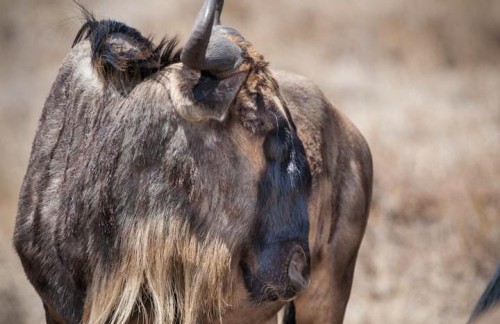
 Wildeebeest on their way back to the South
 Zebra and wildebeests' early arrival in Central Serengeti
Getting to Naabi Hill Gate
Naabi Hill is one of the main entrances to the Serengeti National Park. To get here we drove from Katatu to Ngorongoro Conservation Area and from here onwards to Serengeti. When passing through Ngorongoro we acquired a transit pass at the gate. While we waiting we took a peek in the information centre with information all about the geological formation of the area and its significance in making the environment that it is today.
After passing the Ngorongoro gate, we drove up to the rim where it got much colder and foggier. We made a stop at the panoramic viewpoint to look at the crater and to take some photos. Back on the road, there was a funny sound coming from the car. Bashiru knew there was a small garage nearby where he got the car checked out and the problem fixed in no time. We ended up coming across a few other cars within our trip who had faced some problems. It was nice to see that there was always other cars stopping to make sure everything was and would be alright.
As we descended from the crater rim towards Serengeti National Park we passed Masai communities, cattle, giraffes, and ostriches. At around noon we finally arrived at the official gate of the Serengeti, Naabi Hill. After eating lunch, Bashiru went off to organise our entrance into the park. Due to the changes in the system, the wait time from when you arrive at the gate to when you can leave is at least 2 hours. It is best to expect that it won't take any less and to also expect to wait a while again on your way back. We did the walk up to the top of the small hill and back down. This walk also leads you to a coffee shop and gift shop on your way back down.
 View from Naabi Hill
Animal Spotting
As its the Serengeti National Park where the wild roams free, to see animals you need to go looking for them! This of course makes the adventure of safari so much more interesting and unique. Let your guide know what you really want to see. Shadows tour guides seem to know the Serengeti like the back of their hands, so if you tell them what you hope to see they can go to where you are most likely to going to see them.
We were able to get a few tips on our safari about the best way to spot animals ourselves. The first is look in the skies. If you see a group of vultures, or a vulture circling, there is probably a predator there with its kill. Bashiru also mentioned that hyena's use this same tactic to find their food. The second tip is to go to where the animals are looking. For instance, if all the wildebeest are looking one way, they just might be seeing or smelling a predator in that direction.
 Vultures hang out a hyena waiting for it to finish its feed
 Leopards often climb trees to sleep but also to protect their food
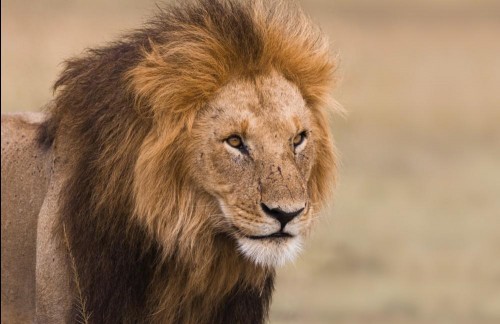
 A lion trying to get a better look
 Topi
Topi A lioness plays with her cubs. The giraffe in the background didn't move the whole time we were there.
 Hippos
 A cheetah teaching her cub how to hunt
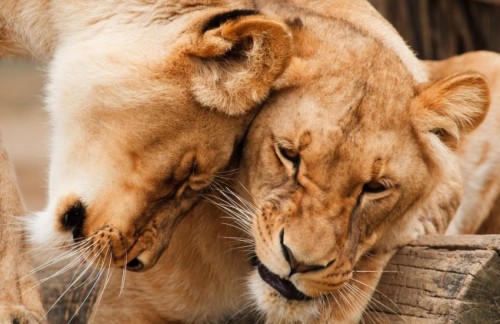
 A lion and lioness
 Elephants looking for water
 Buffalo cooling down in the mud
 Hunting dog with its prey (out of shot). Hunting dogs are extremely endangered. This one is wearing a tracking collar from conservationists. Bashiru said this is only the third one he has ever seen after 7 years as a safari tour guide
 If you look closely you'll see a leopard after its feed. This is the most comfortable way for them to rest when full
 Jackal
 Sleeping lioness