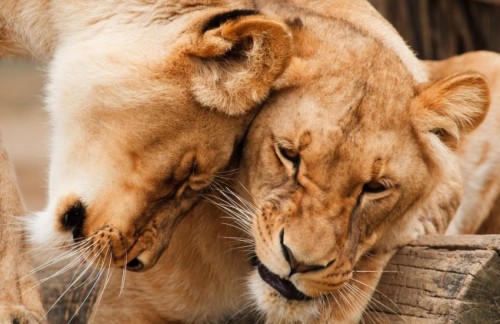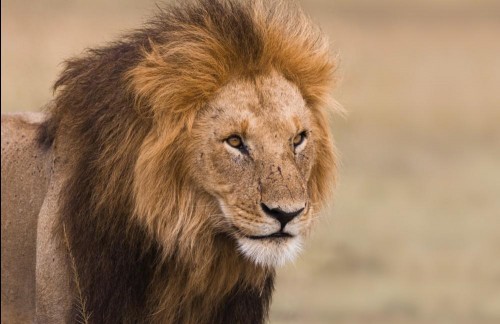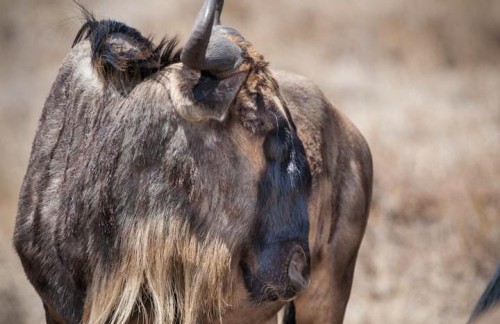





The ground shakes. Dust rises in a giant cloud. You hear the thunder of hooves before you see the source. The Great Migration in Tanzania and Kenya is one of the most dramatic wildlife spectacles on Earth. More than two million wildebeest, zebras, and gazelles move across the Serengeti–Mara ecosystem in search of fresh grazing and water.
But here is the thing, many travellers get wrong. This is not a single event you can circle on a calendar. It is a year-round journey. The animals are always moving. To see the best of it, you need to know where they will be and when.
This Great Migration Serengeti guide will explain how the migration moves month-by-month between Tanzania and Kenya. You will learn where travelers can see river crossings, the calving season, and predator activity. Most importantly, you will discover how to plan a safari around these wildlife movements.
Key Takeaways
- Understand the migration route through Serengeti and Masai Mara
- Learn when river crossings occur
- Discover the best safari months for different migration stages
Plan travel based on wildlife movement patterns
What Is the Great Wildebeest Migration?
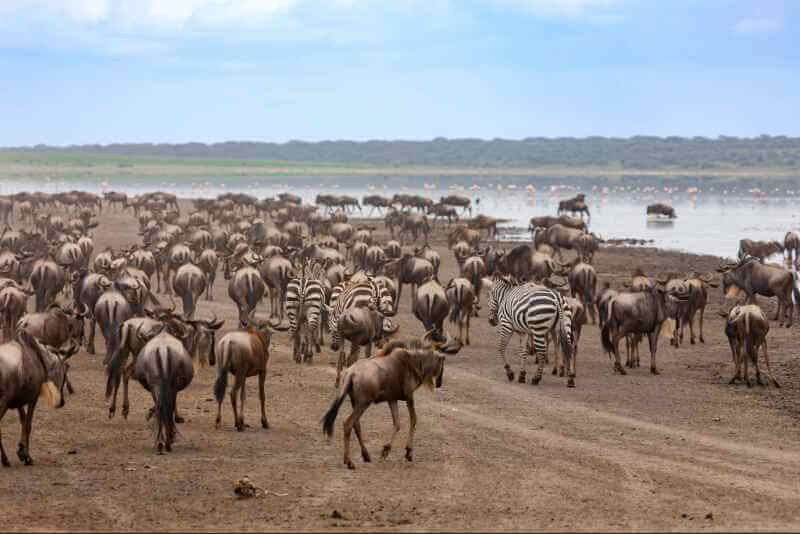
Let us start with the basics. The Great Migration is the continuous movement of about 1.5 million wildebeest, joined by around 200,000 zebras and thousands of gazelles. They travel in a huge, clockwise loop across Tanzania and Kenya. This journey covers over 800 kilometers each year.
Why do they move?
The answer is simple: rain and grass. The herds follow the seasonal rains to find fresh grazing land. When the grass is gone in one area, they move to the next. It is a constant search for food and water.
Predators follow the feast
Wherever the herds go, danger follows. Lions, cheetahs, leopards, hyenas, and crocodiles are never far behind. This makes the Serengeti Migration month-by-month experience different each time. One month, you might see thousands of newborns. Another month, you could witness a life-or-death river crossing.
The Serengeti ecosystem is well studied. Conservation organizations track these movements to help protect the wildlife. Their research shows that while the timing can shift each year slightly due to rainfall, the general pattern stays the same.
Month-by-Month Migration Calendar
Knowing the general location of the herds is the secret to a great safari. Here is how the migration typically flows throughout the year.

January – March: The Calving Season in Southern Serengeti
During these months, the herds gather on the short-grass plains in the Southern Serengeti and the Ndutu area. This is calving season. In February alone, around 500,000 wildebeest calves are born within a three-week window. The plains are full of newborns and their mothers. This attracts every predator in the area. It is the best time of year to see lion and cheetah hunts.
April – May: The Move North Begins
The long rains arrive, and the landscape turns lush and green. The herds start moving north and west from the southern plains. They spread out through the Central and Western Serengeti. The animal columns stretch for kilometers across the grass. This is also a quieter time for tourists, which means better value and fewer vehicles.
June – July: The Western Corridor and Grumeti River
The migration pushes further north into the Western Corridor. Here, the herds face their first big water challenge: the Grumeti River. Huge crocodiles wait in the water. The crossings at the Grumeti are dramatic, though not as famous as those further north. By late June and July, the herds gather in big numbers along the riverbanks.
August – October: The Mara River Crossings
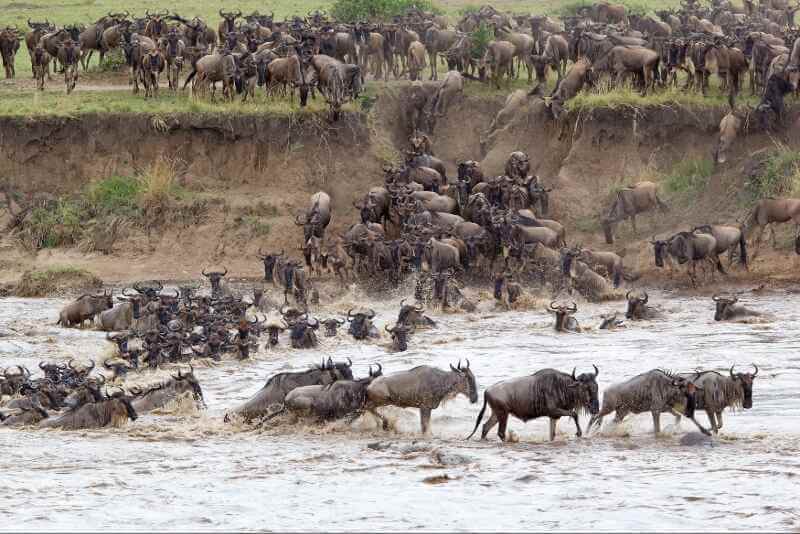
This is the moment everyone has seen in documentaries: Serengeti river crossings. The herds reach the Northern Serengeti and the Masai Mara in Kenya. They must cross the Mara River. It is deep, fast, and full of crocodiles. The wildebeest gather at the water’s edge, often waiting for hours or days. Then, something triggers them, and they plunge in. It is chaos. It is the best time to see the wildebeest migration.
November – December: The Return South
The short rains begin to fall in the south. Fresh grass starts to grow there. The herds, now spread across the Masai Mara and Northern Serengeti, begin their journey back. They move down through the eastern and central plains. By December, they arrive back on the southern plains, ready to start the cycle again.
Where to See River Crossings
The Serengeti river crossings are the highlight of any Great Migration Tanzania Kenya safari. But they are not all the same.
Mara River Crossings
These Serengeti river crossings are the most famous. They happen in the Northern Serengeti (Tanzania) and the Masai Mara (Kenya) from July to October. The Mara River is large and deep. The crossings are chaotic and dangerous. Crocodiles are the main threat here.
In recent years, some crossing scenes have become very busy and have attracted bad press due to poor vehicle behavior around wildlife. That said, Shadows of Africa drivers are trained to follow park regulations at all times and to work with a strong awareness of animal welfare, so sightings are approached with care, respect, and proper guiding standards.
Grumeti River Crossings
These occur earlier, from late June through July, in the Western Corridor of the Serengeti. The river is smaller, but the crocodiles are massive; some of the biggest in Africa. The crossings are still dramatic but often less crowded with safari vehicles.
But it is important to be clear that the river's location and road access usually leave you far from the actual crossing points, so the view is much more distant and nothing like the closer, more dramatic scenes many people picture from the North.
Why Crossings Are Unpredictable
You need to know this: the animals do not follow a strict schedule. They may gather at the river, hesitate for days, or suddenly turn back. At times, they even choose to cross at an entirely different location than expected. This is why patience matters. It is also why booking a stay of at least three or four days near the crossing points gives you a much better chance of seeing the action.
Best Safari Parks for Migration Viewing
The migration route covers several different parks and reserves. Each offers something unique.
Serengeti National Park (Tanzania)
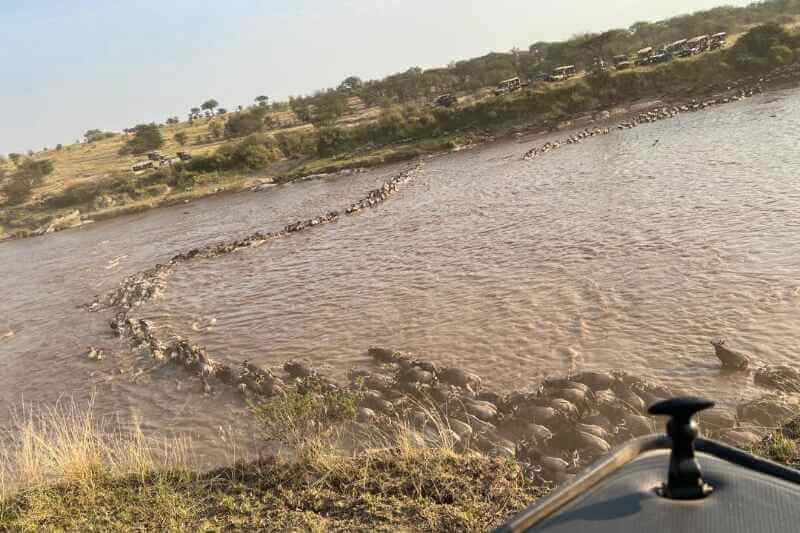
This is the heart of the migration. The park is huge, covering over 14,700 square kilometres. The herds spend about nine months of the year here. You can see them in the south during calving season, in the west during the Grumeti crossings, and in the north during the Mara River crossings.
Ngorongoro Conservation Area (Tanzania)
The Ndutu area, where calving happens, sits within the Ngorongoro Conservation Area. While the famous Ngorongoro Crater has its own resident wildlife, the southern plains of the conservation area are critical for the migration from January to March.
Masai Mara National Reserve (Kenya)
The Mara is the northern stage of the journey. From August to October, it hosts the migrating herds. The grass here is rich, and the animals spread out across the reserve. The Mara River forms its border, making it the prime spot for those famous crossing photos.
Planning a Migration Safari
Seeing the migration takes more than just luck. It takes planning.
Best Lodges for Migration Tracking
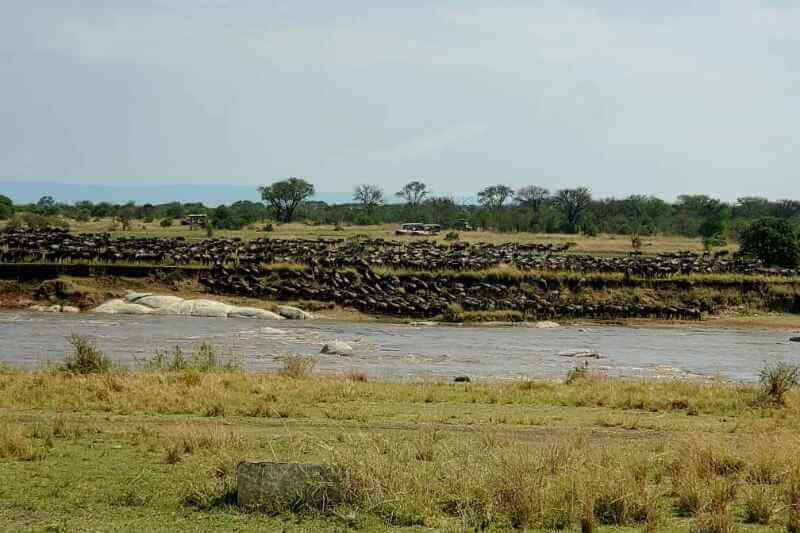
Your choice of accommodation makes a huge difference. For the calving season (Jan–Mar), look for lodges or camps in the Southern Serengeti or Ndutu. For the river crossings (Jul–Oct), you want to be in the Northern Serengeti or the Masai Mara.
Importance of Mobile Camps
Some of the best places to stay are mobile camps. These are semi-permanent tents that move two or three times a year to follow the herds. If you stay in one, you wake up right where the action is. You do not waste hours driving from a distant lodge.
Booking 12 Months in Advance
Do not wait until the last minute. The best camps near the Mara River or the Ndutu calving areas fill up quickly, often 9 to 12 months ahead. If you book late, you might end up staying far from the herds. That means very long and tiring game drives each day.
Simple Safari Tips
- Book early, especially for July to October.
- Choose a good guide. Local experts know where to wait and when to move.
- Bring a good pair of binoculars. Not all action happens right next to the vehicle.
- Pack layers. Mornings are cold, afternoons are hot.
- Be patient. Sometimes you wait. But when it happens, it is worth it.
Witness the Greatest Wildlife Journey on Earth
The Great Migration is not something you just see. It is something you feel. The sound of a million hooves. The tension at the riverbank. The sight of a newborn calf taking its first steps. It stays with you.
Whether you want to see the Serengeti river crossings in full flow or watch the best time to see the wildebeest migration during the calving season, the key is knowing where to go and when. The herds move. You can too.
At Shadows of Africa, we live for this. We’ll give you the Great Migration Serengeti Guide. Let us help you plan a safari that puts you in the right place at the right moment. Contact us today, and let us start building your adventure.