Nechisar National Park
- Home
- Nechisar National Park
Details
Details of Nechisar National Park
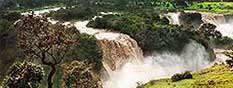
One of the most scenic parks in all of Africa, Nechisar National Park straddles the stunning 'Bridge of God' that separates Lake Chamo and Lake Abaya.
While the tiny park of just 514 square kilometres is not a world-class wildlife viewing destination, its diversity of landscapes makes it something of a treat for photographers and nature lovers.
It is its untamed forests, serene lakes, and rugged landscapes that make Nechisar one worth investigating.
Extensions
Short Overview
Nechisar National Park is located in Arba Minch, which is Amharic for 'Forty Springs'. Arba Minch is part of the Southern Nations, Nationalities, and Peoples' Region (SNNPR). It lies in the Great Rift Valley within the southwestern Ethiopian highlands.
The Africa Cup of Nations returns to East Africa for the first time in 51 years, and it arrives during the best wildlife weeks of the year. Tanzania, Kenya and Uganda co-host the tournament from 19 June to 17 July 2027, and the Great Migration is moving across the Serengeti...
Most Tanzania trips stay in the north, but the country’s wild chimpanzees live on the far western edge, along Lake Tanganyika. Two national parks protect them: Gombe, where Jane Goodall began her research in 1960, and Mahale, a remote mountain park. This guide helps you choose between them and describes...
Most travellers see Ngorongoro only from a vehicle, and very few walk the highlands behind it. This post covers that quieter side: Empakai Crater Trek and its flamingo lake, Maasai cattle trails, and a night climb up an active volcano. Shadows of Africa runs three Tanzania trips that include Empakai. Two...
Few journeys pair two experiences as different as this one. Within four days, you can spend an hour with mountain gorillas, then watch lions hunt on the Serengeti. Shadows of Africa offers this Rwanda Safari and Tanzania Safari in three lengths: six, nine or ten days. This guide explains which...
The East African Cheetah is superfast and majestic, but sadly, it is slowly disappearing from the African wilderness. This is due to human-wildlife conflict, poaching, and habitat loss resulting from agriculture. In Africa, they are found in open savannahs, grasslands, and arid areas, where they feed on antelope species, birds...


