







Travel tips
Tanzania Yellow Fever Requirements
Are you planning a trip to Tanzania and wondering about the Tanzania Yellow Fever Vaccination requirements? You'll be glad to know that the majority of travelers do not require the yellow fever vaccine for their journey to this breathtaking destination.
Tanzania is considered a low-risk country for yellow fever, making it safe to travel without the need for this vaccination.
In this article, we will look at the specifics of Tanzania’s yellow fever vaccination requirements, explain what yellow fever is, and offer guidance on receiving the vaccine, to ensure you have a safe and worry-free journey to Tanzania.
Do I need a yellow fever vaccination for Tanzania?
The vast majority of travelers do not require the yellow fever vaccine to travel to Tanzania. Tanzania has been classified as posing a low risk of yellow fever by the World Health Organization.
If you are from a country with no risk of yellow fever, you won't need the yellow fever vaccine as part of your essential travel vaccinations. Travelers coming directly from Europe or the United States do not need to meet any Yellow Fever Vaccine Requirements, and do not need the yellow fevers vaccine to enter Tanzania.
What is yellow fever?
Yellow fever is a viral disease primarily transmitted through the bites of infected female mosquitoes. The illness is characterized by flu-like symptoms, including fever, chills, headache, muscle aches, and nausea. In some cases, the disease can progress to a severe and even life-threatening form.
Tanzania is safe from yellow fevers, but it is endemic in other parts of Africa and poses a public health concern in those areas. Vaccination is the most effective preventive measure against the virus, and it plays a crucial role in controlling outbreaks and protecting vulnerable populations.
Tanzania yellow fever requirements
You will only need to provide proof of yellow fever vaccination upon arrival to Tanzania if you are traveling from a country with a risk of the virus. As of 2023, neither Europe nor the United States is included in this high-risk list. Please refer to the full list of Yellow Fever high-risk countries.
An important note, however: if you are transiting through one of the yellow fever high-risk countries for a period of 12 hours or more, you will be required to receive the yellow fever vaccination to enter Tanzania.
In these cases, we strongly advise you to consult your doctor and check Tanzania's requirements for vaccination with a healthcare professional before your travel.
Receiving the yellow fever vaccination for travel
The yellow fever vaccine is typically administered as a single dose, which provides long-lasting immunity against the disease, and should be administered at least 10 days before your trip to ensure sufficient protection.
The vaccine should be administered by a qualified healthcare professional in an authorized vaccination center, and you must obtain proof of vaccination from your doctor or health professional in order to travel in high-risk areas.
If your doctor advises against the vaccine due to underlying health issues or other medical factors, you can still travel with an official letter from your doctor. Presenting this letter to the immigration officer upon arrival will waive the vaccination requirement, allowing your trip to proceed as planned.
For more detailed information about Tanzania Yellow Fever Vaccination Requirements when Traveling in Africa, please contact your local healthcare professional.
Interested in more information about health and safari? Have a look at our blog: What vaccinations do I need for Africa?
Shadows of Africa makes every effort to ensure the information above is correct at the time of publishing: but please note updates may occur. So although we provide you with information on the Yellow Fever entry requirements, this is provided as a guideline only. Shadows of Africa will not be liable if any information regarding the entry requirements provided by us is incorrect. Kindly ensure you check the latest requirements before departure applicable to your unique circumstances.

Beginner’s guide to a Serengeti safari
The Serengeti National Park: Tanzania’s most iconic safari destination for the Serengeti Safari. The savannah plains stretching all the way to the horizon are home to Africa’s most famous animals, including all of the “Big 5”, and so much more!
The area is world-famous for the legendary Great Migration, the world’s largest annual movement of grazing animals and predators, with more than 2 million animals migrating north through the park into the Maasai Mara.
What to do
Depending on the time of year you arrive, the Serengeti National Park will offer something different. But there are always plenty of things to do and places to see!
Here are some of the activities available year-round in the Serengeti:
- Wildlife tours: The Serengeti is famous for its incredible game viewing opportunities. You can go on a guided wildlife tour to see lions, leopards, elephants, giraffes, zebras, and many others, all living their lives together in this stunning landscape.
- Hot air balloon safari: For a unique experience, you can take a hot air balloon ride over the Serengeti to see the wildlife from a different perspective. This is typically done early in the morning when the animals are most active.
- Walking safaris: If you want to get even closer to the wildlife, you can go on a walking safari with an experienced guide. This is a great way to learn more about the animals and their habitats.
- Maasai cultural tours: The Maasai people are an indigenous tribe that live in the Serengeti region. You can take a cultural tour to learn about their traditional way of life and see their villages.
The Serengeti also boasts countless stunning landmarks throughout the park. Check out the unique rock formations at Moru Kopjes, the Ol Doinyo Lengai volcano, the dramatic Grumeti River, or the picturesque Seronera Valley.

When to go
The Serengeti puts on a spectacular show at all times of the year, so whenever you arrive, you will be greeted by something incredible.
From December to July you will have the opportunity to see the best parts of the Great Migration, with the Calving Season taking place over January and February in the Ndutu region. The Serengeti leg of the migration concludes with the River Crossing, which happens from July to October.
In April and May, the best wildlife viewing can be found in the Grumeti region, also known as the Western Corridor. This period is usually the rainy season in Tanzania, and you will find that prices are considerably lower.
From June to September there are always a lot of animals out and about in all corners of the Serengeti National Park, predators and prey alike, so it’s a great time to go for general wildlife viewing.
The Great Migration is working its way through southern Kenya in October and November, so there are usually fewer visitors in these months. However, this presents a perfect opportunity to catch the large herds of elephants, giraffes, zebras, antelopes and packs of big cats, who all call the Serengeti their home year-round, without the crowds!
It’s also important to note that some roads and sites may be inaccessible during the wet season, so certain activities and accommodations may be limited in case of heavy rainfall.
Overall, the Best Time to Visit the Serengeti depends on your interests and priorities. The dry season is typically considered the best time for wildlife viewing, while the wet season can offer more lush landscapes and fewer crowds. It's a good idea to research the specific activities you're interested in and the conditions during different times of the year to plan your trip accordingly.

How to get there
The typical starting point for Safari Trips to the Serengeti is the city of Arusha. The nearby Kilimanjaro International Airport connects the city with many other parts of the world, making this the most convenient city for international travelers to begin their Serengeti journey.
From Arusha, travelers can make their way north to the park either on the road or by plane.
By road, the Serengeti is 225 kilometers (140 miles) from Arusha. Depending on which entry point you go to, the trip will take between 5.5-6.5 hours by car. This drive can be done in a safari land cruiser, a mini-bus, a private car, or a shared taxi.
Flights between Arusha Airport and the Serengeti typically take between 45 minutes to 1 hour, depending on the destination airstrip. There are daily flights available with several local airlines.
What animals can you find in Serengeti?
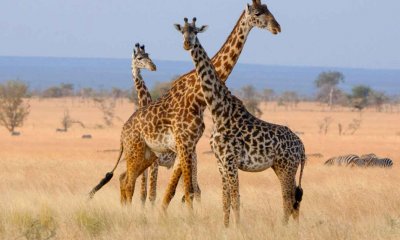
The Serengeti is a wildlife haven with an impressive range of diverse and iconic African animals calling these lands home. Lions, elephants, giraffes, zebras, cheetahs, wildebeests, hippos, rhinos, leopards, buffalos, hyenas, gazelles, warthogs, baboons, crocodiles, and so many more, all coexist in this diverse ecosystem.
The park's vast plains host the majestic lions and the graceful elephants, while giraffes and zebras create a mesmerizing sight as they navigate the grasslands. From the lightning-fast cheetahs to the incredible wildebeest migration, where millions of herbivores journey across the plains, the Serengeti Safari offers a captivating Safari Experience in Tanzania.
Whether it's encountering the elusive leopard or observing the playful antics of baboons, each wildlife encounter in the Serengeti leaves a mark on visitors' hearts.
Ready to go to the Serengeti?
Need to know anything else? Get in touch with Shadows of Africa and let’s plan your Serengeti safari today!

Our Top 5 Tips for Your Second Safari!
Recovered from your first African safari? Start getting ready for round 2!
The magic of safari is this: no two safaris are ever the same. Once you’ve been on your first safari, it’s only a matter of time before you’ll be coming back for a Second Safari! Trust us - we know from personal experience.
First-time safari-goes usually head for the more famous places, like the beautiful Serengeti National Park or Maasai Mara National Park. The second time opens up more opportunities - once you have had your first taste of this unique experience, you naturally feel more comfortable exploring the less-beaten paths.

Here are our top 5 tips for your second safari:
Tip #1: Really enjoy the safari
You’ve already ticked off all of the Big 5, now you can relax and really enjoy! For those coming back again, we recommend taking it more slowly this time.
For most people, the pressure of having to spot all the animals is now off. If you do all of this on your first safari, and tick off everything that you wanted to see, now you can just relax and take everything as it comes.
Spend a few nights at one camp to appreciate the sunsets and sunrises. Spend a few hours with a family of elephants and watch how they spend their days. Focus on the quality of wildlife sightings, rather than the quantity.
A lot of the African wilderness’ beauty comes from its spontaneity. Of course, if you have a clear goal in mind (and a good safari guide!), you can certainly do everything you want. But on the other hand, if you head out on safari with an open mind, you will see many things you didn’t even know you wanted to see!
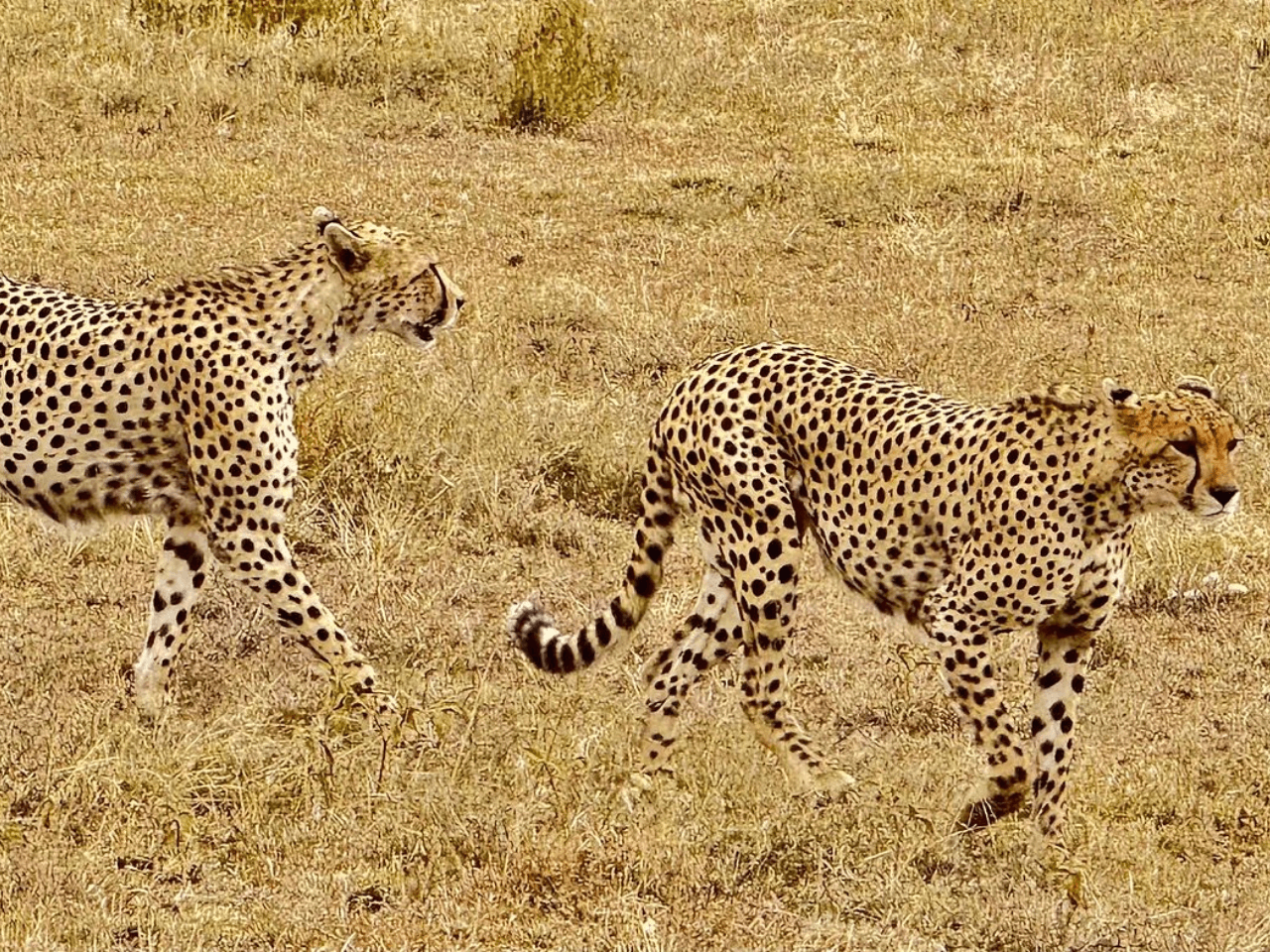
Tip #2: Make time for more than wildlife
Adding some cultural activities to your itinerary can make for a much more immersive African Safari Experience.
It should go without saying that Africa is incredibly rich in culture and history. It is well worth it to spend some time exploring the uniquely interesting life of the African continent and her people.
Of course, the African Wildlife is what draws many people to the continent, but if you have already seen a lot of these majestic animals, you probably won’t feel the need to spend the extra time looking for them again. So why not go for something new!

Tip #3: Save money on accommodation to add more activities
Naturally, once you have spent some time with Africa’s wild animals, you will feel more comfortable being around them. Even if the idea of sleeping among lions still doesn’t excite you, you might be more open to spending your nights under the stars.
The money you can save on accommodation will mean that you can add more activities to your itinerary. Instead of opting for that luxury lodge, why not go on a Hot Air Balloon Safari in Africa!
There are plenty of comfortable ways to save money on accommodation, so that you can add more to your adventure!

Tip #4: Visit in a different season
The Serengeti National Park in the dry season is a completely different place than the Serengeti in the rainy season. The golden savannahs make way for lush green grass.
Animal behavior is different at certains times of the year too. From the Calving Season of the Great Migration, to the River Crossing in Maasai Mara, to the Whale Shark Season on Zanzibar, and even the Bird Breeding Season, where birds show of their spectacular breeding plumage to attract a mate - the timing of your trip can determine what kind of show nature will put on for you.
If you want to get the timing just right to see the landscape at its most vibrant or witness the special moments of an animal’s life cycle, talk to one of our experts and they will make sure you don’t miss out!
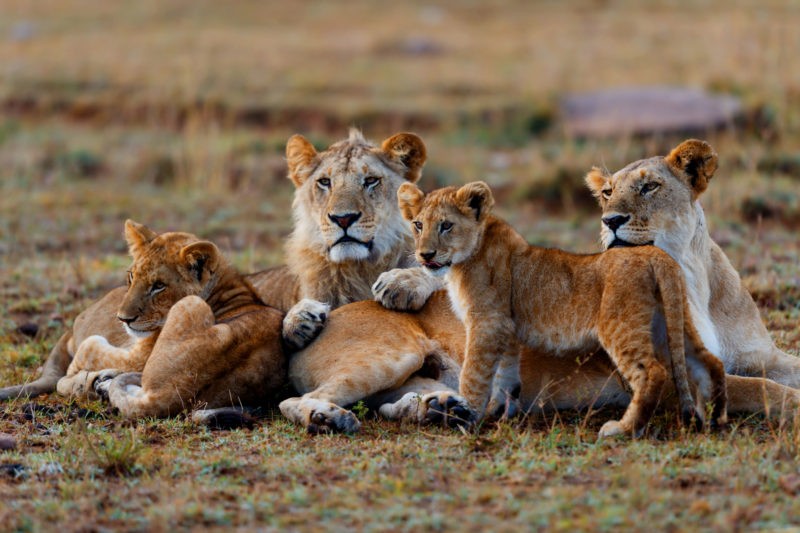
Tip #5: Check out another country or region
If you have been to eastern Tanzania for your first safari, you may not realize just how different Uganda’s natural environment is.
East Africa is a very biodiverse region. There are many animal and plant species that only exist in very specific areas. In fact, if you were to drive from Dar-Es-Salaam to Kigali, you may feel like you passed through many different worlds.
On top of the differences in wildlife and nature, East Africa is a region with very diverse Cultures and Tribes. This diversity exists between countries, but also within countries, as different communities have their own unique histories and ways of life.
If you visited one country or region on your first safari, don’t make the mistake in thinking that other places are the same!

Come back again!
The Second Safari is often even more enjoyable than the first. There are so many reasons to return to this great continent for another adventure.
You feel a well-earned sense of accomplishment after your first African safari adventure, but the second trip opens up many new and unique opportunities, making it well worth coming back!
Of course, the main point here is: you can’t see everything African Safari has to offer in one trip, nor even in one lifetime. On the plus side, this means there will always be something new and exciting to greet you every time you return!
How was your first safari? Feeling like it missed something? Or just interested in knowing what else you can see in this endlessly-fascinating continent? Don’t hesitate to get in touch - our safari experts will make sure your second trip is even more memorable than the first!

What Vaccinations Do I Need to Travel to Africa?
What vaccines do you need ahead of your safari adventure? We highlight the vaccines and medications you should look into ahead of your trip to Rwanda, Uganda, Kenya, or Tanzania.Plastic-Free Safari
It has long been a thorn in the side of travel agencies like us to send out safari vehicles packed with single-use plastics.
Our Tanzania team has already found and implemented a solution: we have now installed refillable water canisters in our safari vehicles. Promoting a Plastic-Free Safari experience for all travelers.
We designed custom brackets to fit the reusable canisters in the back of our safari cars, so everyone out on the trail with us has constant access to drinking water, without any unnecessary plastic footprint.
All of our travelers get their own reusable water bottles as a gift.

♻️ Reduce your carbon footprint with us ♻️
So when you’re going on your next safari with us, you will get your own reusable drink bottle. You can refill your bottles on our safari vehicles.
All you need to do is email us in advance and we will bring one for you. We appreciate you returning this at the end of the safari - we would like to recycle and minimize our waste as much as possible.

East Africa is a world-leading region on minimizing waste and banning single-use plastics. Travelers are not allowed to bring plastic bags when traveling to Tanzania, Kenya, Rwanda or Zanzibar.
People here realize the harm that single-use plastics can cause, so we expect everyone visiting to keep this in mind as well. Help us create a Plastic-Free Africa.
Our Shadows team is always striving to minimize our impact on the natural environment that we are lucky enough to call our home. We want to do everything possible to make sure our visitors can have a Plastic-Free Safari too.

Latest Covid Entry Requirements Zanzibar
Last update: February 2023
Looking for the LATEST Covid Entry Requirements Zanzibar? Shadows of Africa has got you covered. With our team living on the ground, we are always aware of the Covid Entry Zanzibar. For a quick overview, see below. Our safari experts are ready to give you tailored advice.
Latest Covid Entry Requirements for Zanzibar
IMPORTANT: TANZANIA HAS NO ENTRY REQUIREMENTS FOR TRAVELERS- As of February 2023 travelers no longer need a negative COVID-19 Certificate or vaccination to enter Tanzania and/or Zanzibar
Shadows of Africa makes every effort to ensure the information below is correct at the time of sending: but please note updates may occur. So although we provide you with information on the Covid entry requirements, this is provided as a guideline only. Shadows will not be liable if any information regarding the entry requirements provided by us is incorrect. Kindly ensure you check the latest requirements before departure applicable to your situation.
If you want to plan a safe and responsible trip to Zanzibar - don’t hesitate to contact us to start planning & dreaming.
For the full document please click this link: Latest COVID requirements for Zanzibar
 A perfect tropical escape — lounge chairs under a thatched umbrella on the serene beaches of Zanzibar.
Latest Covid Entry Requirements Uganda
Last update: April 2022
Looking for the latest covid entry requirements to Uganda? Shadows of Africa has got you covered. With our team living on the ground, we are always aware of the latest covid entry requirements. For a quick overview, see below. Our safari experts are ready to give you tailored advice.
Latest Covid entry requirement summary:
For fully vaccinated travellers:
- NO requirement for a negative PCR test done on arrival
- NO requirement for a negative PCR test for departure.
Travelers with partial or no vaccination will be required to present a negative CPR test done within 72 hours of travel.
Travelers below 5 years are not required to present a negative PCR test on arrival or departure.
The Ugandan government is taking the safety and health of our travellers seriously, and has implemented regulations that will help make it possible for everyone to enjoy a safe safari. Uganda has been lucky enough to be a safe destination to visit and these new measures will ensure it will continue to be so.
If you want to plan a safe and responsible trip to Uganda - don’t hesitate to contact us to start planning & dreaming.
For the full document please click this link: Full Ugandan travel advisory
Latest Covid Entry Requirements Kenya
Last update: March 2022
Looking for the Latest Covid Entry Requirements Kenya? Shadows of Africa has got you covered. With our team living on the ground, we are always aware of the Latest Covid Entry Requirements Kenya For a quick overview, see below. Our safari experts are ready to give you tailored advice.
Latest Covid entry requirement summary:
- All travellers who are fully vaccinated are exempt from the requirement of a PCR test
- All travellers arriving in Kenya must have a certificate of COVID-19 vaccination.
The following categories of travellers are exempt:- Below 18
- Travellers with medical conditions precluding vaccination
- Travellers who have recovered from a Covid-19 infection
- All documents have to be uploaded pre-travel into global haven before boarding: https://globalhaven.org.
- All travellers will be expected to fill out the traveller's locator form and submit before travel to https://ears.health.go.ke/airline_registration and thereafter submit daily health information for 14 consecutive days.
If you want to plan a safe and responsible trip to Kenya - don’t hesitate to contact us to start planning & dreaming.
For the full document please click this link: Kenyan Ministry of Health
Latest Covid Entry Requirements Rwanda
Last update: October 2022
Looking for the latest Covid Entry Requirements to Rwanda? Shadows of Africa has got you covered. With our team living on the ground, we are always aware of the LATEST latest covid entry requirements. For a quick overview, see below. Our safari experts are ready to give you tailored advice.
Latest Covid entry requirement summary:
- Covid-19 testing is no longer a requirement prior to boarding a flight to Rwanda. However, regular Covid-19 testing is encouraged.
- The Passenger Locator Form is no longer a requirement before departure
- An additional Covid test is no longer required upon arrival at Kigali International Airport
- Certain meeting venues and national parks require Covid-19 tests. Testing is available at health facilities and other designated sites for 5,000 RWF (or US$5) for rapid antigen tests, and 50,000 RWF (or US$50) for PCR tests (required for all visits to primates in Volcanoes, Nyungwe and Gishwati-Mukura National Parks). Rwandan citizens pay a subsidized cost for PCR tests of 30,000 RWF (or US$30)
- A Covid test is no longer a requirement to depart Rwanda by air. However, Covid testing (at own cost) is available for all travelers whose final destination requires one at health centers and other designated sites
The Rwandan government is taking the safety and health of travelers seriously and has implemented regulations that will help make it possible for everyone to enjoy a safe safari, as well as protect the endangered primates. Rwanda has been lucky enough to be a safe destination to visit and these new measures will ensure it will continue to be so.
Note: Tourists are required to take a PCR test 72 hours prior to visiting a national park (except for Akagera). Tourists visiting Akagera are required to take a rapid antigen test, available at numerous walk-in clinics in Kigali (RWF 10,000). No tourist will be admitted to any national park without a valid negative test result.
If you want to plan a safe and responsible trip to Rwanda - don’t hesitate to contact us to start planning & dreaming.
For the full document please click this link: Latest Rwanda Travel Advisory

How it works
- 1 Describe your dream trip
- 2 A travel consultant will help curate your experience
- 3 Confirm & start packing

Let us plan your dream
African trip!Enquire now and a Shadows of Africa Safari Expert will be in touch within 24 hours!
Let's start planningAbout us
We are Shadows of Africa, an international team dedicated to sharing the beauty and wonder of Africa with the world.


 https://fonts.googleapis.com/css2?family=Oswald
Quick contact
