







Uganda
What to pack for a gorilla trek
The complete guide to packing for your Gorilla Trek to make sure you get the most out of this incredible experience.
A gorilla trek is a uniquely special adventure. Trekking through the African rainforest, you will witness the fascinating life of gorillas in their natural habitat. ?
However, to properly enjoy the experience, you need to be prepared. What you pack will make all the difference on your trek.
Protect yourself: In the wilderness, there are many risks and dangers, but with the right preparation, you can easily minimize these risks and they won’t ruin your experience.
Pack only what is necessary: Trekking through the jungle can be tiring, so make sure you’re not carrying excess weight and your pack won’t become a burden.
Enjoy your trek: Ultimately, all the preparations you make are to ensure you have a good time (which is the main aim of this article!) ?

Here is a list of important items to pack for your next gorilla trek!
Proper clothing ?Your choice in clothing goes a long way to making your trek safer and more comfortable.
- Long trousers
- Long-sleeved shirt
- Warm, moisture-wicking clothes (if you expect cold weather)
- Hiking boots: sturdy, waterproof, and worn-in
- Thick socks
- Gaiters to protect your feet from insects (alternatively, tuck your trousers into your socks on the trail)
- Sturdy gardening gloves to protect your hands
- Hooded rain jacket or poncho
- Wide-brimmed hat for protection from the rain and sun
- UV-filtering sunglasses
Cover as much skin as possible and protect yourself from branches, thorns, insects, and anything else that could scratch you on the trail. Always aim to wear neutral-colored clothing (like light brown, green, or khaki) which is better at keeping insects away and will be less startling for local wildlife.
It may seem obvious, but it is also important to consider how comfortable your clothes are. Remember, you will be in these clothes for long periods of time, doing strenuous activity. Make sure your clothing doesn’t make the trek uncomfortable!
Take care of yourself ⛑️
Apart from clothing, there are several other practical things you will need to consider to protect yourself from the elements.
- Light pack: the lighter your pack, the more you will be able to carry in it!
- High SPF sunscreen
- Insect repellant
- Personal medications
- Water bottle
- Snacks
- First-aid kit
- Trekking poles for balance on uneven ground
- Personal documents: passport, vaccinations, insurance, emergency contact details
Enhance the experience ?
When you have your trekking needs covered, then you can use the space you have left in your pack for optional extra gear that will allow you to get the most out of your trip.
- Phone and/or camera
- Chargers or batteries for your devices
- Binoculars
- Headlamp for better sight in darker areas
Ready for your gorilla trek? ?
It is important to do this right - you do not want anything to take away from an experience of a lifetime. Make a checklist for yourself and make sure you have everything you need.
We at Shadows of Africa want you to have the best possible experience when you’re out on the trail with us. Reach out to us to book your gorilla trek and we will make sure you’re prepared before we head out together on our adventure!

We Plant Trees. Together, Planting a Forest
Travel with us, and We Plant a Trees in your destination.
Shadows Of Africa has partnered with One Tree Planted to maintain and restore our beloved continent.
By supporting reforestation in the delicate ecosystems of our African home, We Plant Trees, making sure that this beautiful land will be around for much longer, so that it can continue to give life to its inhabitants, and that we can continue to enjoy its wonder.
Our partners at One Tree Planted have a mission to rebuild animal habitats, restore biodiversity, and improve the lives of the communities who rely on these forests by promoting sustainable forestry practices.
Trees are critical to protecting Mother Nature. They provide habitat for countless creatures, they filter the air we breathe, they clean the water we drink, and they play a big role in the fight against climate change.
Take a trip to Tanzania, Kenya, Rwanda, or Uganda, and we will plant a tree on your behalf!
Traveling with Shadows of Africa means that you leave Africa greener than when you arrived!

Our Top 5 Tips for Your Second Safari!
Recovered from your first African safari? Start getting ready for round 2!
The magic of safari is this: no two safaris are ever the same. Once you’ve been on your first safari, it’s only a matter of time before you’ll be coming back for a Second Safari! Trust us - we know from personal experience.
First-time safari-goes usually head for the more famous places, like the beautiful Serengeti National Park or Maasai Mara National Park. The second time opens up more opportunities - once you have had your first taste of this unique experience, you naturally feel more comfortable exploring the less-beaten paths.

Here are our top 5 tips for your second safari:
Tip #1: Really enjoy the safari
You’ve already ticked off all of the Big 5, now you can relax and really enjoy! For those coming back again, we recommend taking it more slowly this time.
For most people, the pressure of having to spot all the animals is now off. If you do all of this on your first safari, and tick off everything that you wanted to see, now you can just relax and take everything as it comes.
Spend a few nights at one camp to appreciate the sunsets and sunrises. Spend a few hours with a family of elephants and watch how they spend their days. Focus on the quality of wildlife sightings, rather than the quantity.
A lot of the African wilderness’ beauty comes from its spontaneity. Of course, if you have a clear goal in mind (and a good safari guide!), you can certainly do everything you want. But on the other hand, if you head out on safari with an open mind, you will see many things you didn’t even know you wanted to see!
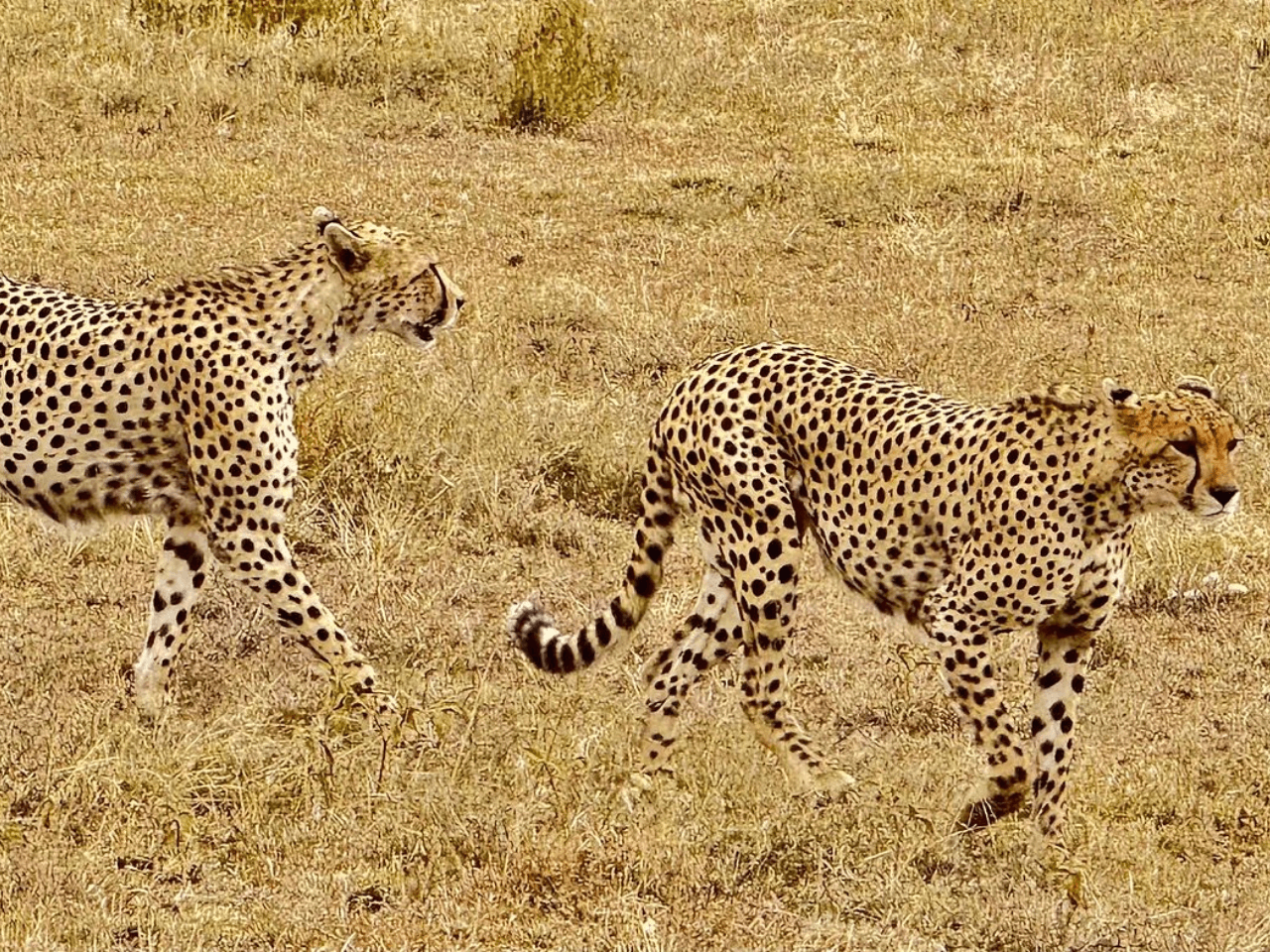
Tip #2: Make time for more than wildlife
Adding some cultural activities to your itinerary can make for a much more immersive African Safari Experience.
It should go without saying that Africa is incredibly rich in culture and history. It is well worth it to spend some time exploring the uniquely interesting life of the African continent and her people.
Of course, the African Wildlife is what draws many people to the continent, but if you have already seen a lot of these majestic animals, you probably won’t feel the need to spend the extra time looking for them again. So why not go for something new!

Tip #3: Save money on accommodation to add more activities
Naturally, once you have spent some time with Africa’s wild animals, you will feel more comfortable being around them. Even if the idea of sleeping among lions still doesn’t excite you, you might be more open to spending your nights under the stars.
The money you can save on accommodation will mean that you can add more activities to your itinerary. Instead of opting for that luxury lodge, why not go on a Hot Air Balloon Safari in Africa!
There are plenty of comfortable ways to save money on accommodation, so that you can add more to your adventure!

Tip #4: Visit in a different season
The Serengeti National Park in the dry season is a completely different place than the Serengeti in the rainy season. The golden savannahs make way for lush green grass.
Animal behavior is different at certains times of the year too. From the Calving Season of the Great Migration, to the River Crossing in Maasai Mara, to the Whale Shark Season on Zanzibar, and even the Bird Breeding Season, where birds show of their spectacular breeding plumage to attract a mate - the timing of your trip can determine what kind of show nature will put on for you.
If you want to get the timing just right to see the landscape at its most vibrant or witness the special moments of an animal’s life cycle, talk to one of our experts and they will make sure you don’t miss out!
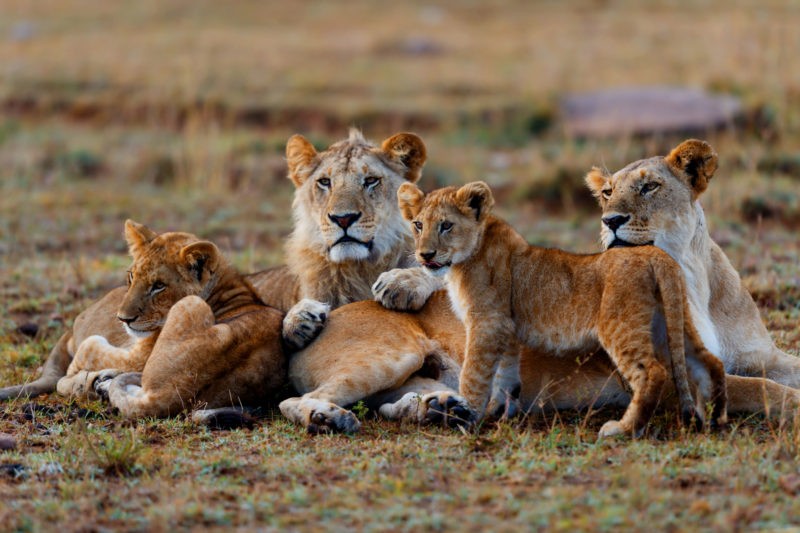
Tip #5: Check out another country or region
If you have been to eastern Tanzania for your first safari, you may not realize just how different Uganda’s natural environment is.
East Africa is a very biodiverse region. There are many animal and plant species that only exist in very specific areas. In fact, if you were to drive from Dar-Es-Salaam to Kigali, you may feel like you passed through many different worlds.
On top of the differences in wildlife and nature, East Africa is a region with very diverse Cultures and Tribes. This diversity exists between countries, but also within countries, as different communities have their own unique histories and ways of life.
If you visited one country or region on your first safari, don’t make the mistake in thinking that other places are the same!

Come back again!
The Second Safari is often even more enjoyable than the first. There are so many reasons to return to this great continent for another adventure.
You feel a well-earned sense of accomplishment after your first African safari adventure, but the second trip opens up many new and unique opportunities, making it well worth coming back!
Of course, the main point here is: you can’t see everything African Safari has to offer in one trip, nor even in one lifetime. On the plus side, this means there will always be something new and exciting to greet you every time you return!
How was your first safari? Feeling like it missed something? Or just interested in knowing what else you can see in this endlessly-fascinating continent? Don’t hesitate to get in touch - our safari experts will make sure your second trip is even more memorable than the first!

Six Ways an African Safari Will Change Your Life
African nature is an incredibly powerful force. It leaves a profound impression on everyone who sets foot on these lands.
The pure and exhilarating natural beauty of the African landscape and all of its inhabitants is not something you easily forget. The experiences you have here will live on in your memory, but also in your spirit.
There are many ways an African Safari can have a life-changing effect on you!
#1: You’ll reconnect with Mother Nature ?
You’ll get a glimpse at what it means to be truly wild. Seeing animals roam free as Mother Nature intended and without human interference is something special, and Africa may be the best place in the world to find that experience.
The best way to open your eyes to the full wonder of this planet is to fully immerse yourself in its nature: feel the breeze on your skin as it blows across the savannah, your hair waving like the grass; watch the sun set behind the Mount Kilimanjaro, birds flying overhead; fall asleep to the sounds of nocturnal animals singing out through the jungle; wake up to the smell of fresh morning dew on the greenery around you.
Even simply standing in the broad plains, just being among everything that makes Africa so special is enough to feel changed. It reminds you of the fact that the human race is part of something much larger than itself.
Your body will feel refreshed and renewed, and this can have a profound effect on a person. An African Safari is good for the mind, body, and spirit. It opens your eyes to the true wonder of this planet, and makes you feel more connected to everything around you.

#2: You’ll learn to appreciate new things ?
It is hard to fully grasp the size and majesty of the African landscape from watching nature documentaries. Nothing compares to being here in person. Seeing these scenes in real life will definitely exceed your expectations.
You may come for the elephants, but you will leave with a deep appreciation for much more than that. These experiences will live in your memories and conversations for a lifetime.
Whatever expectations you had going into your First African Safari, when it comes time to plan your next adventure, you won’t settle for anything less than spectacular. Your local zoo will never be the same again. ?

#3: You’ll reassess your priorities ?
See the world in a new way. You’ll ponder this planet and your place in it while bearing witness to its wonders.
Stepping outside of your comfort zone always leaves you changed on a spiritual level. Whether it is realizing that the material things you once valued are not actually so important, or realizing that you need to make a change in the direction of your life, Africa has the power to make people really think about their lives on a profound level.
The peace you find by slowing down to the pace of Africa, watching herds of animals calmly drinking from a watering hole in the early hours of the day, will be a welcome break from your life at home.
You may just find that life makes sense again after your African Safari…

#4: You’ll address your fears ?
Being in a totally new environment with totally new creatures can be a real shock to the psyche. The best place to address your fears is outside of your comfort zone.
By spending time with unfamiliar animals and in unfamiliar environments, you will get more comfortable, and suddenly you’ll realize that you understand these things better.
Your fear of snakes, spiders, or big cats will disappear when you see how they live, and you learn to appreciate their lives and their important place in the habitat. They won’t seem so scary any more after that!
Overcoming these fears comes with a great feeling of accomplishment, and one that lasts forever!

#5: You’ll contribute to wildlife conservation ?️
Making a positive difference to the planet makes a positive difference in your life (since you also live on this planet!).
Most African Safari actively contribute to local conservation initiatives. The funds gained from these safaris go towards protecting the precious nature that we are lucky enough to enjoy on this continent. Many local communities rely on funding from international travelers to support conservation efforts.
Safaris in Africa are good to help you understand the natural world and the role of humanity in protecting and maintaining it. Ethical ecotourism is a great way to support conservation efforts, all while giving you the trip of a lifetime!

#6: You’ll want to come back ?
You will never forget this experience. It’s something you can’t quite get anywhere else.
You'll miss the friends you make on safari, whether the local people or the wildlife. You will miss the African sun on your skin. You will miss the incredible experiences you had here. You will long to return, to revisit your experiences, but also to discover new ones.
Unfortunately, you can’t see everything Africa has to offer in one trip, nor even in one lifetime. But the good news is: this means there will always be something new and exciting to greet you every time you return! There’s still so much to do and see!

Africa is waiting for you!
Shadows of Africa knows from traveler reviews that we have already helped many people have a life-changing Safari Experience in Africa.
Everyone who is lucky enough to come to this great continent forms a connection to the land. It engages all the senses in ways that you cannot find elsewhere. The wild teaches us how to coexist with the world and everything in it.
It affects everyone in a different way. The moment your food touches the ground for the first time, you feel something new and refreshing. As you experience life here, in all its many diverse beauties, that new feeling becomes clearer, and by the end of your trip you will understand something you didn’t before.
That feeling is forever.

What Vaccinations Do I Need to Travel to Africa?
What vaccines do you need ahead of your safari adventure? We highlight the vaccines and medications you should look into ahead of your trip to Rwanda, Uganda, Kenya, or Tanzania.Plastic-Free Safari
It has long been a thorn in the side of travel agencies like us to send out safari vehicles packed with single-use plastics.
Our Tanzania team has already found and implemented a solution: we have now installed refillable water canisters in our safari vehicles. Promoting a Plastic-Free Safari experience for all travelers.
We designed custom brackets to fit the reusable canisters in the back of our safari cars, so everyone out on the trail with us has constant access to drinking water, without any unnecessary plastic footprint.
All of our travelers get their own reusable water bottles as a gift.

♻️ Reduce your carbon footprint with us ♻️
So when you’re going on your next safari with us, you will get your own reusable drink bottle. You can refill your bottles on our safari vehicles.
All you need to do is email us in advance and we will bring one for you. We appreciate you returning this at the end of the safari - we would like to recycle and minimize our waste as much as possible.

East Africa is a world-leading region on minimizing waste and banning single-use plastics. Travelers are not allowed to bring plastic bags when traveling to Tanzania, Kenya, Rwanda or Zanzibar.
People here realize the harm that single-use plastics can cause, so we expect everyone visiting to keep this in mind as well. Help us create a Plastic-Free Africa.
Our Shadows team is always striving to minimize our impact on the natural environment that we are lucky enough to call our home. We want to do everything possible to make sure our visitors can have a Plastic-Free Safari too.

Latest Covid Entry Requirements Uganda
Last update: April 2022
Looking for the latest covid entry requirements to Uganda? Shadows of Africa has got you covered. With our team living on the ground, we are always aware of the latest covid entry requirements. For a quick overview, see below. Our safari experts are ready to give you tailored advice.
Latest Covid entry requirement summary:
For fully vaccinated travellers:
- NO requirement for a negative PCR test done on arrival
- NO requirement for a negative PCR test for departure.
Travelers with partial or no vaccination will be required to present a negative CPR test done within 72 hours of travel.
Travelers below 5 years are not required to present a negative PCR test on arrival or departure.
The Ugandan government is taking the safety and health of our travellers seriously, and has implemented regulations that will help make it possible for everyone to enjoy a safe safari. Uganda has been lucky enough to be a safe destination to visit and these new measures will ensure it will continue to be so.
If you want to plan a safe and responsible trip to Uganda - don’t hesitate to contact us to start planning & dreaming.
For the full document please click this link: Full Ugandan travel advisory
Your Guide to Visit East Africa This Summer
Travelling to East Africa this summer - a great idea and a wise conclusion!
To realize your great idea support your wise conclusion with updated information Visit East Africa This Summer on pros, cons, and of course the latest Covid regulations. Daily updated and thoroughly checked information will surely help you to get an informed decision.
Pros surely include fewer visitors, curious animals, a higher standard of service for a lower price, easily maintained social distancing, and more profound contact with nature.
Cons may be different Covid protocols when entering each country.1. Tanzania

The undisputed queen of African Safaris, Tanzania, is home to the Wildebeest Migration for ten months of the year, it is where the World Heritage-listed Ngorongoro Crater shows off the unique wildlife, where Mount Kilimanjaro, Africa's tallest mountain protrudes from the average, and the gorgeous island paradise of Zanzibar is being caressed by the sea.
One of the advantages is "front row seats" for the great migration spectacle - dare to fight the croc for its bite? Pre-covid times witnessed rows and rows of cars waiting to catch a glimpse of nature's wonders, now great views are on display.Covid-19 regulations:
All travellers are now required to show a negative PCR Covid-19 test certificate not older than 72 hours. Upon arrival, all travellers will be subjected to rapid Covid-19 testing. The cost of this test is 25 USD and will be paid by the traveller on location. You are required to fill in the health form, available online, before travelling.2. Rwanda

This green heaven in the heart of Africa invites with its unparalleled treasures. Gorilla and chimpanzee trekkings are always on the top, you can spot all of the big five here, and don't forget the amazing birdlife as well.
Volcanoes national park, Akagera, Nyungwe, or the newest Gishwati Mukura national park all have lots to offer, Lake Kivu shares a different perspective, just as a visit to the sombre Rwanda Genocide Museum in Kigali.Covid-19 regulations:
All arriving travellers are required to have a negative PCR Covid-19 test certificate conducted within 72 hours before departure. Before arrival, you are required to fill in the Public Health Passenger Locator Form online and attach the PCR certificate. All passengers are required to stay 24 hours in quarantine, while passengers from India are required to complete 7 days in mandatory quarantine upon arrival at a designated quarantine hotel at their own cost.
All travelers departing from Rwanda must test negative for Covid-19. A PCR test must be performed within 72 hours before departure. The Covid-19 test is not mandatory for accompanied children under 5 years.3. Uganda

No country in Africa can offer quite what Uganda does: world-class gorilla and chimpanzee trekking, terrific game drives, all big five, bustling birdlife, and the majesty of the mighty Nile.
Winston Churchill fondly called Uganda The Pearl of Africa, and we certainly agree with that sentiment, adding our cognition - Uganda's wild charm and variety of activities make it a great place to plan a safari.Covid-19 regulations:
Arriving passengers will be subject to temperature checks and will be screened for infectious diseases by the Port Health Authorities. If a passenger shows signs or symptoms of any infectious disease they will be taken by ambulance to a local isolation center to undergo a COVID-19 test at their own cost. Test results will be returned within 24 to 48 hours; passengers will be expected to remain at the isolation center until the test results are returned. Passengers coming from India or being there less than 14 days ago, are not permitted to enter Uganda. Passengers from certain countries will have to undergo PCR testing on the border /airport at their own costs.
Departing passengers are required to present a negative COVID-19 PCR test certificate, issued no more than 120 hours before travel. The 120 hours begin on the day the sample is collected for testing.4. Kenya

Often referred to as "Africa's safari capital", home to the world-famous Maasai Mara and hosting the famed Visit East Africa This Summer Wildebeest Migration in August and September as well as boasting the best views of Mt. Kilimanjaro, Kenya is also an affordable and well-developed tourism market that is great for families or people traveling on a budget. Many different options to choose from in every rank, for every taste.
Covid-19 regulations:
All arriving passengers must take the PCR test 96 hours before departure from the first embarkation point and present the negative test. You must complete the “Travelers Health Surveillance Form” online before departure.
Currently, flights from the UK and India to Kenya are suspended until June 2021.
Passengers who have been to or transited through India in the past 14 days are not allowed to enter Kenya.What Camera to Bring on Safari
If you are wondering Best Camera for Safari is to pack for your safari experience in Africa, look no further! Here is the comprehensive list of all the camera equipment and accessories you will need for your safari.
This photography gear list is brought to you by our resident photographer Giulia Cimarosti, safari specialist at Shadows Of Africa and professional photographer. Guilia also leads groups on our Best Camera For Safari in Tanzania.
Generally speaking, depending on the device you use, you can expect different results. Let’s go through some options:Mobile Photography on Safari
You don’t have to own super pricey, professional equipment, however, it’s quite safe to say that using a mobile phone to take photos during your safari won’t make good close-up images of the wildlife possible, no matter the phone’s model or quality.
Mobile phones tend to have very poor zooming capabilities; however, they can be great for African sunsets, photographing a herd in the landscape, and of course to take the occasional short video for social media, when a curious cheetah decides to climb on the vehicle!
Keep in mind though that during your safari you won’t always get very close to the animals, so the best way to frame the subject is to use a zoom-telephoto lens on an actual camera
Cameras and Lenses on Safari
If you want to take really good photos on your safari, make sure choose Best Camera For Safari, and DSLR camera! A digital single-lens reflex camera will allow you to use manual settings, adapting them to the lighting situation, the distance to the subject and the effects you want to achieve.
Now you may be wondering which camera body is the best one, but the answer is not an easy one. There are cameras of all formats and brands, but they all have one thing in common: manual settings!
The thing you need to concentrate on when thinking about the right photography gear for safari photography is what lens - or better, lenses - to bring.
 Capturing a majestic jaguar in the wild—an unforgettable safari moment through the lens of a DSLR camera.
Zoom lenses
The must-have kind of lens for safari photography is zoom or telephoto. This is the kind of lens that allows you to zoom into the subject, making it appear closer. There are countless zoom lenses on the market, but make sure your telephoto lens has a focal length of at least 200 mm.
- Budget
28-300 mm or 70-300 mm lenses are Best Camera for Safari in a good budget option for beginners. - Medium
A 150-600 mm lens will allow you to shoot almost anything in daylight, taking your photography to the next level with a reasonable investment. - Pro
A 70-200 mm f/2,8 prime lens, although the focal length is not extreme, is an excellent lens that will not disappoint.
There are other lenses such as 400 mm f/4 or even f/2,8 prime lenses which are top choices but at an extremely high price tag.
If there is a lens worth an investment when planning to go on a photographic safari, it has to be the zoom!
 A DSLR camera and detailed safari map ready for the day's wildlife exploration—tools of every great safari photographer.
Medium and Wide Angle Lenses
Medium and Wide Angle Lenses
Although zoom lenses are the first ones that come to mind when thinking about safari photography, a wide-angle lens also goes a long way when it comes to shooting the animals in their habitat, dramatic African skies and sunsets, and large herds moving during the Great Migration. Make sure you pack a wide to medium lens too!
- Budget
The 18-55 mm “kit lens” that comes with most camera kits works perfectly for this kind of photo. As a budget option, any kit lens works perfectly, actually!
Lenses in the 10-24 mm range are much wider - another good option that will allow you to take creative photographs during your safari.
- Medium
A 15-30 mm f/2,8 wide lens is a high-quality choice for the landscape. - Pro
The 24-70 mm f/2,8 is a “classic”, very sharp lens that never disappoints, allowing you to shoot landscapes (or good quality files to stitch in panoramas later on) and zoom into the subject too.
Bear in mind that a good wide-angle lens also allows you to take wonderful nocturnal photos of the clear skies of the savannah.
 Up-close with nature in Botswana—a safari guest captures the moment as a lion rests just meters away from the vehicle.
Other accessories
Now that you know what to use to shoot your safari photographs, let’s think about the accessories you shouldn’t forget:
- Spare batteries. Although all our vehicles have charging stations to recharge your batteries during the game drives, having one or two extra batteries is always a good idea to keep shooting without a single worry!
- Memory cards. Believe it or not, I can guarantee you will find yourself shooting dozens and dozens of photos of the same animal or scene. It’s easy when you have lions posing for you, or a hunting scene taking place. So pack extra memory cards!
- Battery charger. There are regular battery chargers and also double battery chargers that work with USB and/or car power outlets. I like these, as you can charge 2 batteries at once.
- Protection for your camera gear. The savannah is dusty, and dust is the real enemy of cameras and their sensors. Try to keep everything protected from dust except what you are using. Camera bags or pouches/cloths will work great.
- Cleaning kit. A full kit includes the sensor cleaning kit and tools to remove dust and clean the camera. Try to keep everything clean by gently removing the dust every day after the game drives. Please note: the sensor tends to get dirty with all the dust of the safari, but at the same time cleaning the sensor is a very delicate task so don’t risk it if you are not sure how to do it!
Are you ready to embark on your photographic safari adventure? Please let us know if you need more suggestions and information about Best Camera for Safari. We look forward to having you travel with us!
How it works
- 1 Describe your dream trip
- 2 A travel consultant will help curate your experience
- 3 Confirm & start packing

Let us plan your dream
African trip!Enquire now and a Shadows of Africa Safari Expert will be in touch within 24 hours!
Let's start planningAbout us
We are Shadows of Africa, an international team dedicated to sharing the beauty and wonder of Africa with the world.


 https://fonts.googleapis.com/css2?family=Oswald
Quick contact
